
Ballooning Over Boulder: A Wintertime View Above the Rockies
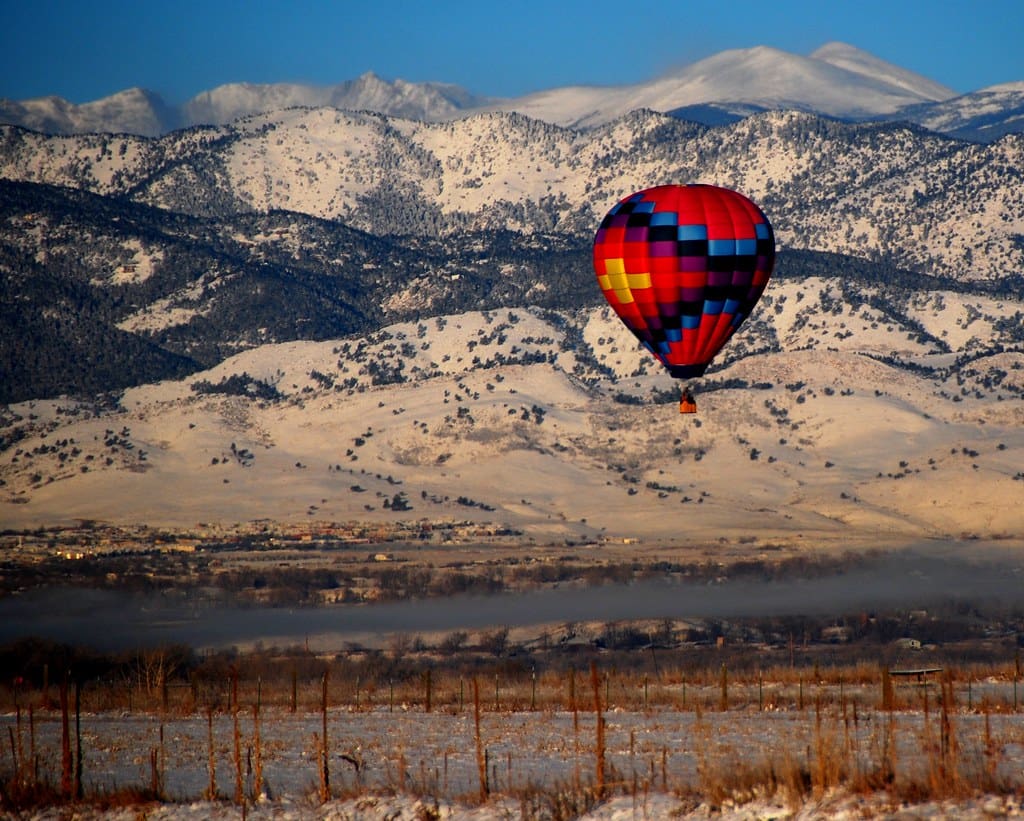
There are few experiences as quietly powerful as floating above Boulder in a hot-air balloon on a winter morning. As dawn breaks, the landscape below slowly reveals itself — snow-covered open space, frozen ponds, and the dramatic rise of the Rocky Mountains stretching across the western horizon. From this peaceful vantage point, Boulder feels timeless, framed by nature at its most striking.
The Rocky Mountains define the experience. Formed over tens of millions of years, this vast mountain range dominates the Front Range, with peaks that rise abruptly from the plains. In winter, the mountains take on an entirely different personality. Snow settles into crevices and along ridgelines, emphasizing the raw contours of the terrain. As the sun climbs, soft pinks and golds illuminate the peaks, creating a constantly shifting display of light and shadow that feels almost unreal from the air.
Winter is widely considered one of the best seasons for ballooning, especially in places like Boulder. Colder air is denser and more stable, often resulting in smoother, calmer flights when weather conditions cooperate. Early mornings are essential, as winds tend to be lightest just after sunrise. The crisp winter air also improves visibility, allowing balloonists to see farther across the plains and deeper into the mountain range than during warmer months.
A typical balloon flight begins well before sunrise. Crews carefully evaluate weather conditions, paying close attention to wind speed, direction, and temperature. Once cleared for launch, the balloon envelope is inflated using large fans, followed by controlled bursts of heat from propane burners. As the balloon rises upright, passengers step into the basket, and with a final surge of warm air, the balloon lifts gently off the ground.
Unlike airplanes or helicopters, hot-air balloons have no engines and no steering mechanisms. They move with the wind, and pilots guide the flight by ascending or descending to catch air currents moving in different directions. This makes each flight entirely unique. The experience is remarkably quiet, broken only by the occasional sound of the burner as the pilot adjusts altitude.
From above, winter Boulder feels serene and expansive. Snow highlights patterns in the land that often go unnoticed from the ground. The Flatirons stand in bold contrast against the foothills, while higher peaks loom beyond, their scale and complexity fully revealed. The city itself fades into the background, reminding passengers how closely Boulder is tied to its natural surroundings.
Hot-air ballooning is one of the oldest forms of human flight, dating back to the late 18th century. Despite modern advancements in aviation, ballooning has remained largely unchanged, relying on the simple principle that warm air rises. This elegant simplicity is part of what makes ballooning so compelling. For a deeper look at the science and history behind balloon flight, the Smithsonian National Air and Space Museum offers a clear overview of how it all works learn more here.
Safety remains a top priority, and balloon flights operate under strict federal guidelines. Weather conditions are closely monitored, and flights are only conducted when conditions are suitable. The Federal Aviation Administration outlines these standards and operational requirements for lighter-than-air aircraft in this resource.
Winter ballooning over Boulder is not about speed or adrenaline. It’s about perspective. It’s about slowing down, rising above the landscape, and witnessing the Rockies from a place of stillness. This season adds clarity, contrast, and quiet beauty that make the experience especially memorable.