
Boulder Municipal Airport: Scenic Flatirons Landings and a Hidden Local Gem
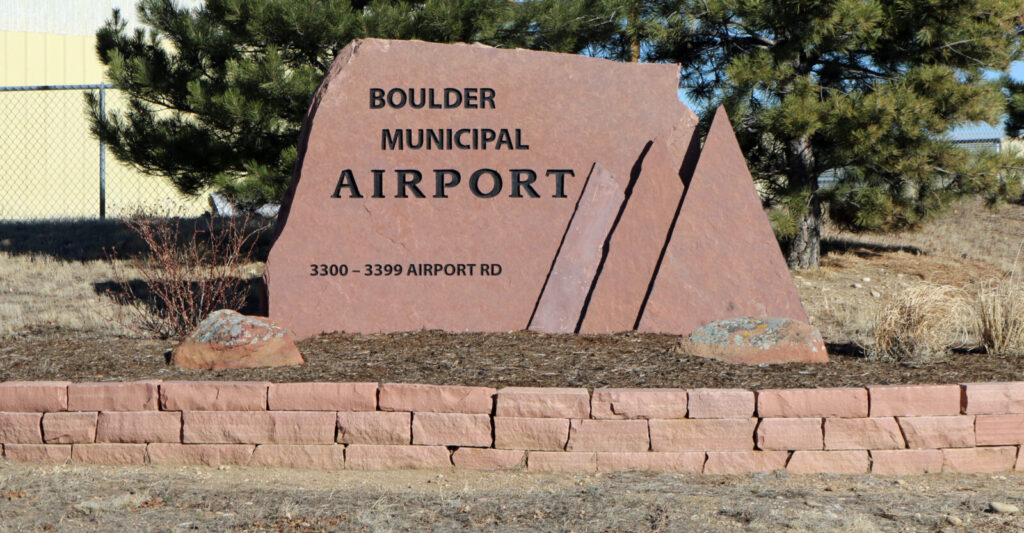
Boulder’s Airport Delivers One of Colorado’s Most Unique Landing Views
After highlighting some of the world’s most beautiful airport landings—from Aspen to Telluride—one question kept coming up: what about Boulder?
The answer is right here.
Boulder Municipal Airport (KBDU) is a quiet but powerful part of the local landscape, offering one of the most scenic and underrated landing experiences in Colorado. While it doesn’t feature steep mountain drop-offs, it delivers something just as memorable—wide-open approaches with the Flatirons rising directly ahead.
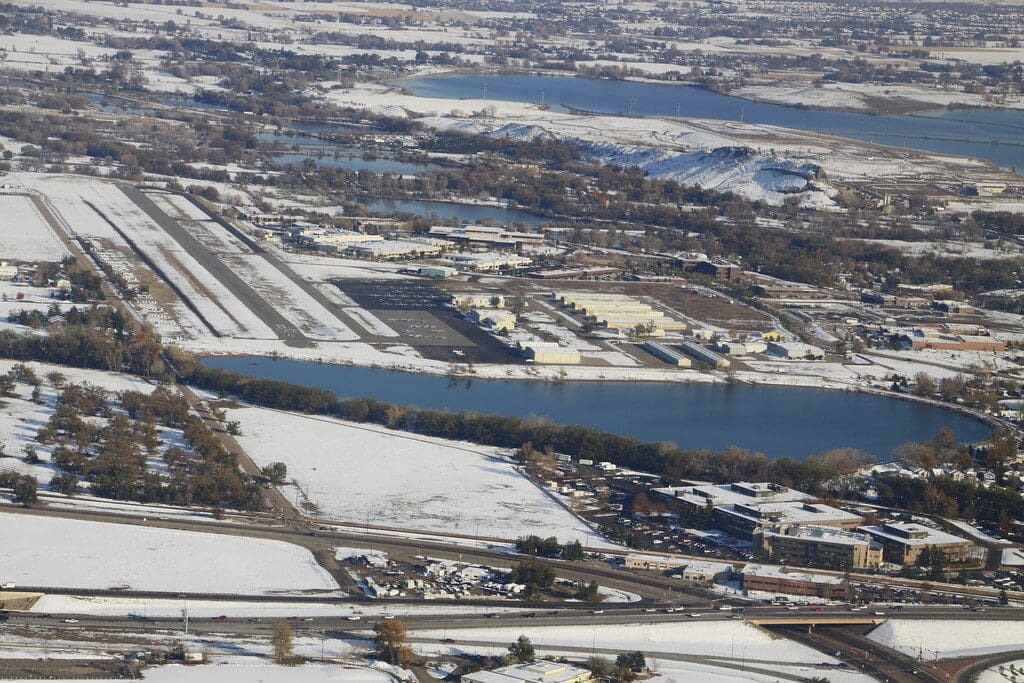
Boulder Municipal Airport
What It’s Like to Land at Boulder Municipal Airport
Located about three miles northeast of downtown Boulder, the airport sits at an elevation of 5,288 feet and serves general aviation only.
There are no commercial airlines here. Instead, you’ll find:
- Private pilots
- Flight training operations
- Gliders and recreational flyers
- Occasional business aircraft
The most visually striking approach is typically into Runway 8, where pilots descend from the plains toward the foothills. As you come in, the Flatirons begin to dominate the view, creating a dramatic and unmistakably Boulder backdrop.
On clear days, the experience is pure Colorado:
- Crisp blue skies
- Golden light hitting the mountains
- Expansive Front Range views
Winds and thermals can add a layer of challenge, especially in the afternoons, but they also make each landing dynamic and engaging.
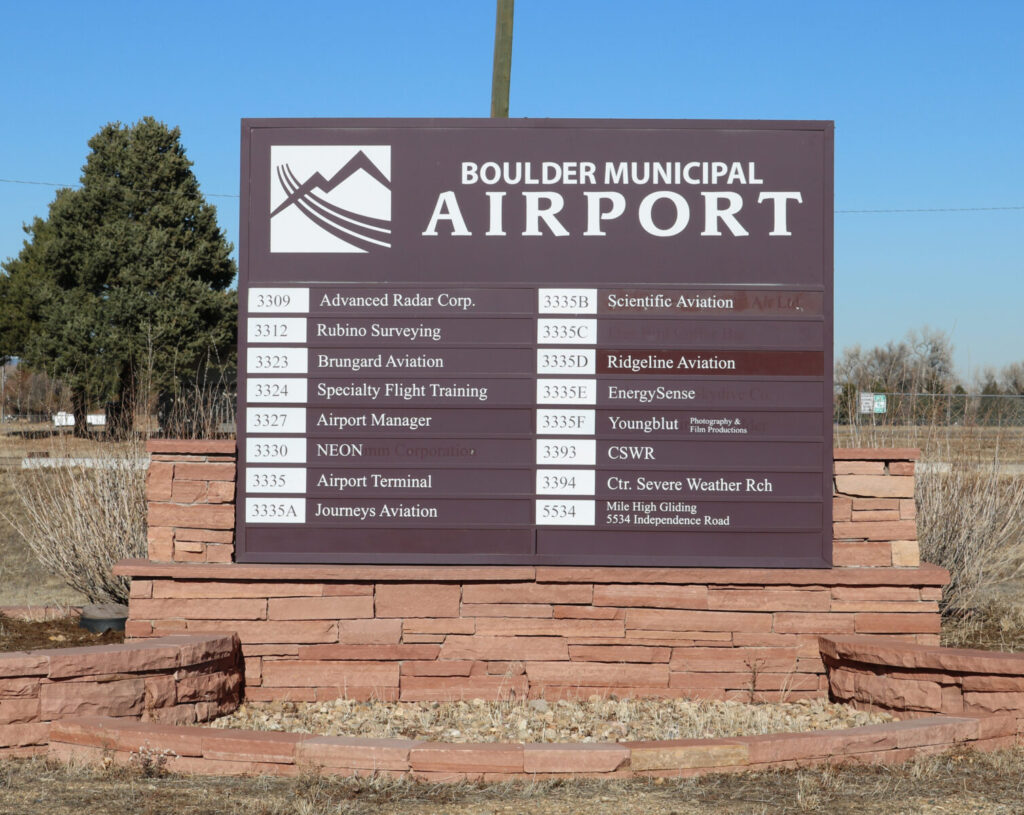
File:Boulder Municipal Airport directory
A Historic Airport That’s Been Part of Boulder for Generations
Boulder Municipal Airport has deep roots in the community.
- Opened in 1928 as Hayden Field
- Became a municipal airport in 1934
- Expanded during the Works Progress Administration era
It holds the distinction of being Colorado’s oldest continuously operating public airport.
Over the decades, it has played important roles beyond recreation, including:
- Supporting pilot training during World War II
- Assisting emergency response during wildfires
- Serving as a base during major flood recovery efforts
This isn’t just an airport—it’s a long-standing piece of Boulder’s infrastructure and history.
The Soaring Society of Boulder: A True Hidden Gem
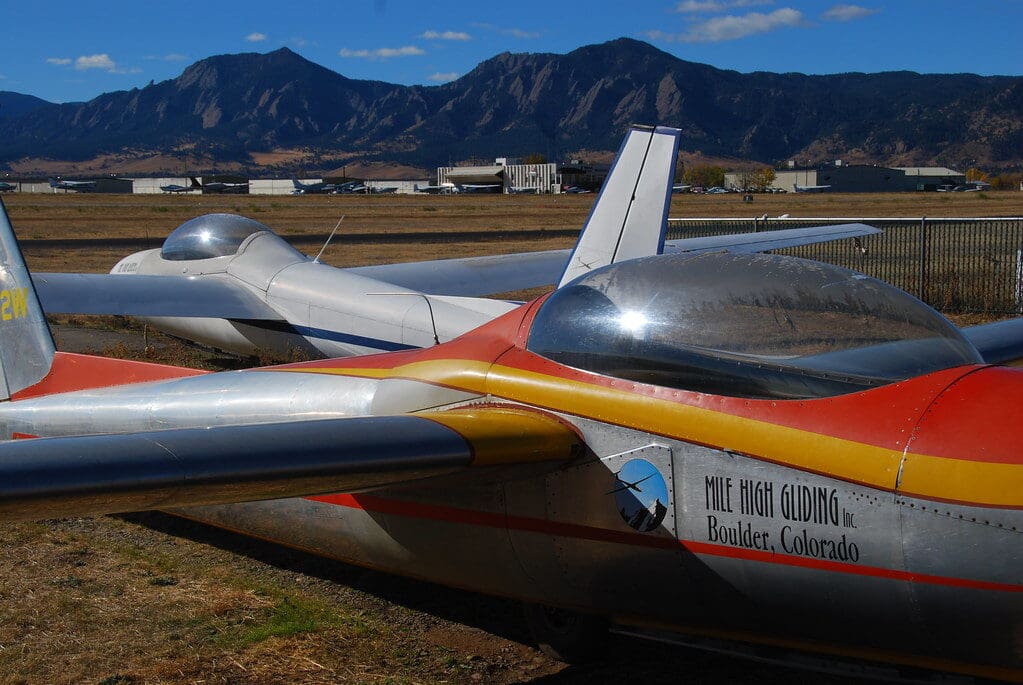
One of the most unique aspects of Boulder Municipal Airport is its vibrant glider community.
The Soaring Society of Boulder, founded in 1959, brings together pilots who specialize in engine-free flight.
Using natural thermals and ridge lift from the nearby foothills, gliders can stay airborne for extended periods, often climbing thousands of feet without a motor.
On weekends, you’ll often see:
- Bright gliders being towed into the sky
- Silent flights circling above the foothills
- Pilots riding invisible currents of air
The group offers training and introductory flights, making it accessible for anyone curious about aviation in its purest form.
Today’s Airport: Small Footprint, Big Impact
Despite its size, Boulder Municipal Airport is an active hub with approximately 50,000 annual operations.
It supports a range of activity, including:
- Flight instruction for new pilots
- Recreational and personal aviation
- Business travel and short-distance flights
The on-site operator, Journeys Aviation, provides essential services such as fueling, maintenance, and pilot support.
The airport’s setting also makes it one of the most visually appealing small airports in the region, with constant views of the Front Range.
Looking Ahead: A Focus on Sustainability and Community
Boulder Municipal Airport is evolving along with the aviation industry.
The city is working toward introducing unleaded aviation fuel, aligning with broader efforts to phase out traditional leaded fuel in the coming years.
At the same time, there is ongoing community conversation about the long-term future of the airport site. Perspectives vary, with some seeing potential for redevelopment and others emphasizing the airport’s role in:
- Emergency services
- Economic activity
- Aviation access and education
For now, the airport remains fully operational and continues to serve Boulder in multiple ways.
How to Experience Boulder Municipal Airport
You don’t need to be a pilot to enjoy what this place offers.
Here are a few easy ways to check it out:
Watch from the Ground
Drive along Airport Road and stop at designated viewing areas to watch takeoffs and landings.
Take a Discovery Flight
Local operators offer introductory flights that let you experience Boulder from the air.
Try a Glider Ride
Experience silent flight with the Soaring Society and see the landscape from a completely different perspective.
Attend Local Events
Occasional open houses and aviation days provide a closer look at the airport and its community.
A Local Experience That Flies Under the Radar
Boulder Municipal Airport may not be widely known outside aviation circles, but it delivers something special.
It’s where:
- The mountains meet the runway
- History meets modern aviation
- And Boulder’s landscape becomes part of the flight itself
For those who take the time to explore it, this is one of the most unique and rewarding local experiences in the area.