Boulder’s Climate Action Moment: How Sustainability Is Shaping the City’s Future
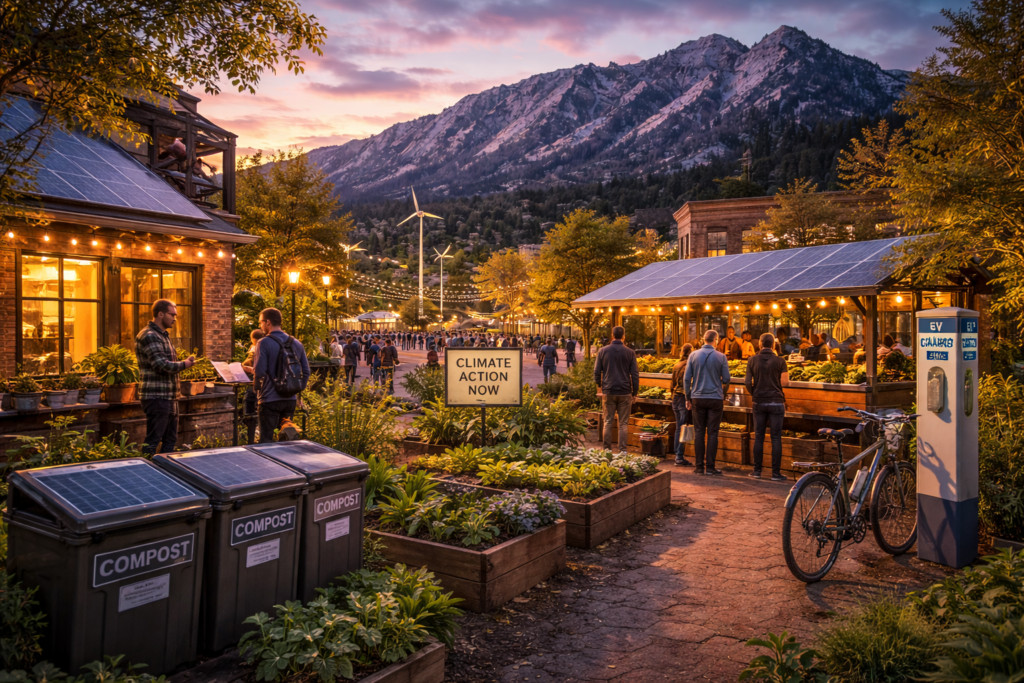
Boulder has never waited for permission to lead. When it comes to climate action and sustainability, the city has quietly built one of the most forward-thinking environmental cultures in the country—one rooted in action, accountability, and everyday choices. As 2026 unfolds, climate resilience is no longer a niche issue here. It’s part of how Boulder plans, builds, and lives.
This moment isn’t driven by trends alone. It’s driven by necessity, values, and a community that understands long-term thinking.
A City Designed Around Climate Reality
Boulder’s approach to sustainability begins with the understanding that climate change is already here. Instead of reacting, the city has focused on preparation—integrating climate considerations into transportation, housing, energy use, and land planning.
Local climate strategies emphasize measurable reductions in emissions, smarter energy systems, and resilience planning that protects both people and natural resources. Programs coordinated through the City of Boulder’s Office of Sustainability have helped guide everything from renewable energy adoption to climate-conscious development standards.
This isn’t theoretical work. It’s embedded into city operations and long-term planning frameworks that influence how Boulder grows.
Green Infrastructure as Everyday Design
One of Boulder’s most effective sustainability tools isn’t flashy—it’s structural. Green infrastructure has become part of the city’s physical fabric, helping manage water, reduce heat, and improve air quality.
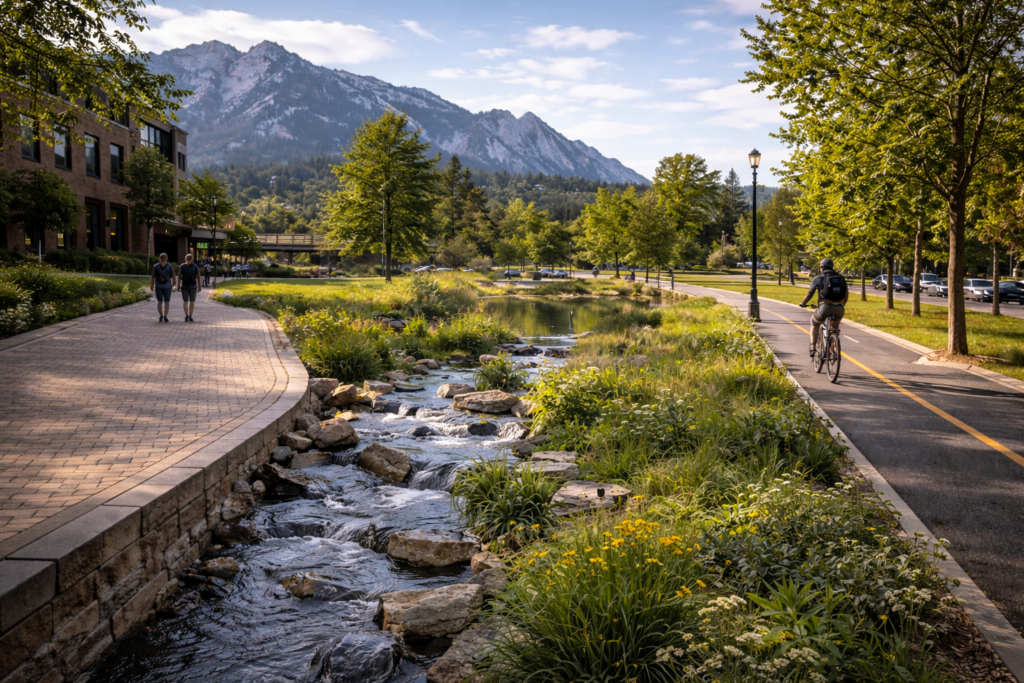
Permeable surfaces, expanded urban tree canopies, restored wetlands, and flood-mitigation projects all play a role in adapting to changing environmental conditions. These investments serve multiple purposes: protecting neighborhoods, enhancing public spaces, and reducing environmental strain.
Rather than treating sustainability as a separate initiative, Boulder weaves it into how streets, parks, and neighborhoods function.
Sustainable Transportation as a Cultural Norm
Transportation remains one of the most visible areas where Boulder’s climate values show up. Walking, biking, and public transit aren’t just alternatives here—they’re core parts of daily life.
Expanded bike infrastructure, multimodal transit planning, and reduced vehicle dependency support both emissions goals and quality of life. The result is a city where sustainable choices are often the easiest ones to make.
This local commitment mirrors national efforts to reduce transportation-related emissions highlighted by organizations like the U.S. Environmental Protection Agency, reinforcing Boulder’s alignment with broader climate science and policy direction.
Community-Led Sustainability in Action
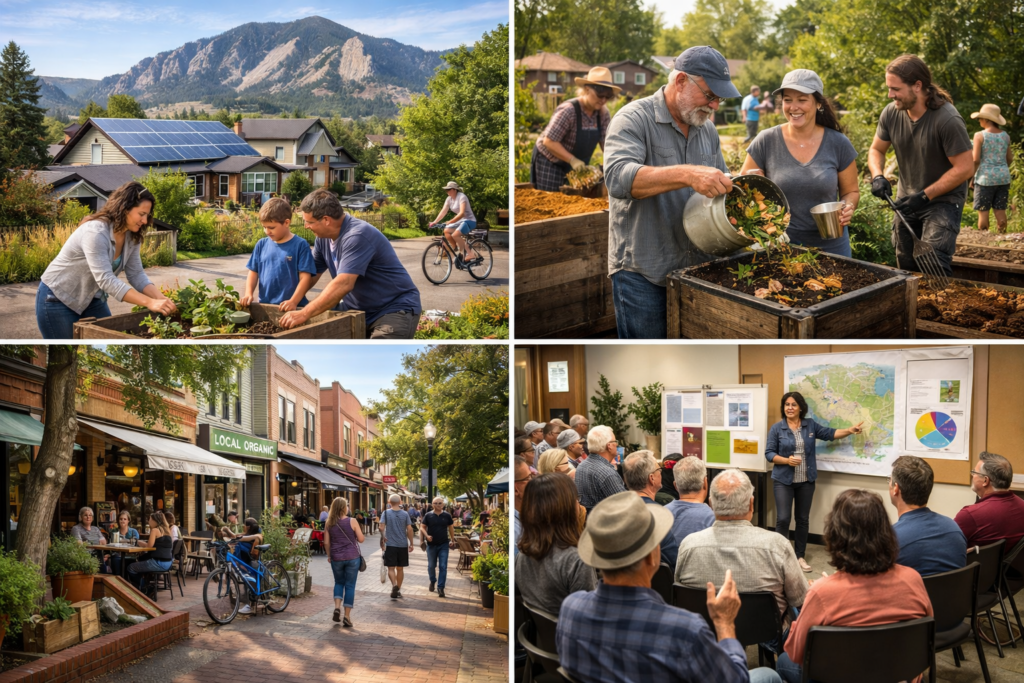
What truly sets Boulder apart is participation. Climate action here isn’t limited to policy documents—it’s visible in neighborhoods, businesses, schools, and households.
Residents engage through energy efficiency programs, composting, solar adoption, and climate education initiatives. Local businesses increasingly factor sustainability into operations, not as marketing, but as responsibility.
Community response matters because lasting climate progress depends on trust and shared ownership. Boulder’s culture of civic engagement makes that possible.
Resilience Beyond the Environment
Climate action in Boulder extends beyond carbon metrics. It’s also about resilience—economic, social, and ecological. Preparing for extreme weather, protecting water resources, and ensuring equitable access to clean infrastructure all factor into how the city measures success.
This holistic approach recognizes that sustainability isn’t just environmental—it’s human. It’s about protecting future generations while improving life today.
Stories highlighting this balance between innovation and livability continue to resonate locally, reflected in ongoing conversations and community narratives shared through platforms like this local Boulder storytelling hub.
Looking Ahead
As 2026 continues, Boulder’s climate work is entering a new phase—less about proving leadership and more about refining it. The focus is shifting toward scalability, accountability, and deeper integration across systems.
Boulder isn’t chasing sustainability headlines. It’s building a city designed to last.
And in a world increasingly defined by climate uncertainty, that quiet consistency may be its most powerful contribution.