James Peak 13,294 Feet: The Snow-Capped Mountain Visible from Boulder
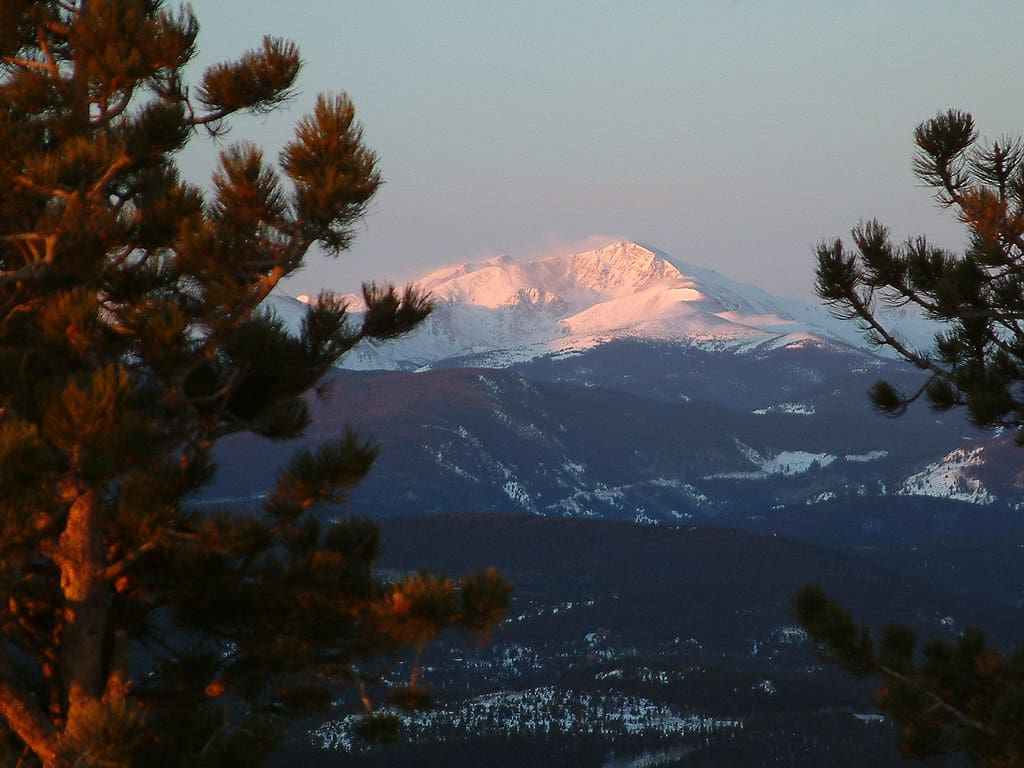
On rare, crystal-clear days in Boulder, the horizon opens up and reveals something special — a distant, snow-capped summit rising high above the Front Range. That peak is James Peak, standing tall at 13,294 feet, quietly watching over Boulder from the Continental Divide.
While Boulder is famous for its close-up mountain drama — the Flatirons, Bear Peak, and Green Mountain — James Peak offers a different kind of beauty. It’s not immediate or towering overhead. Instead, it appears far in the distance, subtle yet powerful, its white summit often visible when the air is clean and the light is just right.
Where James Peak Sits in Relation to Boulder
James Peak is located northwest of Boulder, roughly 25 to 30 miles away, deep in the Front Range near the Continental Divide. It rises within the James Peak Wilderness, a protected expanse known for alpine lakes, tundra, and rugged high-country terrain.
From Boulder, James Peak sits behind the foothills and nearer mountains. That distance is what gives it its magic. On winter days or just after a storm, James Peak often remains snow-covered while Boulder below is dry and sunlit — a striking contrast that makes the peak instantly recognizable in photos.
Can You Really See James Peak from Boulder?
Yes — and this photo proves it.
James Peak can be seen from Boulder under specific conditions:
-
Clear, dry air
-
Low humidity
-
Winter or post-storm visibility
-
Elevated viewpoints around town
It’s most often spotted from higher ground like Flagstaff Mountain or Mount Sanitas, and sometimes from open areas in east Boulder where sightlines stretch far toward the Divide. When visible, James Peak appears as a sharp, triangular summit with a bright snow cap, standing apart from the darker, closer foothills.
Why James Peak Often Looks Snowy
At over 13,000 feet, James Peak sits in true alpine territory. Its elevation means:
-
Cooler temperatures year-round
-
Longer-lasting snowpack
-
Earlier winter conditions than Boulder below
That’s why it’s common to see James Peak glowing white while Boulder enjoys blue skies and mild weather — a visual reminder of how dramatically elevation shapes Colorado’s landscape.
Fun Facts About James Peak
-
Elevation: 13,294 feet
-
Range: Front Range of the Rocky Mountains
-
Wilderness Area: James Peak Wilderness
-
Name Origin: Named after Edwin James, an early explorer and botanist
-
Summit Terrain: Alpine tundra and rocky ridgelines
-
Visibility: Best seen from Boulder in winter and fall
James Peak is also popular with experienced hikers and backcountry travelers, offering expansive views across the Continental Divide and deep into Colorado’s high country.
A Distant Landmark That Connects Boulder to the Divide
What makes James Peak so compelling from Boulder isn’t just its height — it’s the connection it represents. It links the city to the larger spine of the Rockies, reminding residents and visitors that Boulder sits at the gateway between plains and peaks, civilization and wilderness.
James Peak stands calm and commanding, snow-capped against a deep blue sky. It’s a reminder that even from the heart of Boulder, the high alpine world is never far away — sometimes all it takes is a clear day and the right perspective.