
Mallory Cave Boulder: The Hidden Bat Cave Closed for Conservation
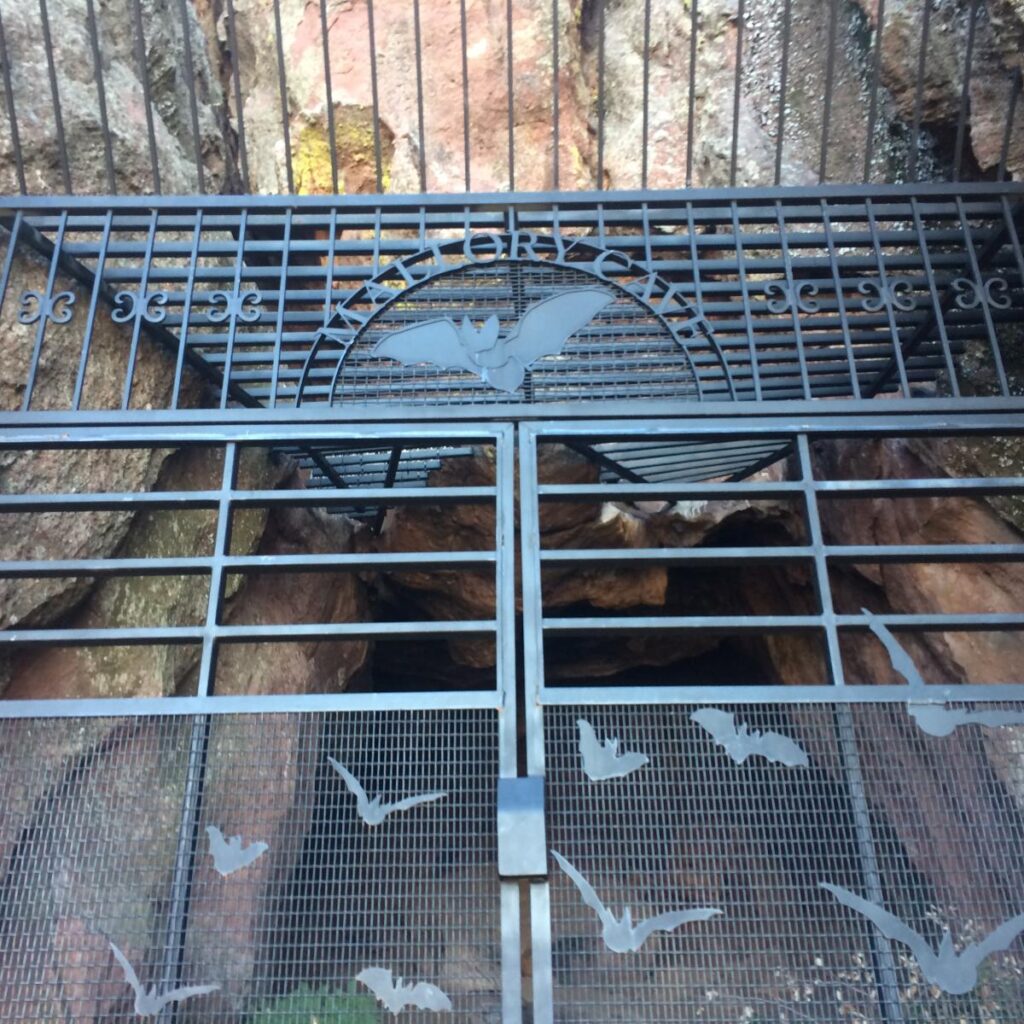
Tucked high into the limestone cliffs of Flagstaff Mountain lies one of Boulder’s most intriguing natural landmarks: Mallory Cave, commonly known as Boulder’s Bat Cave. Though largely unknown to many residents and visitors, the cave holds an important place in Boulder’s natural history and has played a meaningful role in scientific research connected to the University of Colorado Boulder. Today, Mallory Cave stands as a powerful example of Boulder’s commitment to conservation, science, and responsible land stewardship.
Mallory Cave formed naturally over millions of years as water slowly dissolved and shaped the limestone along the mountain’s face. This geological process created a sheltered cavern with relatively stable internal temperatures and humidity levels—conditions that are especially important for wildlife. Long before the cave became widely known, it quietly served as habitat for several bat species native to Colorado.
Researchers eventually identified Mallory Cave as a critical site for bats, including Townsend’s big-eared bats, a species known for its sensitivity to disturbance. These bats depend on dark, quiet, and thermally stable environments for both hibernation and raising their young. Even brief human intrusion can disrupt these delicate conditions, causing bats to awaken during hibernation or abandon maternity roosts altogether.
Because of these risks, Mallory Cave is permanently closed to the public and should not be entered. The closure is intentional, clearly posted, and rooted in science. It is not a temporary restriction and not a matter of safety for visitors; rather, it is a conservation measure designed to protect vulnerable bat populations whose survival depends on undisturbed habitat.
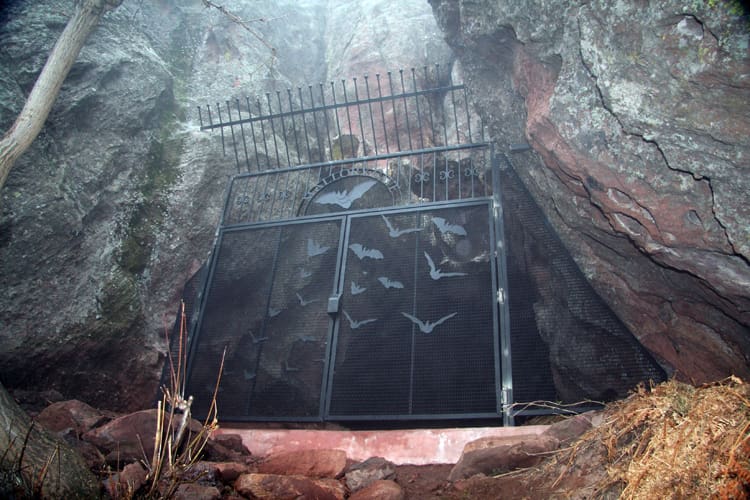
The University of Colorado Boulder has played an important role in understanding and documenting the ecological value of Mallory Cave. Over the years, CU researchers and students have conducted biological surveys and wildlife studies in Boulder County that helped establish the cave’s importance as a bat hibernation and maternity site. Findings from this research contributed to broader conservation efforts and reinforced the need for long-term protection of the cave.
In this way, Mallory Cave represents a real-world extension of academic research into practical environmental decision-making. It illustrates how scientific study can directly influence land management policies and how universities like CU Boulder contribute to preserving the landscapes that surround them.
Colorado is home to 18 species of bats, all of which play a vital role in maintaining ecological balance. Bats are natural insect controllers, capable of consuming thousands of insects in a single night. Despite their importance, bat populations across North America have declined due to habitat loss, disease, and human disturbance. Protecting sites like Mallory Cave is one of the most effective ways to support their long-term survival.
While the cave itself remains closed, the surrounding Flagstaff Mountain area continues to offer legal access to trails and viewpoints that showcase Boulder’s dramatic geology and foothill terrain. These areas allow people to appreciate the broader landscape without compromising sensitive wildlife habitat. Mallory Cave, viewed in this context, becomes less about exploration and more about understanding why some places are best preserved rather than visited.
Boulder has long embraced an ethic of environmental responsibility, often choosing protection over access when science supports that decision. Mallory Cave is a clear reflection of that value system. It is a reminder that conservation sometimes means restraint, and that protecting the unseen can be just as important as celebrating the visible.
Mallory Cave may be closed, but its significance remains open and enduring. It stands as a quiet symbol of Boulder’s natural heritage, the role of scientific research in conservation, and the importance of respecting landscapes that serve purposes beyond recreation. In protecting Mallory Cave, Boulder protects not just a cave, but a living ecosystem—and a legacy of thoughtful stewardship for generations to come.