
Next To Boulder, The Magic of the Westminster Butterfly Pavilion: Big Wings, Brave Kids
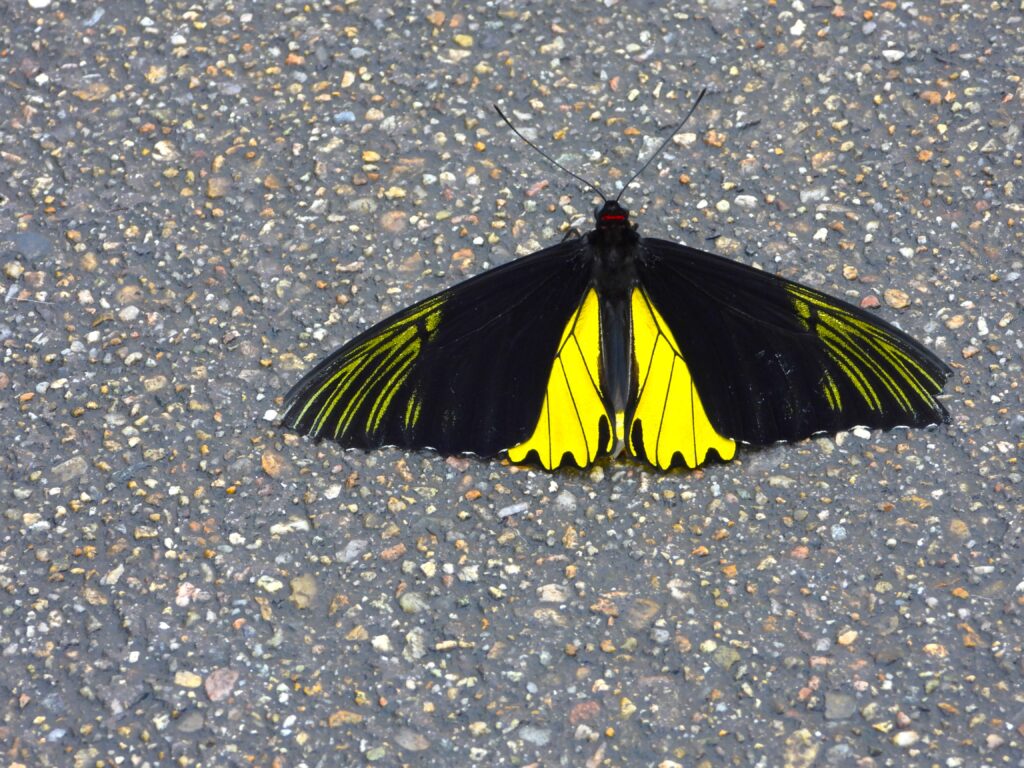
Male Common Birdwing (Troides helena) puts on a great show! photo Lenny “Lensworth” Frieling
Lensworth here next to Boulder, and what better way to spend a Colorado day than wandering through the warm, living wonderland that is the Westminster Butterfly Pavilion? If there is one place where curiosity flutters louder than wings, it’s here – especially when the Pavilion is packed with kids. Their reactions are half the show, and sometimes the best part.
Walk in the front doors and you can feel it instantly: the mix of humidity, excitement, and the quiet hum of thousands of delicate wings. Kids freeze mid-stride as a blue morpho coasts by, doing that slow, dramatic flap that looks like it belongs in a Disney special. Some children hold perfectly still, hoping a butterfly might land on a sleeve or, even more magical, on a fingertip. Others bolt from one patch of flowers to the next, whisper-shouting to parents about the one that almost landed on me.

The Monarch of Migratory Fame. Photo Lenny “Lensworth” Frieling
The monarch are famous for their migration of thousands of miles spanning many generations each season for the entire migration.

Postman butterfly, which can refer to species such as Heliconius melpomene or Heliconius erato. Photo Lenny “Lensworth” Frieling
These butterflies are native to tropical and subtropical regions of the New World, ranging from Mexico to northern South America.
They are known for their bright warning coloration, which signals to predators that they are unpalatable.The species H. melpomene and H. erato exhibit Müllerian mimicry, where both distasteful species have similar markings to reinforce the warning to common predators. Adults of this genus are notable for foraging for pollen in addition to nectar, a behavior that is rare among butterflies. Their larvae feed exclusively on passion flower vines (Passiflora).

The Postman Butterfly imitates a distasteful variety as a defense mechanism. Photo Lenny Lensworth Frieling
Every once in a while the Butterfly Pavilion surprises even seasoned visitors. Instead of Rosie greeting the kids today, a giant beetle took center stage. Kids lined up wide-eyed, half fascinated and half unsure, to feel its surprisingly gentle weight in their palms. The reactions were priceless. A few children shrieked, a few beamed with pride, and one little guy announced loudly that he wanted a beetle for Christmas. Moments like that remind us that wonder comes in many forms, sometimes six-legged and gleaming.
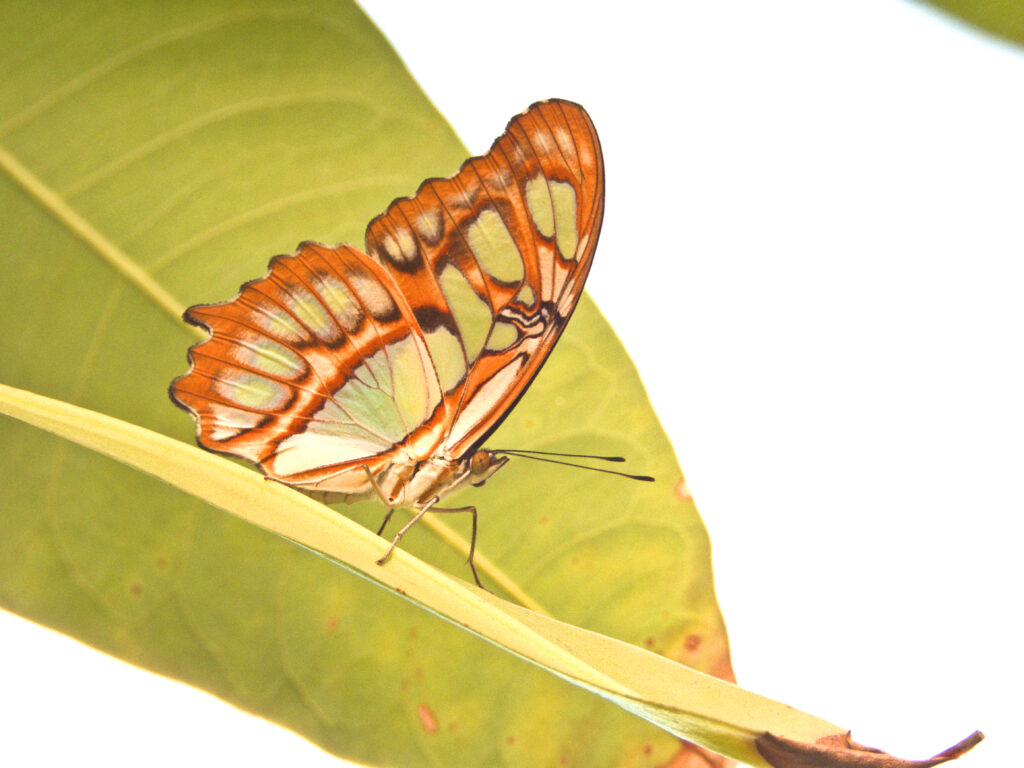
This species is a brush-footed butterfly (family Nymphalidae) found throughout Central and northern South America, and as far north as southern Florida and Texas. Photo Lenny Lensworth Frieling
The wings are dark brown to black with large, translucent whitish-green or yellow-green patches. The underside, as shown in the image, bears the same pattern but is light brown and olive green. Adults primarily feed on rotting fruit, sap, and dung, though they will occasionally consume flower nectar.These butterflies are native to tropical and subtropical regions of the New World, ranging from Mexico to northern South America. They are known for their bright warning coloration, which signals to predators that they are unpalatable. The species H. melpomene and H. erato exhibit Müllerian mimicry, where both distasteful species have similar markings to reinforce the warning to common predators.Adults of this genus are notable for foraging for pollen in addition to nectar, a behavior that is rare among butterflies. Their larvae feed exclusively on passion flower vines (Passiflora).

The butterfly in the image is a Tiger-striped Longwing butterfly (Heliconius ismenius). Photo Lenny “Lensworth” Frieling
It is also known as the Ismenius tiger or tiger heliconian. It is found in tropical and subtropical regions of the New World, from Central America to northern South America. The butterfly has black wings with striking burnt orange or yellow stripes and white spots on the forewing tips. Adults feed on pollen from specific plants, while the caterpillars feed on passion vines (Passifloraceae). This species is a classic example of Müllerian mimicry, where multiple unpalatable species share the same warning coloration to deter predators
There is something profoundly uplifting about watching the next generation interact with nature this way. No screens, no outside noise, just wonder, brightly colored and airborne. Parents get caught up too. You can’t stand in the conservatory for more than sixty seconds without cracking a grin. Butterflies have that effect; kids amplify it.
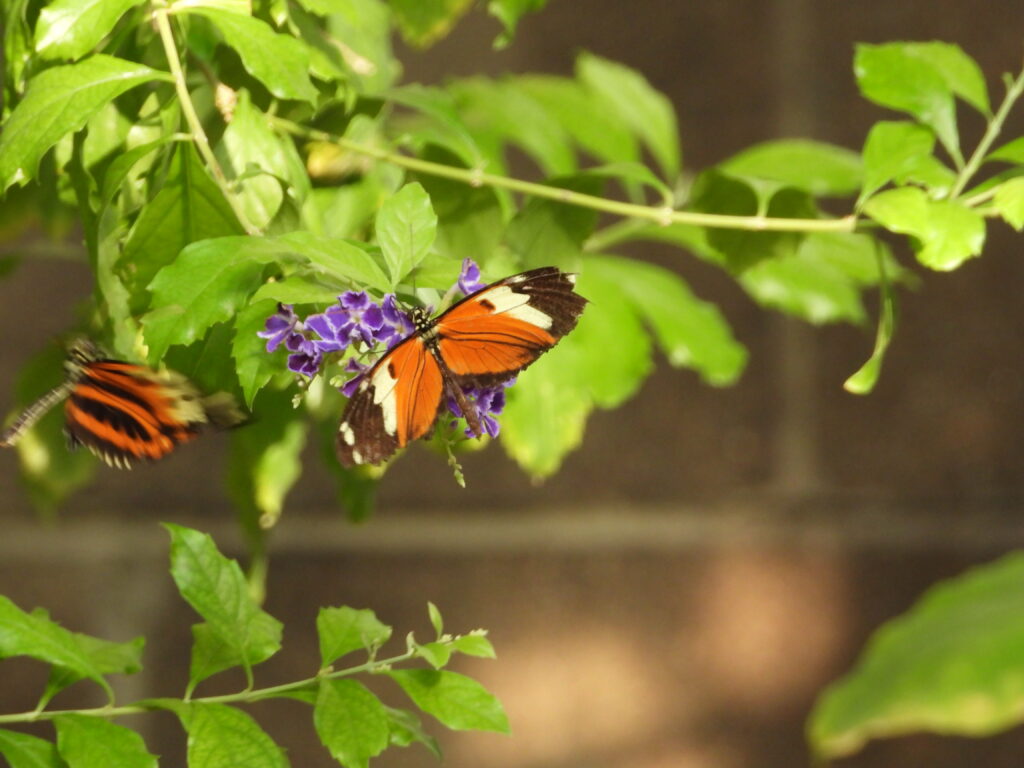
Another variation of “long wings.” photo Lenny “Lensworth” Frieling
And then, of course, there’s the classic rite of passage. Whether it is Rosie the Tarantula or today’s giant beetle, the bravery test is the same. Every kid walks in confident they will be the tough one. Half freeze when their turn arrives, and the other half walk away looking like they just summited Everest. These tiny moments of courage become lifelong stories.
The learning is subtle but powerful. A child who watches a butterfly emerge from a chrysalis never looks at nature the same way again. A kid who gently holds a beetle or tarantula carries that spark of courage home. And a family that wanders through the Pavilion together leaves with something shared, wings, wonder, and warmth that lasts long after the humidity fades from their glasses.
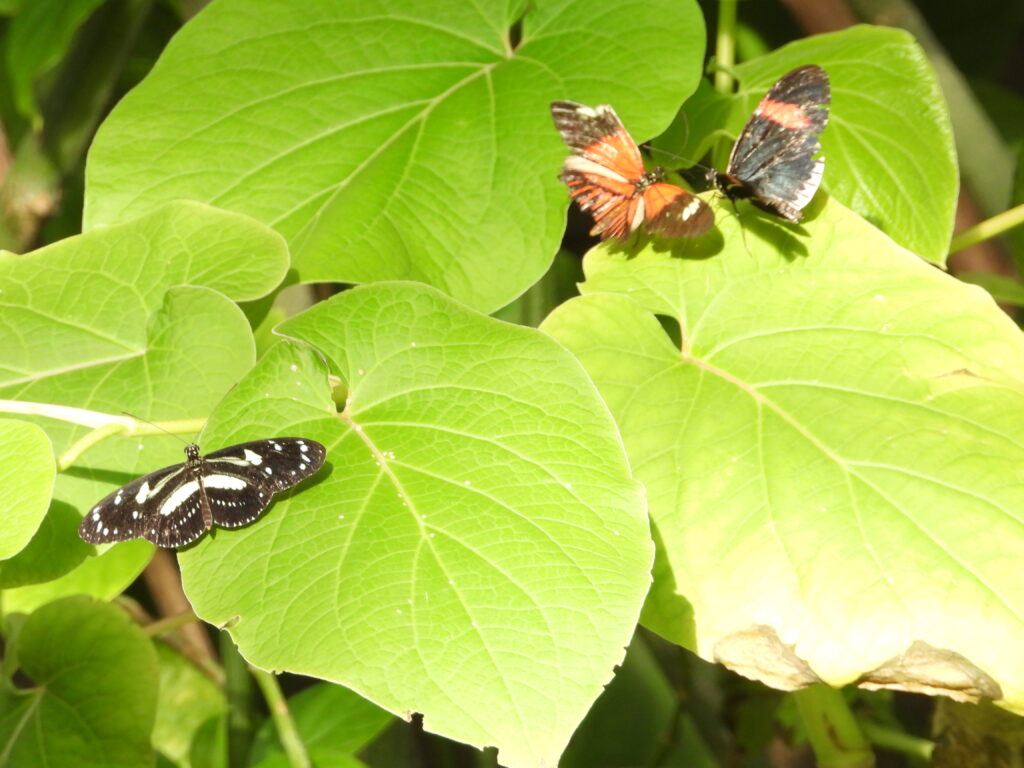
A variety of butterflies. Photo Lenny “Lensworth” Frieling
Consider “Lensworth,” Lenny’s first book of photographs, as a holiday gift. It is great on a coffee table!
Shared Knowledge Is Power!
Lenny “Lensworth” Frieling