
Red Flag Warning in Boulder, Colorado: What It Really Means on Windy Days

A Red Flag Warning has been issued for Boulder, Colorado, and for many residents the alert feels confusing—especially when the sky is clear and there is no smoke in the air. That confusion is understandable. A Red Flag Warning is not about what you can see. It is about what could happen very quickly if a fire starts under the current conditions.
In Boulder, Red Flag Warnings are most often driven by wind, not flames.
What a Red Flag Warning Actually Means
A Red Flag Warning is a fire-weather alert issued when weather and environmental conditions align to create a high risk for rapid wildfire spread. These warnings are issued when forecasters are confident that a combination of strong winds, very low humidity, and dry vegetation is either occurring or imminent.
According to the National Weather Service’s official fire-weather definitions, Red Flag Warnings are used specifically to highlight periods when fires can start easily and spread rapidly before suppression efforts can be effective, especially in areas with dry fuels and complex terrain like the Front Range (National Weather Service fire weather definitions).
The key point is this: a Red Flag Warning is about fire behavior potential, not active fires.
Why Wind Is the Primary Concern in Boulder
On many Red Flag days in Boulder, wind is the dominant risk factor. Strong, sustained winds increase fire danger in several ways at once. Wind supplies oxygen to flames, dries vegetation even further, and carries embers far beyond the initial ignition point. Those embers can ignite new fires well ahead of the main fire, sometimes crossing roads, trails, and open space buffers in minutes.
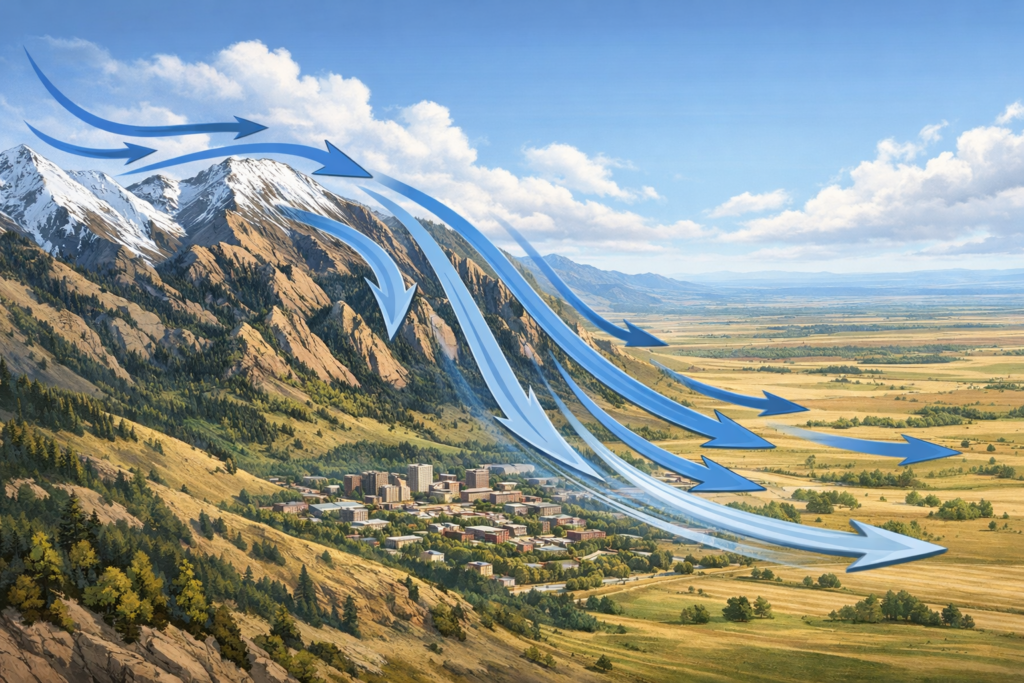
Boulder’s location at the edge of the Rocky Mountains creates a natural wind accelerator, where air flows over the peaks, descends rapidly through the foothills, and intensifies as it moves toward the plains.
Boulder’s location along the foothills makes it especially susceptible to wind-driven fire behavior. Downslope winds and rapid pressure changes can intensify suddenly, creating dangerous conditions even when temperatures are cool and skies are blue.
This is why Boulder often sees Red Flag Warnings during extreme wind events rather than during visible heat waves.
Why There Can Be No Smoke and Still a Red Flag Warning
One of the most common misconceptions is that Red Flag Warnings are issued because a fire is already burning. That is not true. These warnings are designed to be preventative, not reactive.
The warning exists because once a wind-driven fire ignites, it can become extremely difficult to control. Fire agencies rely on Red Flag Warnings to reduce ignition sources during the narrow window when conditions are most dangerous.
Clear skies do not reduce wildfire risk when humidity is low and winds are strong.
Why Red Flag Warnings Happen Outside Summer
Another misunderstanding is seasonal. Many people associate wildfire danger with summer heat, but Red Flag Warnings are driven by humidity, wind, and fuel dryness—not the calendar.
In Boulder, grasses and surface fuels can remain dry through fall, winter, and early spring. When low humidity combines with strong winds, fire danger can spike regardless of temperature. This is why Boulder can experience Red Flag Warnings during months that do not feel like traditional wildfire season.
What a Red Flag Warning Does Not Mean
A Red Flag Warning does not mean evacuations are coming. It does not mean smoke is nearby. It does not mean a fire will start.
What it means is that if an ignition occurs, conditions are favorable for rapid and dangerous fire spread. That distinction matters, because it shifts the focus from fear to prevention.
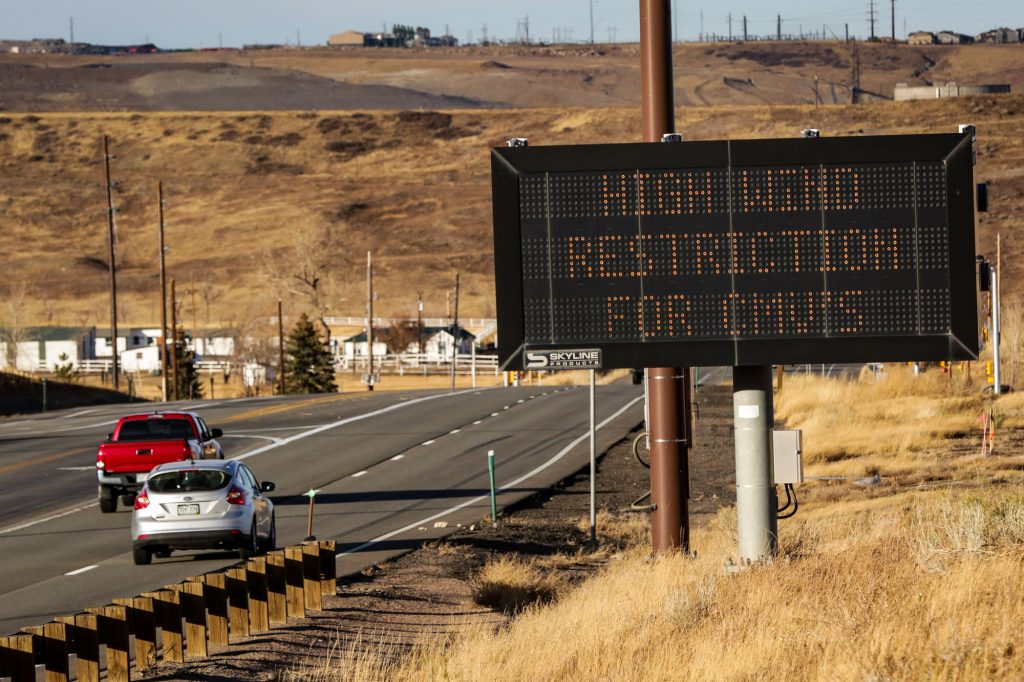
A sign warns motorists of high winds and hazardous travel on Hwy. 93 near Rocky Flats on Wednesday, Dec. 15, 2021.
Why These Warnings Matter Locally
Boulder County has seen firsthand how quickly wind-driven fires can escalate when conditions align. During Red Flag events, firefighting options can be limited, making prevention the most effective defense.
That is why Boulder County emphasizes temporary behavior changes during these alerts, including restrictions on burning and activities that could create sparks during high-risk periods (Boulder County fire safety guidance).
Local coverage that explains how wind and fire risk intersect helps residents understand why these warnings matter even on clear days, especially during extreme wind events (local Boulder reporting).
What Residents Should Do on Red Flag Days
During a Red Flag Warning, residents should avoid activities that generate sparks or heat in dry areas. This includes outdoor burning, welding, or operating certain equipment. Vehicles should not be parked on dry grass, trailer chains should be secured, and people should remain aware of changing wind conditions.
Small decisions during Red Flag conditions can prevent large consequences.
The Bottom Line
A Red Flag Warning in Boulder, Colorado is a precise, science-based alert about conditions, not visible danger. It often reflects wind-driven risk rather than smoke or flames.
Understanding what these warnings actually mean allows Boulder residents to respond with awareness instead of confusion—and helps protect both people and the landscape that defines the community.