
The Arapaho Glacier’s Legacy: From Boulder’s Water Source to Climate Wake-Up Call
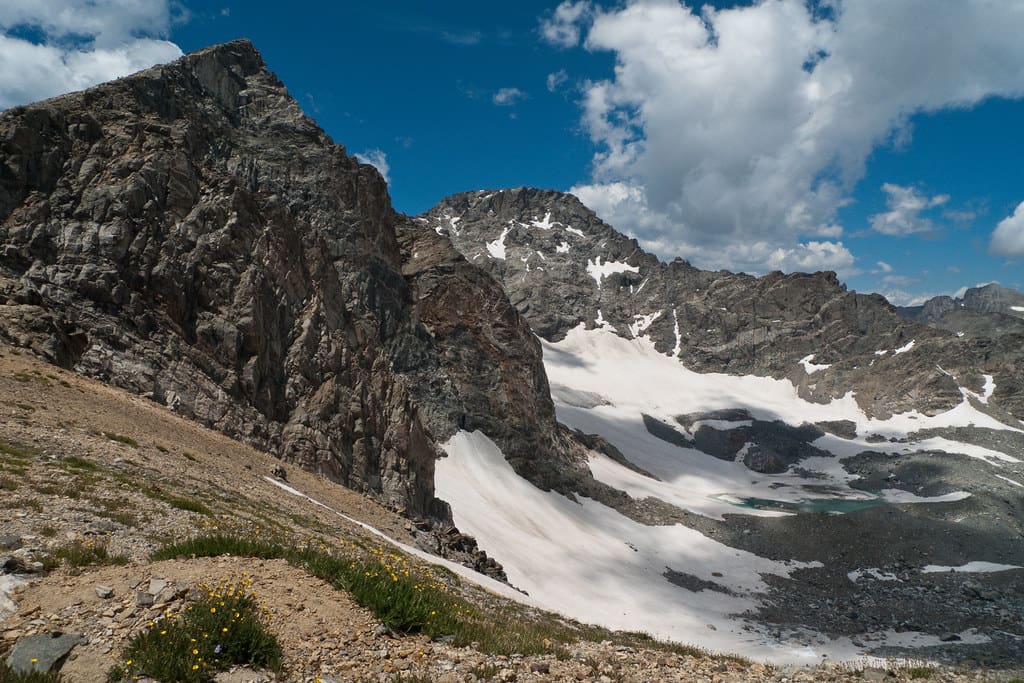
Arapahoe Glacier Overlook
High in the rugged alpine terrain west of Boulder, the Arapaho Glacier stands as a quiet witness to both Colorado’s past and its changing future. Long before it became a symbol of climate change, this glacier played a vital role in shaping Boulder’s survival, growth, and identity.
Named after the Arapaho people, who lived, hunted, and traveled through these mountains for centuries, the glacier represents far more than frozen ice. It is a reminder of how deeply Boulder’s story is tied to water, mountains, and the delicate balance of the natural world.
A Lifeline for a Growing Frontier Town
In the late 1800s, Boulder emerged as a critical supply hub for gold and silver miners pushing into the Front Range. Water was everything—essential for drinking, sanitation, agriculture, and ore processing. Seasonal creeks were unreliable, and early settlers quickly realized that high-elevation water sources offered a more dependable solution.
By the 1870s, Boulder began building reservoirs to capture consistent alpine runoff. That effort deepened in the early 20th century when the city secured land in the Silver Lake Watershed, fed by the Arapaho Glacier. In 1904, Boulder officially established control over the watershed, and by 1929—following a federal land grant—the city completed the purchase of the glacier and surrounding terrain.
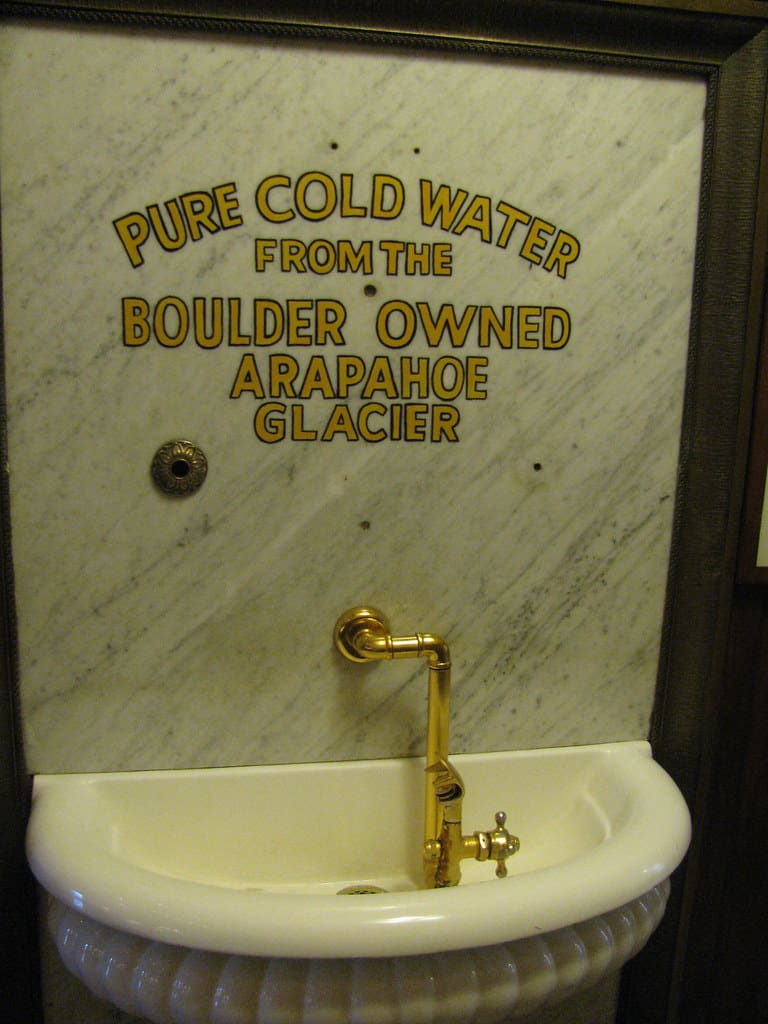
A $200,000 steel pipeline soon followed, delivering pristine meltwater from the high country to Boulder’s reservoirs, including Chautauqua and Sunshine. For decades, drinking fountains around town proudly displayed signs reading: “Pure Cold Water from the Boulder-Owned Arapahoe Glacier.” One of those fountains still survives inside the historic Hotel Boulderado, a tangible link to the city’s water heritage.
From Essential Resource to Historic Symbol
Today, the glacier supplies only a tiny fraction of Boulder’s overall water needs. Modern systems rely primarily on snowmelt, reservoirs, and diversified sources. Yet the Arapaho Glacier’s importance never faded—it simply shifted.
What was once a critical utility has become a powerful symbol.
Covering roughly 0.17 square kilometers—about the size of 32 football fields—the Arapaho Glacier is now considered Colorado’s largest remaining glacier, though scientists technically classify it as a perennial snowfield. Its size, however, has changed dramatically.
Researchers from the University of Colorado Boulder have documented its rapid retreat. According to senior scientist Ted Scambos, comparisons between early 1900s photographs and modern surveys reveal that the glacier has lost roughly half its volume in just the past two decades. In some areas, thinning exceeded 60 feet between 2005 and 2021.
The primary culprit is warming summers. Seasonal snow now melts earlier and more completely, exposing bare ice to direct sunlight. Without consistent replenishment, the glacier simply cannot recover.
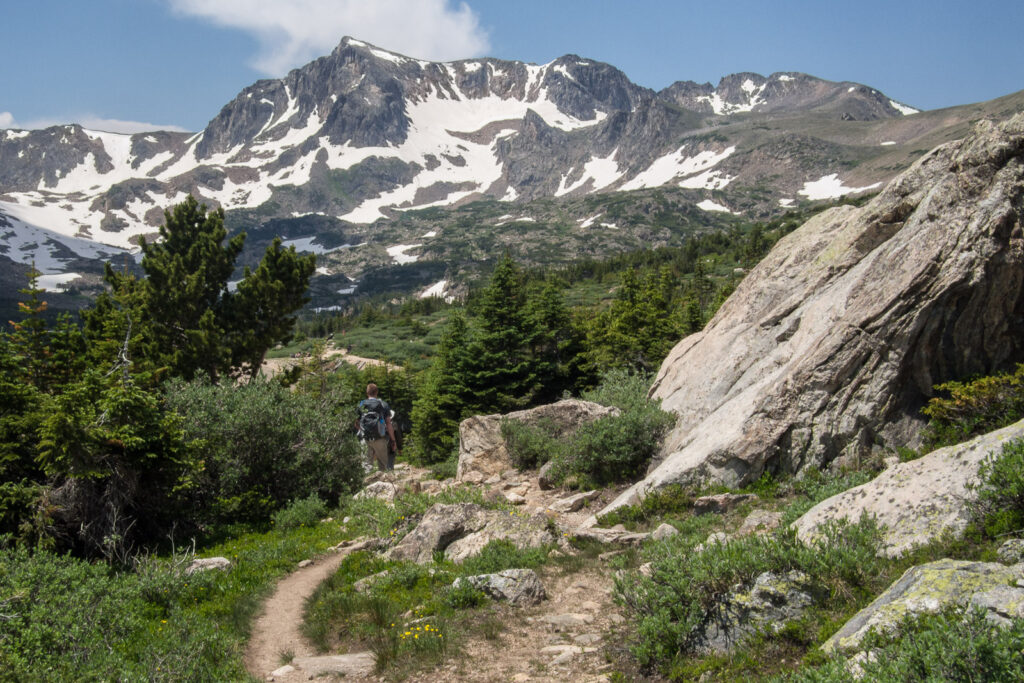
Arapaho Glacier Hike
A Window into Colorado’s Water Future
The Arapaho Glacier’s decline mirrors broader trends across Colorado’s high country. As snowpack diminishes and melt cycles accelerate, water systems face increasing strain.
This reality is already visible. Much of Colorado is experiencing severe snow drought, with statewide snowpack far below historical averages. Reduced mountain snow means less sustained runoff for rivers, reservoirs, and groundwater—raising concerns for municipalities, agriculture, and ecosystems alike.
While the glacier’s direct contribution to Boulder’s water supply is now minimal, its disappearance carries an outsized message. It offers a clear, visible indicator of how climate change is reshaping the very systems that once made life in the Front Range possible.
For deeper context on glacier monitoring and alpine climate research, the University of Colorado Boulder maintains extensive long-term studies that track these changes across the Rockies. National drought conditions and snowpack data are also closely monitored through federal climate and water forecasting programs.
Honoring the Past, Acting for the Future
The Arapaho Glacier helped build Boulder—fueling its growth during the mining era and anchoring its early water security. Its retreat is sobering, but it also offers clarity.
Climate change is no longer abstract or distant. It is etched into the mountains above town.
Honoring the glacier’s legacy means more than remembering history. It means making thoughtful choices—supporting water conservation, reducing emissions, and protecting the landscapes that define Colorado’s identity.
The Arapaho Glacier has shaped Boulder for over a century. Whether its story continues as a warning—or a turning point—depends on what we choose to do next.