What Surprises First-Time Visitors About Boulder
Most people arrive in Boulder with a clear picture already in mind. The Flatirons in the background, Pearl Street in the foreground, and the sense that everything revolves around hiking boots and smoothie bowls.
That picture is not wrong, but it misses what actually stays with you. The real surprises appear between destinations, in moments that feel unplanned and oddly personal. Boulder reveals itself quietly, and that contrast often catches first-time visitors off guard.
Boulder Feels Smaller — And More Intimate — Than Expected
Despite its reputation and national visibility, Boulder rarely feels like a city that tries to impress. Streets feel navigable rather than sprawling. Neighborhoods connect without abrupt transitions. Cafés, trails, and gathering spaces sit close enough that movement feels natural instead of strategic.
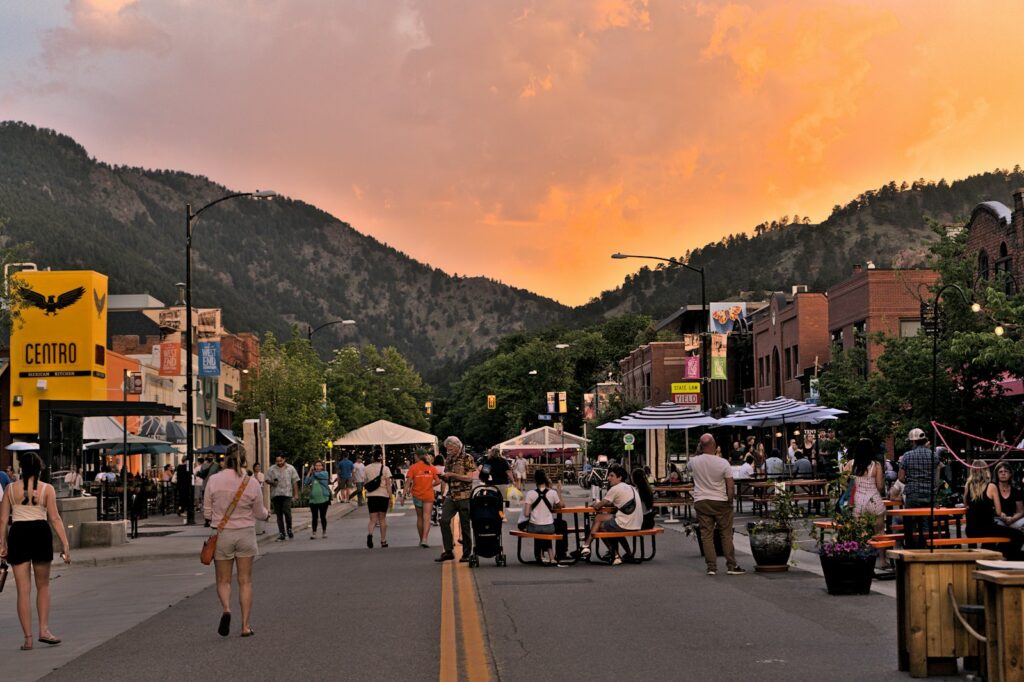
Photo by Deepak Adhikari on Unsplash
That sense of scale changes how the city is experienced. Time slows when everything feels within reach. There is less pressure to optimize a schedule or rush toward highlights. Conversations stretch a little longer. Familiar faces appear sooner than expected. Boulder feels lived-in rather than staged, which surprises visitors who arrive expecting a polished destination.
Boulder’s Culture Feels Playful and Intentional
Boulder’s creativity rarely announces itself. It shows up in details that reward attention rather than demand it. The impression forms through small discoveries, not carefully staged experiences.
Handwritten love notes tucked into the walls at Piece, Love & Chocolate turn a casual stop into something personal. A miniature Stonehenge replica standing quietly in a residential area sparks surprise without explanation. These moments often appear while wandering without a plan, when a walk through the city slows into a pause.
That rhythm extends beyond the streets. After time spent outside, some people settle into quiet breaks, sometimes offline, sometimes online. In those moments, the appeal often comes from spaces that feel simple and unforced, much like high RTP casinos, which tend to attract attention not through noise but through clarity and balance. Boulder follows that same principle. Nothing pushes itself forward. Everything feels intentional, yet easy to step into.
The Pace Is Calm, Even When People Are Active
Boulder’s population moves constantly, but the atmosphere remains relaxed. Physical activity doesn’t translate into urgency or competition. That contrast often stands out to first-time visitors.
Several details reinforce that feeling:
- Fitness blends into daily life rather than dominating it.
- Public spaces allow pauses without pressure.
- Conversations rarely feel rushed, even in busy areas.
- Personal routines matter more than performance.
That balance creates an environment where movement supports calm instead of replacing it. The result feels unusual in a culture that often links activity with intensity.
Nature Isn’t a Destination — It’s Part of the City
Many places advertise outdoor access. Boulder integrates it. Trailheads appear minutes from downtown. Open space frames neighborhoods instead of surrounding them at a distance. Nature doesn’t require preparation or commitment. It shows up in daily routines.
Unexpected geological features deepen that impression. Sandstone formations near The Peoples’ Crossing resemble a smaller version of Red Rocks, yet they sit quietly beside everyday paths. These aren’t landmarks people travel hours to reach. They exist as part of the city’s rhythm, which reshapes expectations about what “outdoor living” can mean.
Trails Often Hold Unexpected Stories, Not Just Views
Scenic paths draw people in, but stories keep them there. Boulder’s trails offer more than visual reward, and that depth surprises visitors who expect simple recreation.
Mallory Cave stands out as an example. The trail leads to a protected bat habitat with restricted access, which changes how the area is experienced. The path becomes a lesson in restraint rather than consumption. Nature isn’t treated as a backdrop; it carries responsibility and context.
These moments reshape how visitors see Boulder’s outdoor culture. Respect often outweighs convenience, and care for the environment becomes part of the experience itself.
Even Short Drives Reveal a Different Side of Boulder
Leaving the city doesn’t require distance. A brief drive introduces farmland, open skies, and roads that feel far removed from urban routines. The Boulder County Farm Trail surprises many first-time visitors with its honor-system farm stands and quiet agricultural stretches.
That contrast arrives quickly. Urban life fades into rural simplicity within minutes. The shift reinforces Boulder’s layered identity. City, nature, and farmland coexist without clear borders. Few places allow that kind of transition so effortlessly.

Why These Small Surprises Define Boulder
Boulder rarely relies on singular moments to make an impression. Its impact builds gradually through details that feel discovered rather than delivered. A hidden note, an unexpected formation, a trail with a story, or a drive that leads somewhere quieter than planned — these experiences linger.
First-time visitors often leave with fewer photos than expected, yet stronger memories. Boulder doesn’t ask for attention; it rewards it. That quiet confidence, more than any attraction, defines the city and explains why its surprises stay with you long after the visit ends.