
Why Prairie Dogs Are the Most Misunderstood Wildlife in Boulder, Colorado
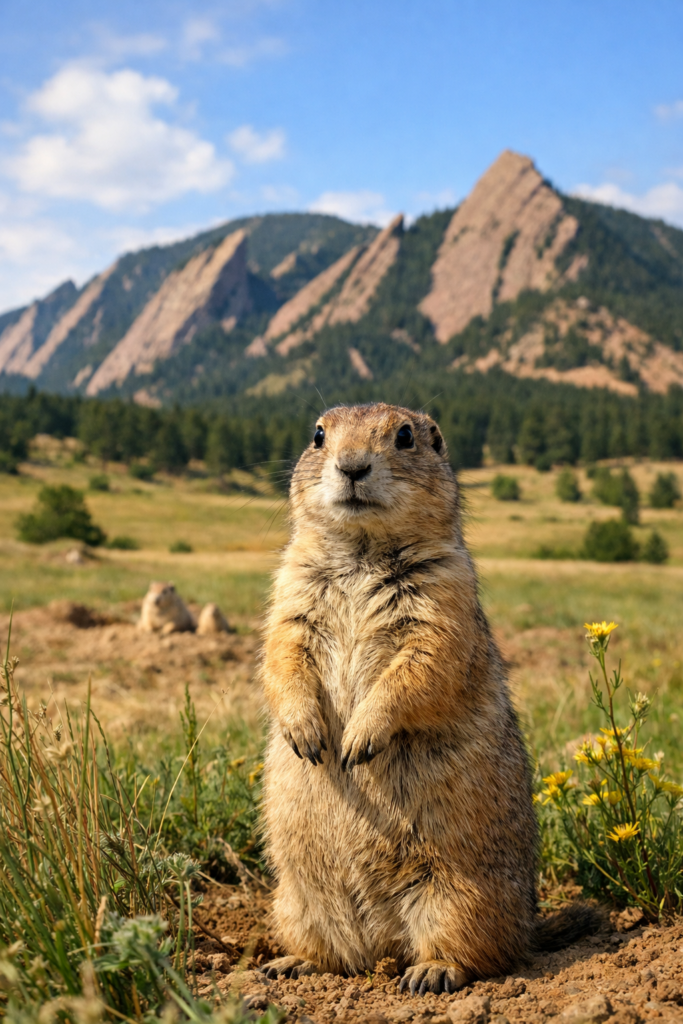
If you’ve spent any time walking Boulder’s trails, visiting Open Space, or even driving past open fields near town, you’ve probably seen them pop up like tiny sentinels — prairie dogs standing upright, watching the world go by. They’re familiar, visible, and undeniably part of Boulder’s landscape. Yet few animals in the city are more misunderstood.
Prairie dogs aren’t just cute faces peeking out of the grass. They are one of the most important wildlife species in Boulder, quietly shaping the land and supporting countless other animals in ways most people never realize.
What prairie dogs really are
Despite their name, prairie dogs aren’t dogs at all. They’re highly social rodents in the squirrel family, known for their complex underground tunnel systems and sophisticated communication. Scientists have documented that prairie dogs use different alarm calls to warn each other about specific threats, helping protect entire colonies.
What some people mistake for noise or nuisance behavior is actually a survival system refined over thousands of years.
A keystone species hiding in plain sight
Prairie dogs are considered a keystone species, meaning their presence supports an entire ecosystem. Their burrows provide shelter for animals like burrowing owls, rabbits, snakes, and insects. Raptors such as hawks and eagles rely on prairie dog towns as hunting grounds. Even the way prairie dogs graze helps maintain healthy grasslands.
According to Colorado Parks and Wildlife, prairie dogs play a crucial role in maintaining biodiversity across the Front Range, even though their populations have declined dramatically from historic levels due to habitat loss and disease. Their importance often goes unnoticed because their impact happens quietly, underground, and over time.
Why prairie dogs spark debate in Boulder
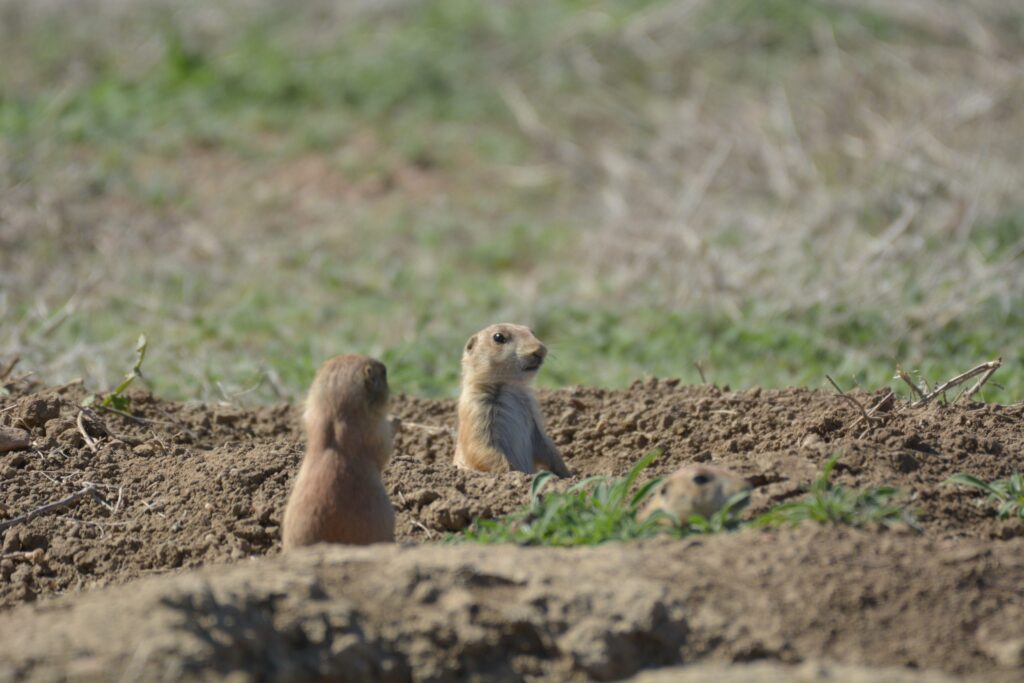
In a city that values both wildlife and livability, prairie dogs sit at the center of an ongoing conversation. Some residents enjoy seeing them along trails and open fields. Others worry about burrows near homes, bike paths, or athletic fields.
Boulder has responded by creating one of the most detailed prairie dog management programs in the country. The city prioritizes coexistence whenever possible, including relocation and habitat protection, while balancing safety and land-use needs. Lethal control is tightly regulated and not taken lightly, reflecting Boulder’s broader commitment to thoughtful wildlife stewardship, as outlined in the city’s urban wildlife policies.
Misconceptions that won’t go away
One of the most persistent myths is that prairie dogs are dangerous or unhealthy to be around. In reality, prairie dogs are far more vulnerable to disease than humans are, and outbreaks such as plague pose a serious threat to prairie dog populations themselves. Another misconception is that they destroy landscapes, when in fact their presence often improves soil quality and plant diversity over time.
These misunderstandings have followed prairie dogs for generations, even as science continues to highlight their ecological value.
Why prairie dogs feel uniquely “Boulder”
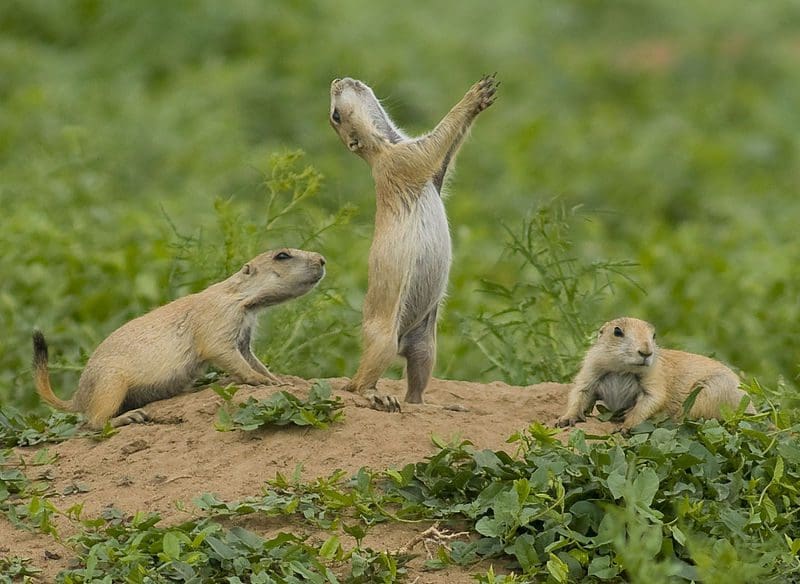
Unlike bears or mountain lions, which appear occasionally and often trigger alerts, prairie dogs are part of daily life here. You don’t need to venture deep into the mountains to see them. They live alongside us, reminding Boulder residents that wild ecosystems don’t stop at trailheads.
They also reflect something deeper about the city itself — a place constantly balancing growth, conservation, and coexistence. Prairie dogs are not just wildlife; they are a living symbol of that balance.
Learning to see them differently
The next time you spot a prairie dog standing watch near a trail or open field, it helps to pause and look again. That small animal represents an entire underground community, a network of life supporting far more than meets the eye.
Understanding prairie dogs doesn’t require choosing sides in a debate. It simply means recognizing that some of Boulder’s most important wildlife doesn’t roar, soar, or hide in the trees. Sometimes, it stands quietly in the grass, misunderstood but essential, shaping the land beneath our feet.