
Bear Season Is Ramping Up in Boulder: What You Need to Know Right Now

Boulder has always shared its foothills, forests, and mountain canyons with black bears. Every summer, residents and visitors begin seeing more of them, but late July marks the beginning of an especially important time of year. As bears prepare for winter, their search for food intensifies, increasing the likelihood of encounters with people.
A recent incident near Beaver Reservoir north of Ward has brought renewed attention to bear safety. Early reports suggested a possible bear attack after a man was found unconscious at a campsite. The Boulder County Sheriff’s Office later determined the man had suffered a medical emergency. A black bear entered the campsite afterward, apparently attracted by unsecured, spoiled food, but it was not responsible for the man’s injuries. While the circumstances were very different from the initial reports, the event serves as a timely reminder that bears are becoming increasingly active as summer progresses.
Colorado’s black bears follow a predictable seasonal cycle. Most emerge from their dens in the spring and remain active until late fall. The highest level of activity typically occurs from late summer into early autumn, when bears enter a biological phase known as hyperphagia.
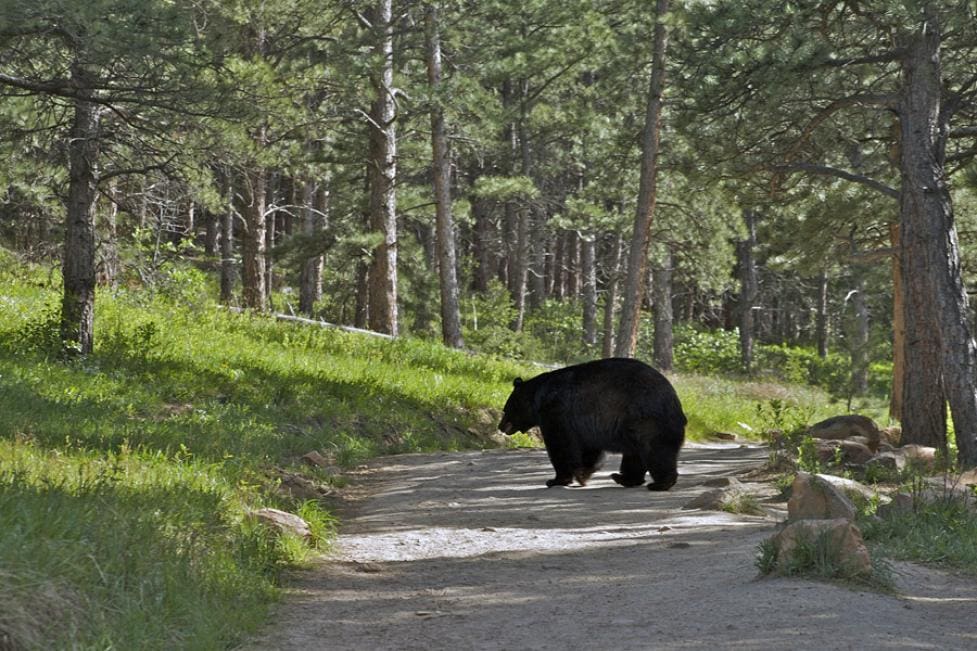
Hyperphagia is the period when bears dramatically increase their food intake to build the fat reserves they need to survive winter hibernation. During this time, a black bear may spend much of the day searching for food and consume tens of thousands of calories daily. Natural foods such as berries, acorns, insects, and other vegetation remain their preferred diet, but bears are also highly opportunistic. Easy meals found around homes, campsites, vehicles, and neighborhoods can quickly become irresistible.
That is why Colorado Parks and Wildlife encourages residents to remove food attractants before bears discover them. Once a bear repeatedly finds food around people, it can lose its natural wariness and become habituated. In many cases, those bears eventually have to be relocated or euthanized, making prevention the best solution for both wildlife and the community.
Practical Bear Safety Tips
Around Your Home
- Store trash and compost in bear-resistant containers whenever possible.
- Put garbage carts out only on the morning of pickup instead of the night before.
- Remove bird feeders or bring them inside overnight during bear season.
- Pick ripe fruit promptly and clean up fallen fruit beneath trees.
- Never leave pet food or water bowls outdoors overnight.
- Clean outdoor grills after each use to eliminate food odors.
- Keep vehicle doors locked and remove snacks, coolers, grocery bags, and scented items from inside.
While Hiking or Camping
- Carry bear spray and keep it easily accessible.
- Make noise while hiking, especially in dense vegetation, near streams, or around blind corners.
- Store all food, toiletries, coolers, and scented items in bear-resistant containers or approved food storage systems while camping.
- Never feed wildlife intentionally or accidentally.
- If you encounter a bear, remain calm, speak in a firm voice, slowly back away, and always give the animal plenty of space. Never run, and never approach cubs.
Fortunately, black bears rarely seek confrontations with people. Nearly every encounter begins because a bear is searching for food rather than looking for conflict. Removing attractants dramatically reduces the chances of unwanted visits.
If you observe unusual bear behavior or experience a conflict, report it to Colorado Parks and Wildlife or the City of Boulder. Early reporting allows wildlife officers to respond before a bear becomes accustomed to finding food around people.
Living in Boulder means sharing one of Colorado’s most beautiful landscapes with remarkable wildlife. Black bears have called these mountains home for thousands of years, and with a little preparation, people and bears can safely coexist. Simple habits such as securing trash, locking vehicles, cleaning grills, and properly storing food make a meaningful difference.
As hyperphagia begins and bear activity continues to increase through August, September, and October, a little extra awareness can help protect your family, your neighborhood, and the bears themselves.
Staying bear aware isn’t just good wildlife stewardship—it’s one of the simplest ways to help preserve the wild character that makes Boulder such a special place to call home.