
Faces of Boulder: Two Boulderites Solo the Flatirons
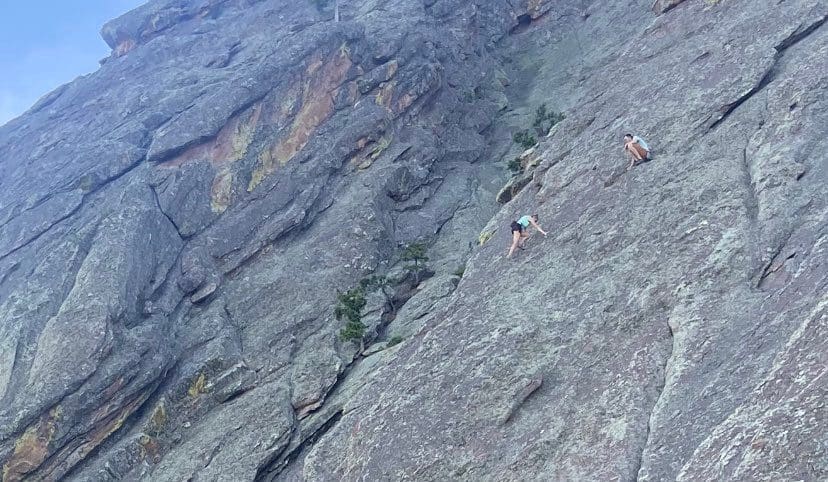
Look closely at the photograph. Two people are moving steadily up one of Boulder’s iconic Flatirons, side by side against an enormous sweep of tilted sandstone. The rock rises sharply behind them, the city stretches far below, and there are no ropes in sight.
It is an extraordinary image—and a powerful reminder that the Flatirons must always be approached with respect.
Seeing two people climbing together without ropes is unusual. Soloists generally move alone, while roped parties are a more familiar sight across the popular east faces. These people appear calm, deliberate, and completely focused as they share the exposed terrain.
Their composure should not make the climb appear safe or easy.
From below, the Flatirons can look almost vertical. Once climbers are on the rock, certain established routes may feel more manageable than they appeared from the trail. The sandstone can provide excellent friction, natural features, and positive places for experienced climbers to position their hands and feet.
But moderate climbing does not mean moderate consequences.
Without a rope or protective equipment, there is no system to arrest a fall. One misplaced foot, loose flake, unexpected gust of wind, or momentary loss of concentration can become irreversible. Every movement requires complete attention.
Experience is essential, but experience does not eliminate risk.
Flatirons conditions can change quickly. Rain and snow can make sandstone dangerously slick, while ice may remain in shaded sections after nearby trails look dry. Strong winds, afternoon storms, extreme temperatures, dehydration, fatigue, and unfamiliar terrain can turn a seemingly routine ascent into an emergency.
Preparation begins before reaching the rock. Climbers should research their route, understand the descent, check the weather, carry sufficient water, use appropriate equipment, and make sure someone knows where they are going. Those without the necessary training and experience should climb with qualified partners or professional guides.
Knowing when to turn around is also part of climbing safely. Reaching the summit is never more important than returning home.
The people in this photograph appear efficient and composed, perhaps reflecting years spent developing their skills. However, a single image cannot show their preparation, experience, equipment choices, or knowledge of the route. It should never be interpreted as encouragement for an unprepared person to attempt the same climb.
That distinction matters. Outdoor photographs often capture the beauty of an achievement without revealing everything required to reach that moment—or the consequences if something goes wrong.
Boulder’s climbing culture is built on adventure, independence, and a deep connection with the natural landscape. It must also be built on humility, preparation, and respect.
Look at the photograph again. Notice the steepness, the exposure, and the concentration of the two climbers.
No ropes. No room for complacency. Every step matters.
That is both the beauty and the reality of solo climbing in the Boulder Flatirons.