Literary Boulder: Famous Writers and Books Tied to the City
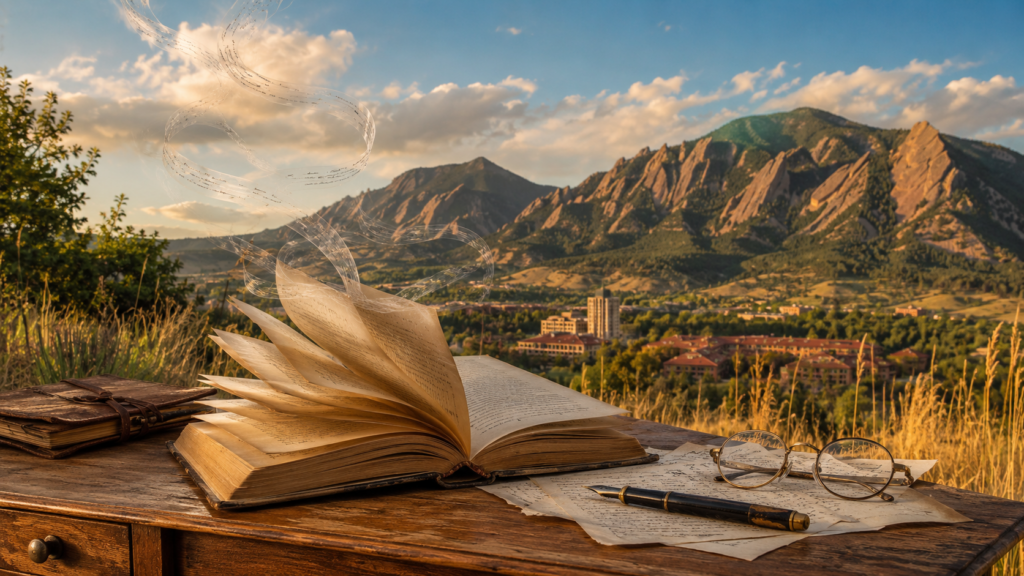
Boulder is famous for the Flatirons, its extensive trail system, and an unmistakably independent spirit. Less widely recognized is the city’s surprisingly influential literary history. Major American writers have lived here, taught here, or transformed Boulder into a setting for memorable fiction and nonfiction.
The result is a city that has quietly punched above its weight in American letters for more than a century.
Allen Ginsberg, Naropa and Boulder’s Beat Legacy
The most consequential chapter began in 1974, when Allen Ginsberg and Anne Waldman founded the Jack Kerouac School of Disembodied Poetics at Naropa Institute, now Naropa University.
Ginsberg was already one of the defining voices of the Beat Generation. Waldman was an accomplished poet, performer and literary organizer. Together, they helped make Boulder an unlikely western center for experimental writing and contemplative poetics.
William S. Burroughs, Gregory Corso, Diane di Prima and numerous other influential writers participated in Naropa programs over the years. The school’s annual Summer Writing Program continues to bring poets, novelists and teachers to Boulder from around the world.
Boulder did not create the Beat movement, but it gave the Beats something San Francisco and New York never did: a permanent academic home.
Stephen King’s Boulder Years
Stephen King and his family lived briefly on 42nd Street in South Boulder during the mid-1970s. Although his stay was relatively short, Colorado left a permanent mark on two of his most important novels.
King developed the idea for The Shining after spending a night at the nearly empty Stanley Hotel in Estes Park in 1974. He then worked on the novel while living in Boulder. The fictional Torrance family also has roots in the city before moving into the isolated Overlook Hotel.
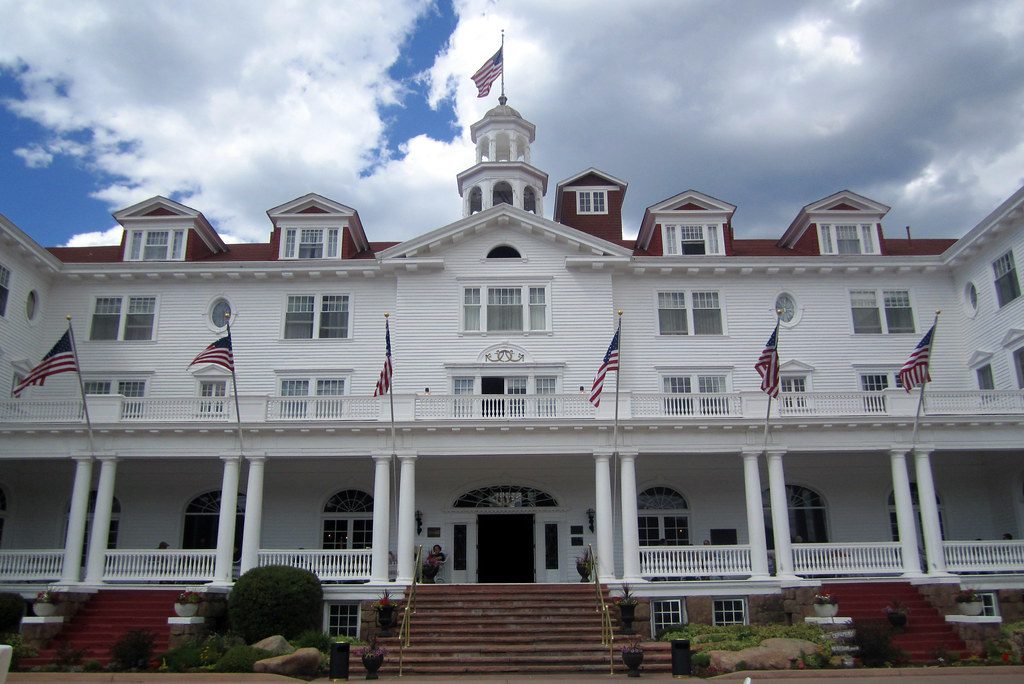
Colorado – Estes Park: The Stanley Hotel
Boulder plays an even greater role in The Stand. In King’s sprawling post-apocalyptic novel, survivors of a devastating pandemic travel to Boulder and establish the “Boulder Free Zone,” hoping to rebuild a functioning society. Recognizable locations, including the downtown bandshell, become part of the story.
King later personally confirmed that he was living in Boulder while writing both The Shining and The Stand. Few cities can claim such a direct connection to two modern American classics.
John Fante’s Boulder Childhood
An earlier and sometimes overlooked literary story belongs to John Fante.
Born in Denver in 1909 and raised largely in Boulder, Fante drew heavily on his Colorado childhood when writing Wait Until Spring, Bandini and the posthumously published 1933 Was a Bad Year. His fictional town of Rocklin closely resembles the Boulder of his youth, with familiar streets, landmarks and social tensions appearing under altered names.
Fante later moved to California and wrote Ask the Dust, now widely regarded as a classic Los Angeles novel. His work slipped into obscurity for a time before Charles Bukowski championed it and helped introduce Fante to a new generation of readers.
Los Angeles may claim Fante’s best-known novel, but Boulder supplied the emotional landscape of his earliest work.
Adventure, Mystery and Wildlife
Boulder’s literary connections did not end with the Beats, King or Fante.
Author and mountaineer Jon Krakauer has had a long connection with the city. His best-selling books—including Into the Wild, Into Thin Air and Under the Banner of Heaven—combine adventure, investigation and moral complexity in a way that feels compatible with Boulder’s outdoor culture.
Stephen White used Boulder as the primary setting for his popular Alan Gregory mystery series. The novels follow a local clinical psychologist drawn into investigations that reveal a darker side of life beneath the city’s polished exterior.
David Baron’s The Beast in the Garden examines Boulder’s complicated relationship with mountain lions. The nonfiction book explores how human behavior, suburban growth and wildlife management contributed to increasingly dangerous encounters along Colorado’s Front Range.
Exploring Literary Boulder
The easiest place to begin a literary walk is Pearl Street. Boulder Book Store, open since 1973, remains one of the region’s leading independent bookstores and regularly welcomes nationally known authors. Readers can learn more about this downtown institution in AboutBoulder’s feature on Boulder Book Store.
Nearby, the Beat Book Shop specializes in Beat literature, poetry and countercultural works. From there, visitors can walk toward the Boulder Public Library, Central Park and the Glen Huntington Bandshell before continuing toward the University of Colorado campus and Naropa.
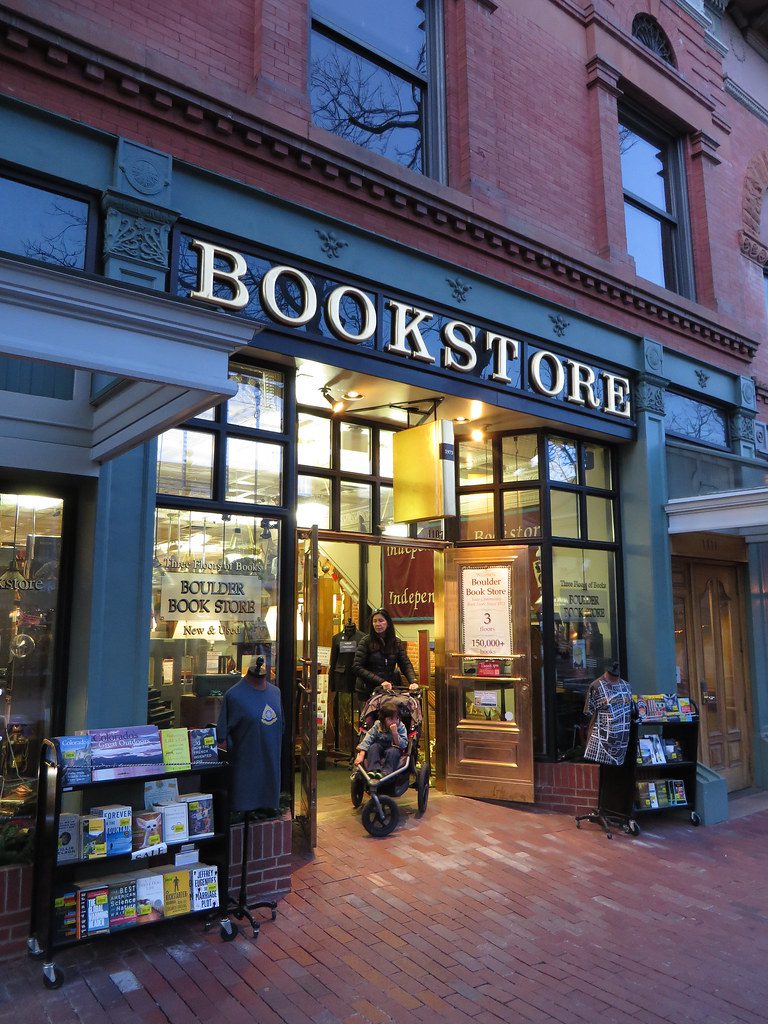
Boulder Bookstore, Boulder, Colorado
Boulder may never be defined primarily as a literary capital. Its mountains and outdoor culture will probably always come first. Yet the writers who found inspiration here have given the city another layer—one shaped by poetry, horror, adventure and memory.
The Flatirons look the same whether someone arrives as a hiker or a reader. The difference is knowing how much that landscape has already given to the page.