Boulder’s Biggest Secret: Does Chief Niwot Have a Face?
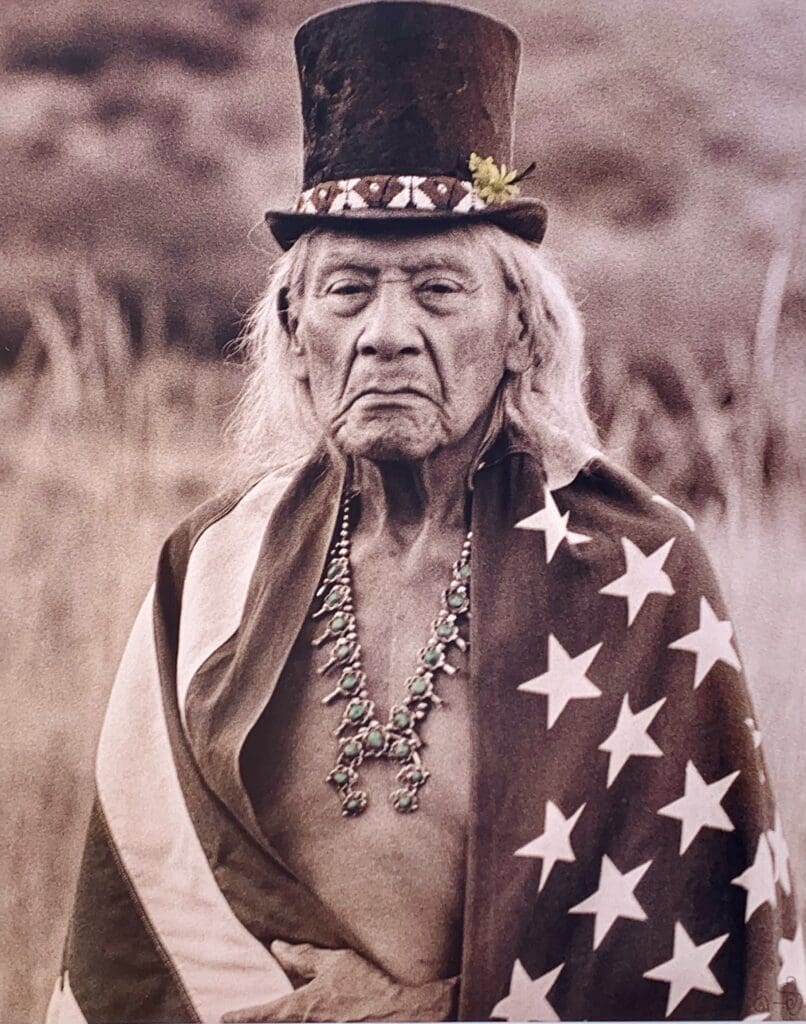
Dona Bollards’s Photo Of Eldred Poisal, The Closest Image Of Chief Niwot We Have. Photo: Donna Bollard
Boulder, Colorado’s Chief Niwot: The Face We Do Not Have
Do we know what iconic Chief Niwot, known as “Left Hand,” really looked like? We’ve all seen sculptures and representations of the great chief, but do we know what he looked like? The answer is easy. NO! There is no existing picture of the Chief. There are several representations which purport to be pictures of Left Hand. The fact is that there is no existing picture or sculpture of the Chief. The closest we’ve come, and the closest that exists so far, is a picture taken by superstar photographer Dona Bollard of Eldred Poisal. We know a lot from a letter written by Eldred Poisal. We know that Eldred died at the Sand Creek Massacre. We know that Chief Niwot died several days after the massacre from wounds suffered at the hands of the invading US Calvary at Sand Creek. We can surmise that Poisal might have been a blood relative of Left Hand. That’s as close as reliable history can take us. There is at least a reasonable chance that there is a resemblance between Chief Niwot and Eldred Poisal. There may have been a blood relationship tying the two. There is something unusually powerful about an empty space in history. It is so powerful because of the importance of great chief in the history of Boulder Valley, of Colorado and of the West.
For the Boulder Valley, that empty space is the face of Chief Niwot, also known as Left Hand. No photograph. No painting. No sketch drawn from life. Despite his central role in the history of this valley, there is no verified image of what he actually looked like.
That absence has always invited speculation. Most people believe that they are seeing drawings of Chief Niwot when in fact they are seeing the most common pictures of what the Chief might have looked like.
It is one of the reasons the photographs of Eldred Poisal, taken by Santa Fe photographer and artist Dona Bollard, have generated such interest and excitement. Dona’s work is extraordinary. Her mastery of traditional darkroom chemistry and sepia toning gives her images a timeless gravity, the kind that feels historical even when it is contemporary.
When Boulderites first encounter these photographs, the reaction is immediate and understandable: Is this what Chief Niwot looked like? Many believe that some of the pictures which purport to be of Left Hand are actually portraits or likenesses, when in fact no such portrait or likeness exits. One has certainly never been found.
The honest answer requires slowing down.
Eldred Poisal, in a carefully written letter composed late in his life, laid out his family history with elegance and precision. That letter matters. It is not folklore or guesswork. It is Eldred himself explaining where his family line intersects with the history of Chief Niwot and where it does not. He was a Southern Arapahoe chief, diplomat, and interpreter who negotiated for peace between white settlers and the Cheyenne and Arapaho tribes during the Pike’s Peak Goldrush and Colorado War.
Chief Niwot was killed by wounds suffered at Sand Creek in 1864. He was one of many victims of what stands as one of the darkest chapters in American history. His sister, Snake Woman, survived. She was spared because soldiers believed her light skin meant she was White. That single misidentification altered an entire lineage.
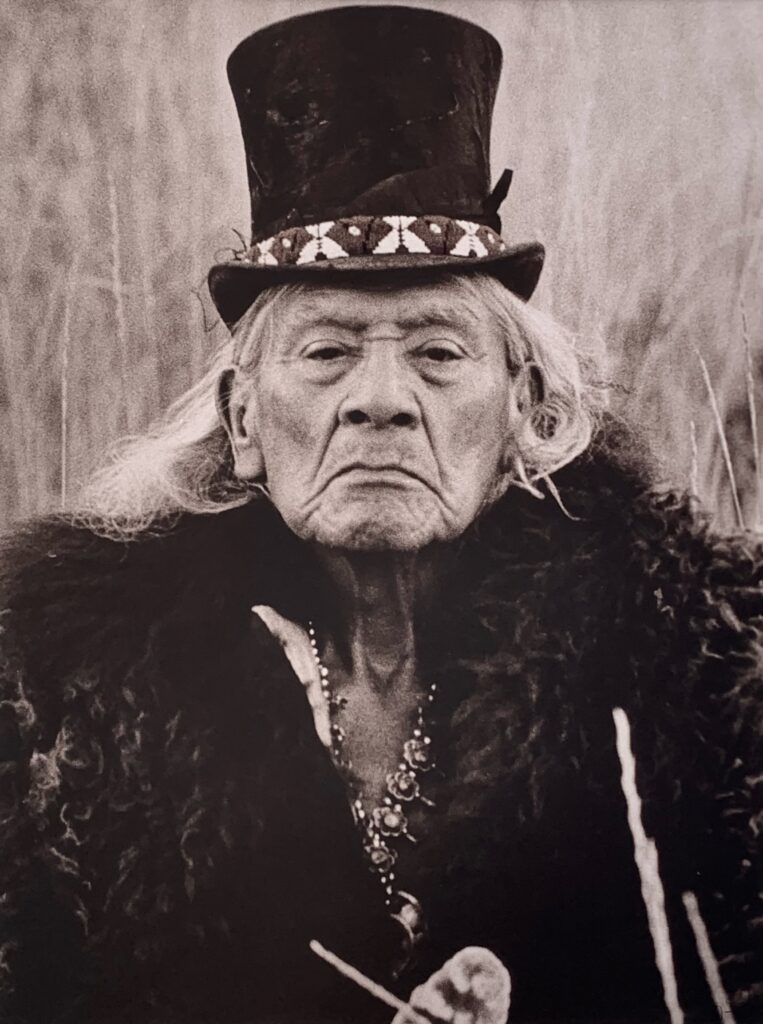
Eldred Poisal Photo By And Courtesy Of Dona Bollard. A Possible Relative Of Chief Niwot
Snake Woman’s daughter, Margaret Poisal, also survived. Margaret later married Thomas Broken Hand Fitzpatrick. Through this line, Eldred Poisal became a direct descendant of Snake Woman and a living bearer of the history that flowed around Chief Niwot rather than straight through him.
This distinction is essential.
Eldred Poisal does not claim to be a blood descendant of Chief Niwot. A careful reading of his letter makes that clear. What he does offer is something rarer than certainty: documented proximity. A family line shaped by the same events, the same violence, the same cultural collisions that defined Niwot’s world.
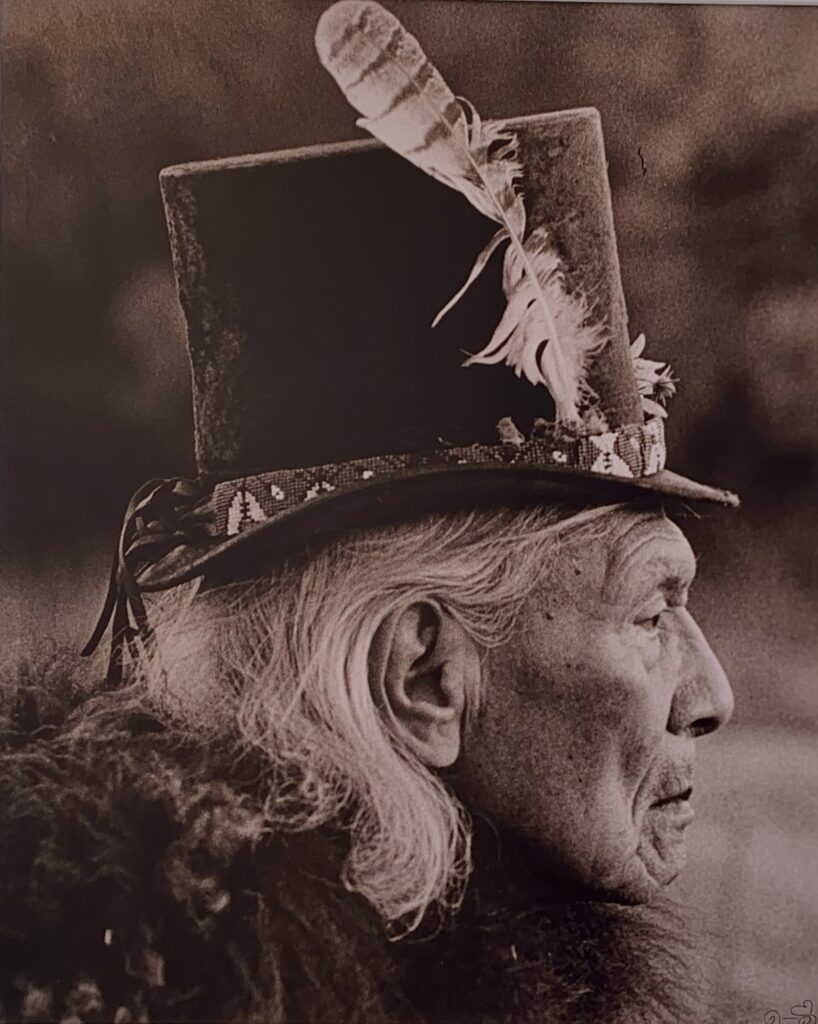
Photo Of Eldred Poisal By And Courtesy Of Dona Bollard: A Possible Relative Of Chief Niwot
Eldred himself closed his letter by saying he was proud to have his image shown as “Nowot”. That statement has sometimes been misunderstood. It is not a claim of direct lineage. It is an acknowledgment of shared history and responsibility, an offering rather than an assertion.
That nuance deserves respect.
Dona Bollard’s sepia toned photographs do not give us the face of Chief Niwot. What they give us is the closest responsible visual reference we may ever have. Not a portrait, but a human echo. Not a solution, but a window.
We like faces. Faces make history feel settled. A face gives us something to point to and say, “That is him.” But in the case of Chief Niwot, history denies us that comfort.
What we do have are stories, accounts, and reputations. Niwot is remembered as a peacemaker; a leader who sought coexistence in a time when violence was becoming inevitable. He was a man of diplomacy in an era that increasingly rewarded force. His life ended in the horror of Sand Creek in 1864, making him not only a leader, but a symbol of betrayal and loss.
And yet, we still want to know what he looked like.
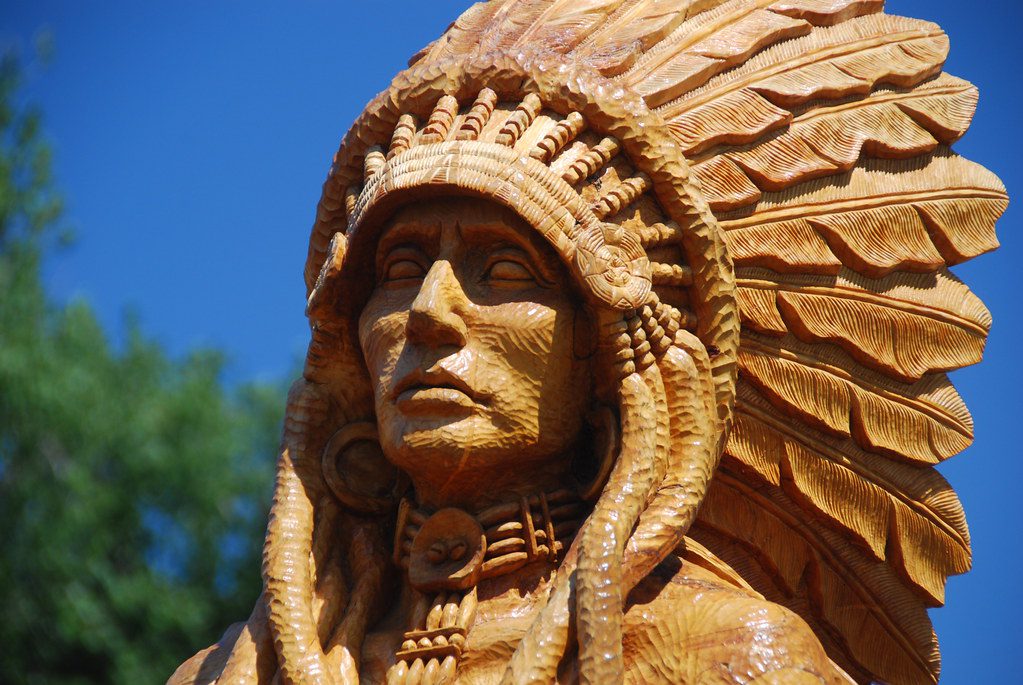
A Representation Carving Of Chief Niwot
That desire explains the fascination with the remarkable photographs taken by Dona Bollard of Eldred Poisal. They are compelling images. They stop you. They invite speculation. If you are human, your mind immediately tries to connect the dots.
Could this be the face?
The answer, carefully and honestly, is “no, this is not a picture of Chief Niwot, but it may be a picture of a person with blood ties to the Chief.
A close reading of Eldred Poisal’s own letter matters here. He does not claim to be a direct blood descendant of Chief Niwot. What he offers instead is something more subtle and, in its own way, more valuable: a documented family history that runs alongside Niwot’s story, intersecting through marriage, survival, and shared history rather than through a straight biological line.
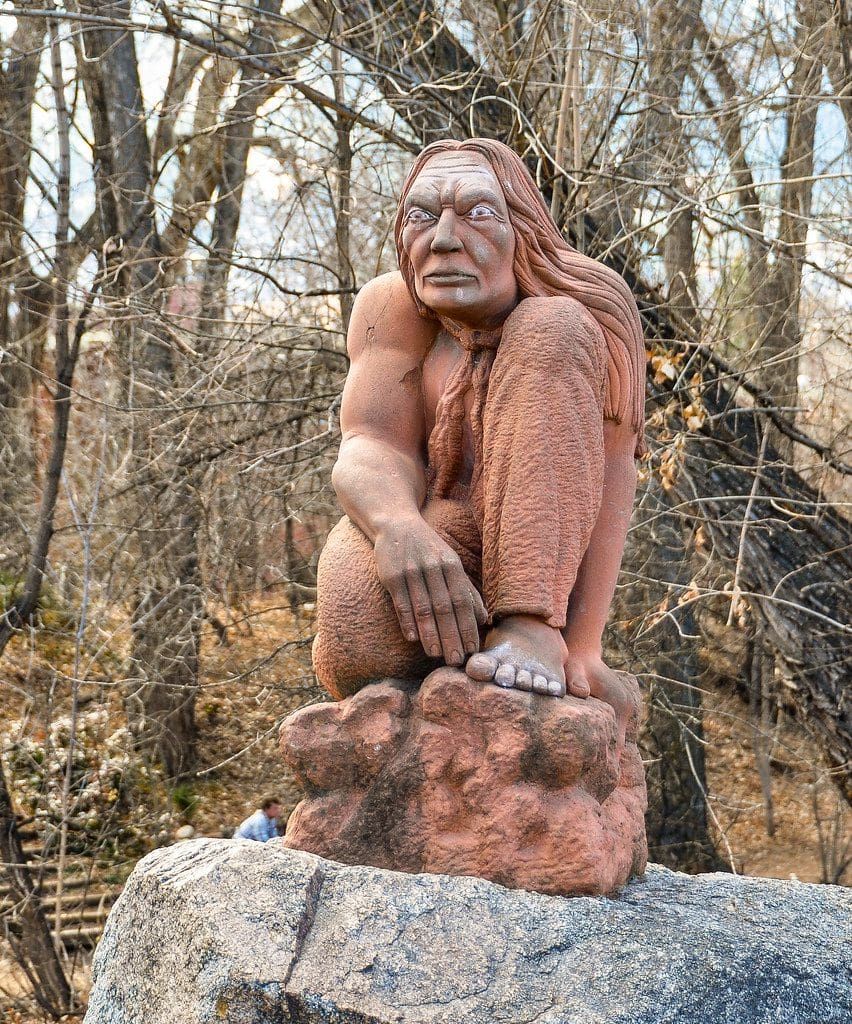
A Local Carving Purporting To Be Of Chief Niwot
In a world that often rushes to label, declare, and conclude, there is integrity in stopping short. There is value in saying, “This is as far as the evidence allows us to go.”
Perhaps the most important lesson here is not what Chief Niwot looked like, but why we still want to know. Faces feel grounding. They make history feel finished. But some stories resist being closed.
Chief Niwot’s legacy lives not in an image, but in place names, in oral history, in the land itself, and in the unresolved silence left by Sand Creek. That silence is not emptiness. It is weight. The significance of Chief Niwot is given substance by the appearance of “Left Hand” and “Niwot” in the naming of so many things in the Boulder Valley. And maybe that is exactly the point.
The Great Chief in part draws our attention not because we can picture him, but because we cannot. His legacy is wondrous and powerful. He was the greatest of the Ute Chiefs. He was known as the Great Peacemaker.
Shared Knowledge Is Power!
Lenny “Lensworth” Frieling