
Faces of Boulder: Climbing Edition — Winter Bouldering, Quiet Focus, and the Beginner’s Path
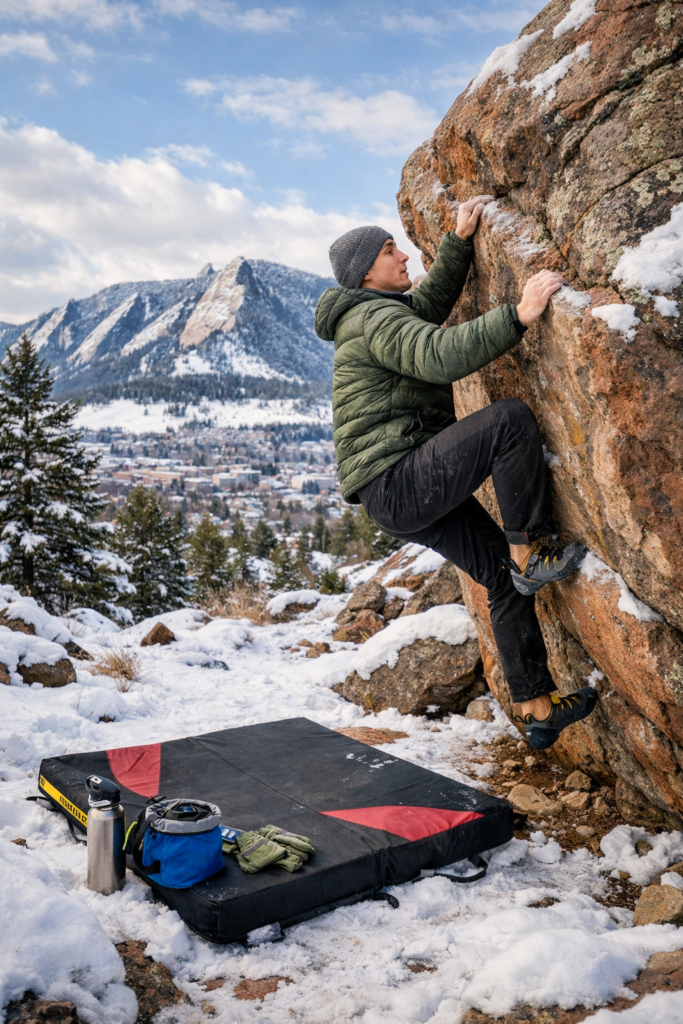
A Winter Face of Boulder
Winter in Boulder, Colorado, reveals a different side of climbing. The crowds thin, the air sharpens, and the rock feels more honest. On a clear winter afternoon, a gentleman pads quietly across packed dirt, crash pad strapped to his back, breath visible in the cold. He is not chasing grades or attention. He is here for movement, for peace, and for the simple joy of learning the rock.
This is one of the many real faces of Boulder climbing. Not the headlines or highlight reels, but the everyday climber discovering bouldering at ground level—hands chalked lightly, feet careful, mind calm. Winter brings a rhythm that rewards patience. The rock cools, friction improves, and the silence invites focus.
Why Winter Is Ideal for Beginner Bouldering
Bouldering in winter can be one of the best ways to start climbing in Boulder. Cooler temperatures create better grip, and shorter sessions reduce fatigue. With a crash pad and a careful mindset, beginners can work low, manageable problems while building technique and confidence.
Winter also encourages intention. Climbers warm up thoroughly, choose problems thoughtfully, and rest more between attempts. That slower pace is perfect for beginners learning body positioning, balance, and footwork. Boulder’s culture supports this approach, emphasizing respect for the land and for fellow climbers, guided by principles outlined by the City of Boulder’s Open Space and Mountain Parks climbing guidelines, which help protect both climbers and sensitive environments .
The Crash Pad and the Beginner’s Mindset
The crash pad is more than safety equipment. For beginners, it represents freedom. It allows exploration without fear, encouraging climbers to try moves repeatedly and learn from small mistakes. Paired with a spotter or thoughtful pad placement, it turns low boulders into personal classrooms.
The gentleman climbing today chooses a modest line—clean rock, gentle angles, and solid landings. He practices quietly, stepping off when it feels right, returning again with patience. This mindset reflects the heart of bouldering: progress measured not by height, but by understanding.
Top Beginner-Friendly Bouldering Areas in Boulder
Boulder offers several areas well-suited for beginners, especially in winter:
- Flagstaff Mountain lower boulders provide approachable problems with good landings and easy access.
- Boulder Canyon roadside blocs offer quick sessions with varied features and short approaches.
- North Boulder Open Space includes scattered beginner-friendly lines where climbers can practice footwork and balance away from busier zones.
For those just starting out, learning basic movement and outdoor etiquette is essential, and organizations like the Access Fund offer clear guidance on bouldering fundamentals and responsible climbing practices .
Peace, Quiet, and the Boulder Way
What sets Boulder apart is not just the quality of its rock, but the culture surrounding it. Climbers greet one another softly, share beta generously, and respect moments of solitude. Winter amplifies this atmosphere. The pauses between attempts become moments of reflection, and the landscape feels expansive and grounding.
Stories like this—ordinary, meaningful, and rooted in place—are part of the ongoing record of Boulder life captured through local coverage that celebrates the people who shape the community every day.
Faces of Boulder, One Climb at a Time
Faces of Boulder: Climbing Edition is about more than climbing. It is about presence. A beginner with a crash pad, winter sun on stone, and the quiet confidence that grows with each attempt. In Boulder, even the smallest climbs can feel like meaningful steps forward—on the rock, and within yourself.