How Stories Built My Capacity for Empathy
By Adrienne Markey, University of Colorado 2025 Graduate
When I started my honors thesis at the University of Colorado Boulder, I had no idea how much it would change the way I saw myself—and the world. As a double major in English and Spanish, I knew I wanted to explore the connection between language and empathy, but I didn’t expect the research to become so personal.
Over two years, I examined how reading and language learning help us understand one another across difference. What began as an academic project soon became a reflection on my own life—how stories and words shaped not only my education, but my humanity.
Here is an excerpt from my work where I consider the role of literature and language in my life:
My Upbringing, the Inspiration:

I grew up in Douglas County, Colorado, a place marked by its affluence and demographic homogeneity…. my upbringing as a white, upper-class citizen was one in which my exposure to cultural, linguistic, and historical diversity was physically and socially limited. When I moved to Boulder for college, the demographic composition of my new home was strikingly similar: where again, according to the 2023 census “there were 13.6 times more White (Non-Hispanic) residents (82.5k people) in Boulder, CO than any other race or ethnicity” (datausa.io). Despite my insulated upbringing, I now find myself deeply concerned with questions of justice, particularly in relation to the realities of those marginalized by systemic structures of power. My actions—how I vote, what I consume—are influenced not only by my wants or needs, but by my empathy and prioritization of all humans. How, given my surroundings, did I develop a sense of connection to communities I have never inhabited, for people I have never met? If my worldview was not shaped by immediate exposure to diverse social, racial, and class realities, then what forces led me to care so deeply about groups and communities that I am not a part of? Literature and language have shaped my intellectual and emotional development, helping me bridge both literal and figurative distances.
My Research Method:
Using an autoethnographic approach, I will examine my experiences with language and literature to deepen my argumentation of their vitality in promoting prosocial thinking and behaviors. My relationship with literature, language and empathy will be the object of interpretation and analysis. To begin this autoethnography, I considered my relationship with reading growing up, considering how such skill allowed me to access varying perspectives and realities. I recognized the relation between my journey with Spanish and the resulting sense of deeper connection to a population outside my immediate in-group. Evaluating my feelings surrounding language and literature might give insight into the broader applications of both tools in promoting empathy and extended social understanding.
What the Death Eaters Gave Me:
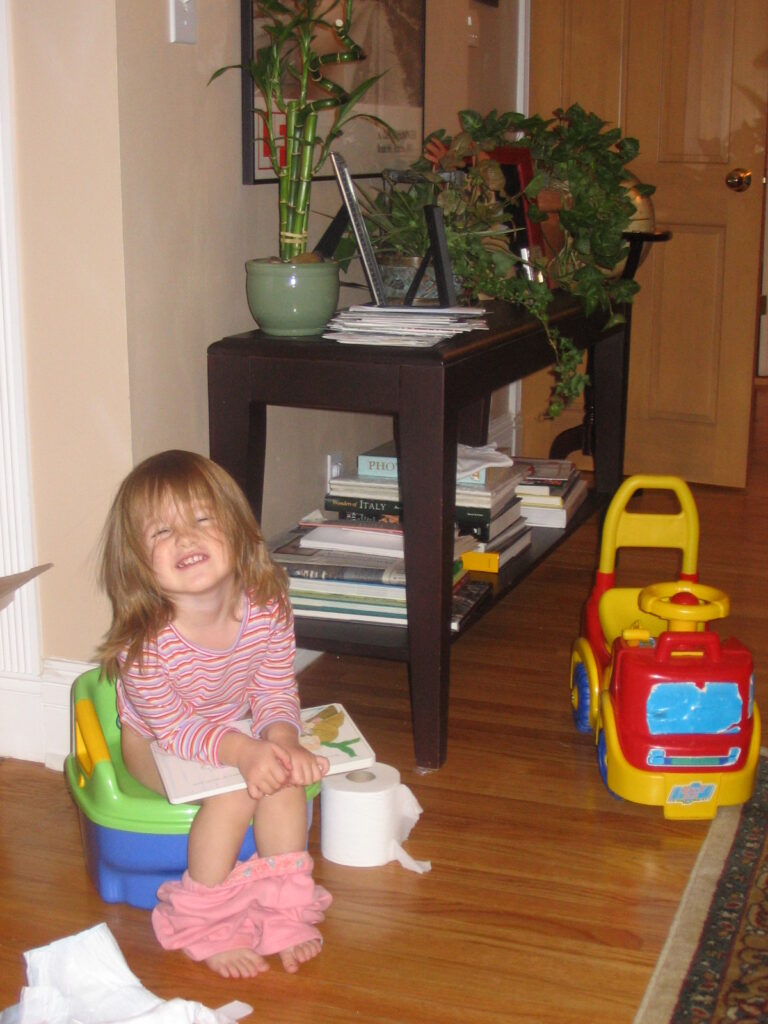
Before I could comprehend language, my mom read to me: before naps, in the morning, after school, before bed. Our walls were stacked with books, our shelves bending from the weight of all their stories. When I could read independently, I mastered the skill of hiding under my covers and reading far past my bedtime. Captivated by narratives that transported me beyond the boundaries of my own reality, I followed Jack and Sally around the world and through history with the help of their magic treehouse. I read about Rebecca, my American girl doll, a Jewish New Yorker during WWII. Annabeth from Percy Jackson taught me that it was okay to be strong, to beat a boy. Hermione Granger embodied the value of female intelligence while Voldemort and his Death Eaters exemplified the dangers of greed and control. I traveled the world through narratives. Stories like Twilight, Kingdom Keepers, and the Red Pyramid took me from my bubble and showed me Forks, Washington, Orlando, Florida and even Egypt. Living in a place where, generally, everybody around me looked the same and belonged to the same social class, literature facilitated my imagination, allowing me access to the settings, minds, stories, and perspectives of people far away. Every time I opened a new book, I actively thought about how it would feel to live in such a reality myself. I wept over lost characters and painful depictions of tragedy; words on pages provoked deep, emotional responses within me that brought a sense of reality to each story.
Systemic Injustice in Literature:
It was through literature that I first truly encountered systemic injustice. In 8th grade, I read To Kill a Mockingbird for the first time. I had never read a book quite like the one Harper Lee wrote. The book made me sad, and a little scared; I had never known the kind of hate Lee depicted, never fully grasped what racism really looked like and how it impacted people of color. I had learned about America’s violent and degrading origins through history class and textbooks, but I could only imagine such discrimination through my own personal lens. Yet, Lee’s use of the first person perspective of a girl who questioned the rules of her world allowed me to connect deeply to the injustices of the time. Then, I read The Help. Next, I read Taking Flight, I Know Why the Caged Bird Sings, and The Poisonwood Bible. These stories shook my understanding of reality and forced me to grapple with my position of class and racial privilege. I was able to follow stories of oppression and violence in a way that engaged my thinking and emotions more than history books or lessons ever did. Narratives that closely followed the protagonist engaged my imagination, allowing me to step into their shoes and, in a small way, share in their suffering and their joy.
Spanish Skills and Empathy:
In seventh grade, I began my linguistic journey with Spanish courses and something that started as an obligation turned into a huge interest in my life. I found that my imperfect, yet adequate ability to speak another language opened up a whole new community for me. It made the deep and culturally specific meanings behind songs, books, and movies, originally written in Spanish, easier to understand. Because “none of the households in Douglas County, CO reported speaking a non-English language at home as their primary shared language” (datausa.io), I rarely utilized Spanish outside of school. In class, we learned about Spanish-speaking cultures. We consumed media, lessons about traditions, books, movies, news, and more, all while working to master the Spanish language. My participation in Spanish courses allowed me to imagine the lives of others, while my simultaneous engagement with the language allowed for a truer interpretation of texts, sources or materials being studied. My Spanish education influenced my decision to study in Spain, where my ability to speak with those around me, in their native language, granted a deep sense of connection between myself and those around me, even far away from home. I was happily surprised to find that the people I knew only through media of some sort were just as easy to connect to as people I knew at home—our humanity proved a stronger bond than our differences pushed us apart. I was struck by the fundamental sameness of people—everyone ate some sort of food, spoke some kind of language, laughed and smiled and frowned and cried. While personal circumstances varied, our shared humanity proved stronger than our differences.
My Time as a CU Buff:
At the University of Colorado Boulder, I chose to major in English with an emphasis on literature analysis. On top of my love for reading, I was beginning to realize how important the tool of expression through language and communication really was. I knew that the ability to clearly articulate my thoughts through writing and critically assess the written word would serve me greatly for the entirety of my life. I figured, with this skill set, I could better understand all of the complicated and potentially unfair inner workings of the world. I paired my English major with a Spanish major. My collegiate education, filled with advanced literary analysis and Spanish courses, has deepened my curiosity about people and their realities. An Asian American literature course, for example, introduced me to overlooked histories, including Japanese internment camps, expanding my understanding and empathy for Asian American voices. Dedicated and extensive immersion with fiction, and Spanish-media greatly expanded my worldview and understanding of faraway peoples: their values, customs, struggles, and needs. In my life, literature and language have bridged gaps across distance and difference. This led me to question whether they could have a similar impact on other US citizens.
What it all means…
The power of reading, and the humanities in general, as a transformative tool is an accepted notion in the US, however economical and social pressures are quickly discouraging engagement with historically and culturally necessary engagement with language and literature. In the unprecedented contemporary moment, a push away from reading and communication will be detrimental for the already fractured nature of the US. If reading and practicing linguistic skills bridges the gap of dissociations between people, in the same manner they did for me, can we learn to empathize, to care for those we have never met, those we cannot see? If discrimination stems from ignorance and detachment, can we use storytelling to dismantle it?

When I look back now, what began as research feels more like a love letter—to stories, to language, and to the possibility of connection. Books and communication gave me a way to understand lives far from my own, and a way to imagine something better for all of us.
As the world grows more divided and fast-paced, I believe that literature and language remain two of the most powerful tools we have for cultivating empathy. In a time when it’s easy to feel discouraged or overwhelmed by headlines and the weight of hopelessness, my research continually justifies my love for reading. It reminds me that every time I open a book, watch a film, or engage with storytelling in any form, I am practicing the art of perspective-taking, of opening my heart to the experiences of humans across time, cultures, and geographies, page by page.
This means that bedtime stories, movie marathons, past-their-bedtime bookworms — all of them are engaging in a practice that can contribute to the healing of our nation, and our world. Becoming a critical, compassionate, globally attuned thinker can begin with something as simple as turning to Chapter One.
If you’re reading this, I invite you to join me: let’s keep reading bravely, listening deeply, and letting stories stretch the boundaries of our understanding. The world needs more curious hearts and the courage to imagine new realities.
Adrienne Markey is a recent graduate (May 2025) of the University of Colorado Boulder, where she studied English and Spanish. Her honors thesis explored how language and literature build empathy across difference. Visit CU Scholar to access her full research. She is now the Chief of Staff Fellow at Dream Tank, using her love letters to help mobilize youth to dream, design, and launch their futures, now.