Myths About Champagne That Survive Because of the Wrong Glassware
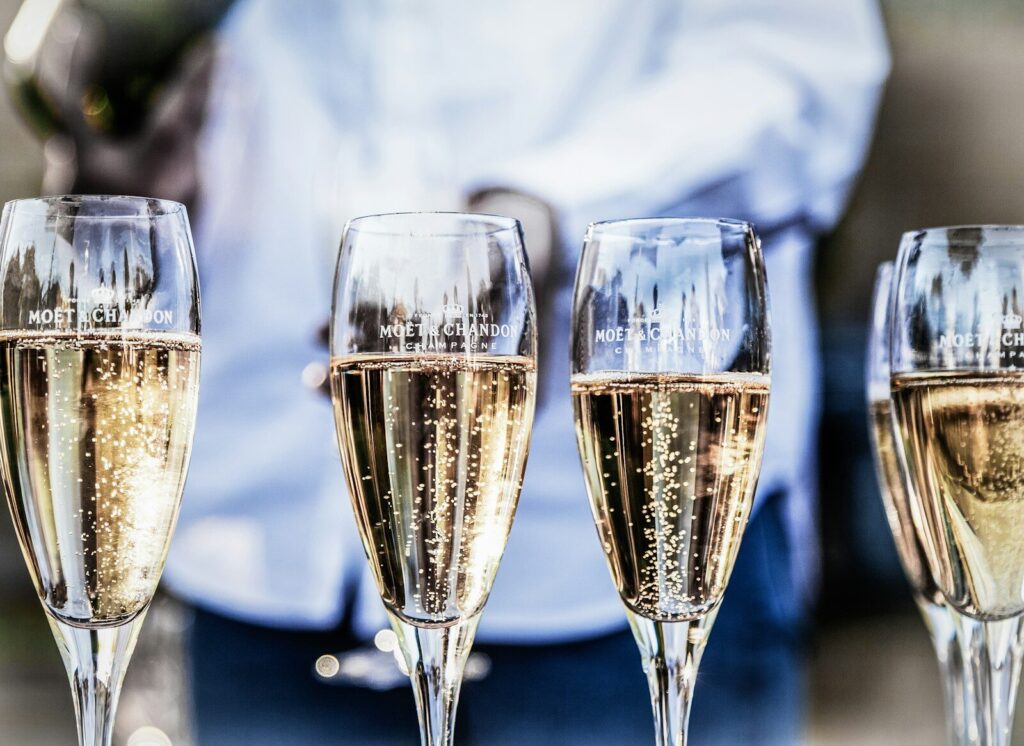
Photo by Deleece Cook – AboutBoulder.com
Champagne carries a set of deeply held assumptions that seem obvious — until you start examining what actually happens in the glass. Some of these assumptions persist because people taste champagne from the wrong vessel and draw conclusions based on a distorted experience. A glass shapes the perception of a drink as actively as serving temperature or the quality of the wine itself. That is why many champagne myths endure: the wrong glassware sustains them, not the drink.
Myth one: the more bubbles, the better the champagne
Bubble activity in a glass is widely treated as a quality indicator — the livelier the display, the better the wine. This logic sounds convincing but describes the properties of the glass more than the properties of the drink.
Bubbles in champagne form at nucleation points — microscopic scratches or particles on the glass surface. Smooth, polished glass provides few nucleation points, so bubbles are sparse. Slightly textured glass, or a laser-etched base as found in modern flutes, produces a steady stream — which is precisely why manufacturers engrave the interior surface of the glass.
Champagne quality is measured by bubble size and stability. Small, even bubbles rising in long chains indicate proper carbonation and good acid balance. Large, chaotic bubbles signal excessive pressure, disturbed wine, or a glass with coarse nucleation points. A coupe with its wide open top disperses gas quickly, creating the visual impression of a lively drink that loses its effervescence within minutes — the glass geometry drives that outcome, not the wine.
Myth two: champagne tastes better from a coupe because “that’s how it used to be served”
The coupe is associated with the Art Deco era, Hollywood glamour of the 1930s, and aristocratic receptions. That aesthetic context creates a persistent sense that the drink tastes better in it. Taste perception does depend on visual context — sensory psychology research confirms this. But aesthetics and functionality follow different rules.
The wide open rim of a coupe disperses aromatic compounds into the air before they can concentrate above the surface of the drink. The result is a flat olfactory impression that reads as lightness or simplicity. An aged, complex champagne with a layered bouquet loses much of that complexity in a coupe.
For bars and venues that work seriously with sparkling wines and build considered bar supplies, the coupe belongs in specific scenarios:
- champagne-based cocktails, where the wine’s aroma is secondary to the overall composition;
- light aperitifs and simple sparkling wines, where aromatic loss is of little consequence;
- banquet and reception service, where visual impact carries equal weight alongside function.
Serving premium champagne in a coupe means deliberately reducing the impression of a product the guest has paid for.
Myth three: temperature matters more than the glass
Serving temperature is a critical variable. The optimal range for most champagne styles sits at 8–10°C: above that, effervescence feels aggressive; below it, the aromatic profile is muted. This argument is often used to justify indifference toward glassware — the thinking being that chilling is what matters, and the vessel is a secondary concern.
In practice, correctly chilled champagne behaves differently in a thin-walled flute and a thick-walled wide glass within two minutes of pouring. Thin glass slows heat transfer from the hand to the drink. A wide liquid surface accelerates warming. A glass with a long stem allows it to be held with minimal heat transfer to the contents. A stemless format places the entire palm against the bowl — convenient for casual settings, but a measurable disadvantage when the goal is to keep champagne at serving temperature through a full glass.
The right champagne glasses address several variables at once: they maintain temperature, concentrate aroma, and keep effervescence stable throughout the time the guest is drinking. Temperature is an important variable, but the glass determines how long it holds within the right range.
Myth four: the same glasses work for prosecco and cava as for champagne
Sparkling wines get grouped into a single category and served in identical glassware — a common bar practice that simplifies procurement but reduces service quality. Champagne, prosecco, and cava are produced by different methods, carry different effervescence profiles, and different aromatic structures.
The differences between formats and their optimal glassware break down as follows:
- champagne, produced by the traditional method, with fine persistent effervescence, opens best in a narrow flute or a tulip with a tapered rim;
- prosecco, produced by the Charmat method, with larger and less persistent bubbles, suits a wider tulip with an increased bowl volume where the fruity aromatics can concentrate freely;
- cava, produced by the traditional method, sits close to champagne in effervescence structure and opens in the same formats.
- Understanding these distinctions allows a bar to build its glassware range deliberately rather than on the assumption that all sparkling wines are interchangeable.
Myth five: the glass only affects aesthetics, not taste
The difference between glasses is easier to demonstrate than to argue. Pour the same champagne into a coupe, a flute, and a tulip simultaneously, wait five minutes, and taste all three. The difference in aroma, effervescence, and flavor balance will be clear even to someone with no professional tasting background. The same wine, the same temperature, the same pour volume — and three noticeably different drinking experiences.
Glass geometry affects three variables at once:
- the concentration of aromatic compounds above the surface of the drink;
- the rate of effervescence loss and the resulting tactile sensation in the mouth;
- the temperature profile across the full duration of drinking.
All three variables contribute to what a person perceives as taste. They operate simultaneously and together define the impression in the glass. Glassware is a service tool that either amplifies the quality of a drink or diminishes it. In a professional context, every element of service shapes the guest’s impression of the venue — and the choice of glassware works exactly like any other tool behind the bar.
The glass does more than hold the drink
Each of these myths survives for the same reason: people form opinions about champagne without changing the glass. A coupe delivers one experience, a flute another, a tulip a third — with identical wine in all three. Once that difference is felt directly, the explanation follows naturally: it has nothing to do with the label, the vintage, or the price point. It comes down to the geometry of the vessel, which either works with the drink or against it.
A bar that understands this selects glassware with the same attention it gives to the wine list. Champagne in the right glass speaks for itself — no additional explanation from staff required, no gap between expectation and experience on the guest’s side.