Neptune: The Mysterious Ice Giant of Our Solar System
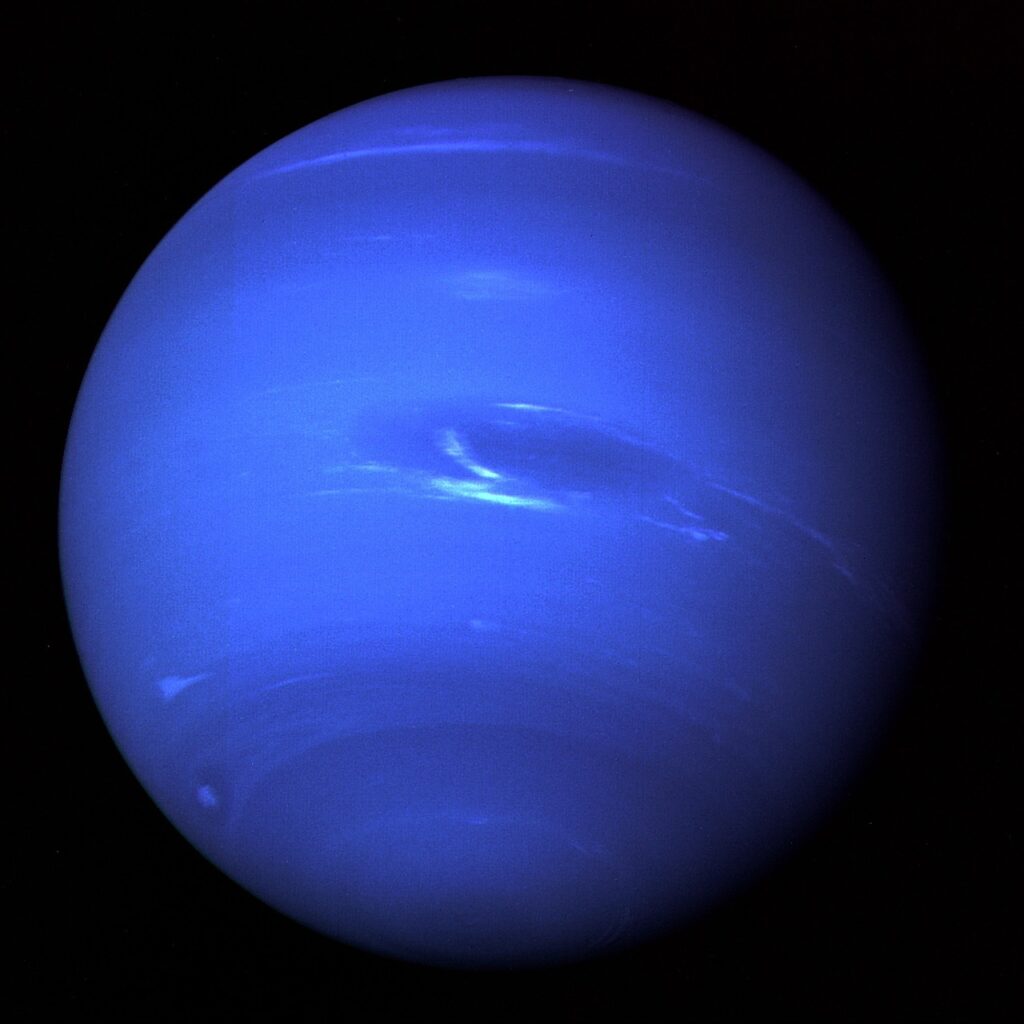
Continuing our journey through the night sky, after exploring Mars, Jupiter, Saturn, and Uranus, we arrive at Neptune—the distant blue world shrouded in mystery. Though not the easiest planet to observe, Neptune has fascinating features and a unique story that make it a captivating subject for any stargazer.
A Discovery Guided by Math
Neptune holds the distinction of being the first planet discovered through mathematics rather than direct observation. In the mid-19th century, astronomers noticed that Uranus was deviating from its expected orbit. John Couch Adams in England and Urbain Le Verrier in France independently predicted the existence of a distant planet causing this gravitational pull. In 1846, Johann Gottfried Galle and Heinrich Louis d’Arrest observed Neptune in the exact location predicted, marking a triumph for Newtonian mechanics.
However, the story doesn’t start there. Galileo Galilei had unknowingly observed Neptune in 1612, mistaking it for a fixed star. Modern analysis of his notes suggests he may have suspected it was a planet. Still, credit for Neptune’s discovery goes to the 19th-century astronomers who used the power of prediction to find it.
Neptune’s Unique Characteristics
As the eighth and farthest planet from the Sun, Neptune has several defining traits:
- An Ice Giant: Composed primarily of hydrogen, helium, and methane, Neptune is classified as an ice giant due to its substantial interior layers of water, ammonia, and methane ices. It shares this classification with its neighbor, Uranus.
- A Brilliant Blue Hue: Neptune’s striking blue color comes from methane in its atmosphere, which absorbs red light and reflects blue wavelengths.
- Stormy Weather: Neptune has some of the fastest winds in the solar system, reaching speeds of up to 1,200 miles per hour. These winds fuel massive storms, including the famous “Great Dark Spot” observed by Voyager 2 in 1989, which has since disappeared and been replaced by other storms.
- Frigid Temperatures: With its vast distance from the Sun—about 30 times farther than Earth—Neptune receives very little sunlight. Temperatures plunge to around -373°F (-225°C), making it one of the coldest places in the solar system.
Observing Neptune in 2025
Neptune is a faint object in the night sky, requiring a telescope to observe. Here are some key celestial events to look out for in 2025:
- January 21–February 21: Neptune will participate in a planetary parade alongside Venus, Mars, Jupiter, Uranus, and Saturn. During this rare alignment, all six planets will be visible in the evening sky. Learn more about this event here.
- March 21: Saturn and Neptune enter the same 10×50 binocular field of view for the first time in 35 years, marking the start of their close pairing.
- July 6: Saturn and Neptune reach their closest separation of less than a degree. Observers in dark skies can spot both planets in the same binocular field of view. Read more about Saturn here.
- September 23: Neptune reaches opposition, its closest approach to Earth this year, making it brighter and more visible. While still faint, it will appear as a tiny blue dot in telescopes with at least 150x magnification. This is the best time to observe Neptune in 2025.
Neptune’s Moons and Rings
Neptune has 14 known moons, with Triton as the standout. Triton, discovered shortly after Neptune itself, is unique among large moons for its retrograde orbit, suggesting it was likely a Kuiper Belt object captured by Neptune’s gravity. Triton’s icy surface and geysers of nitrogen make it a prime candidate for future exploration.
Neptune also has a faint ring system, observed in detail during Voyager 2’s flyby in 1989. These rings are not as prominent as Saturn’s but offer a glimpse into the dynamic processes shaping the outer solar system.
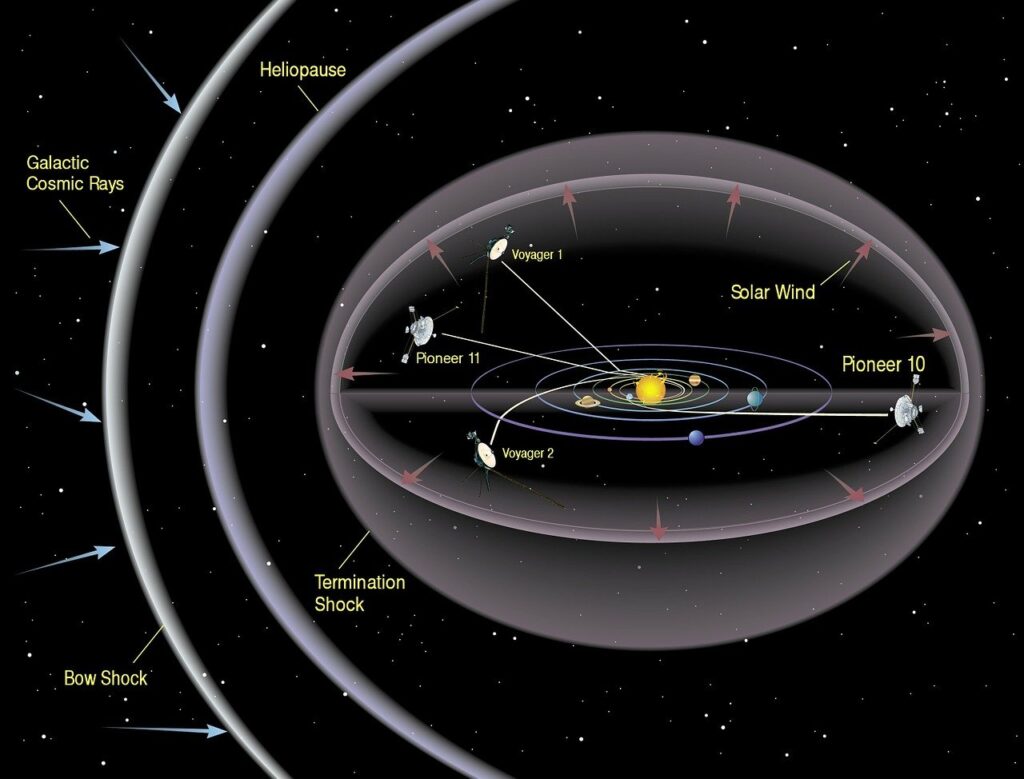
Voyager 2 tour of the solar system
Voyager 2 and Beyond
To date, Voyager 2 is the only spacecraft to have visited Neptune. Its 1989 flyby revealed much of what we know about the planet, from its rings to its turbulent atmosphere. Since then, observations have been limited to Earth-based telescopes and the Hubble Space Telescope. Plans for future missions to Neptune remain in the conceptual phase, but its allure as a scientific frontier endures.
Don’t Miss Neptune in 2025
This year presents exceptional opportunities to observe Neptune, particularly during its September opposition and the planetary parade in January. Though its distance makes it challenging to view, Neptune’s deep blue hue and fascinating history are worth the effort.
To see Neptune and other celestial wonders, join one of our AstroTours. Our expert astronomers will guide you through the night sky, sharing stories and science that bring the planets to life.
Stay tuned for the next installment in this series, where we’ll explore Venus!