
Columnists
Recent Content
When you glance up at Boulder’s night sky, you’re not just seeing stars and constellations—you’re tapping into a rich tapestry of myths, legends, and ancient tales. Here at AstroTours.org, we …
When you glance up a…
When you glance up at Boulder’s night sky, you’re not just seeing stars and constellations—you’re tapping into a rich tapestry of myths, legends, and ancient tales. Here at AstroTours.org, we believe that the stories behind the stars are the gateway to making astronomy both memorable and endlessly captivating. If you’ve ever gazed at Orion and wondered how he became the famed celestial hunter, or peered at the waxing moon and sensed an untold story, this article is for you. Constellations as Cosmic Storytellers 1. The Majesty of Orion One of the most recognizable constella…
Luke Huxley
June 7, 2025
Boulder’s blend of soaring peaks and relatively dark skies makes it a fantastic destination for astronomy enthusiasts. Whether you’re seeking an iconic Milky Way shot set against the Flatirons or …
Boulder’s blend of…
Boulder’s blend of soaring peaks and relatively dark skies makes it a fantastic destination for astronomy enthusiasts. Whether you’re seeking an iconic Milky Way shot set against the Flatirons or a quiet night under a starry canopy away from city lights, here are some must-visit stargazing spots in and around Boulder. 1. Flagstaff Road (Sunrise Amphitheater & Beyond) Highlights: Sunrise Amphitheater offers broader views compared with the lower overlooks like Panorama Point. If you continue past the Amphitheater to spots near Walker Ranch, you’ll find higher elevat…
Luke Huxley
May 9, 2025
Among the highlights of spring’s celestial displays, the Eta Aquarids stand out as a meteor shower both prolific and delightfully accessible — even if you’re stargazing from the Northern Hemisph…
Among the highlights…
Among the highlights of spring’s celestial displays, the Eta Aquarids stand out as a meteor shower both prolific and delightfully accessible — even if you’re stargazing from the Northern Hemisphere. Produced by dust and debris from Halley’s Comet, the Eta Aquarids can light up the skies with swift, bright “shooting stars.” When and Where to Look Active Window: April 19 – May 28 Peak: Night of May 6 to dawn on May 7 Radiant: Constellation Aquarius Estimated Rate: Up to 60 meteors per hour in the Southern Hemisphere and up to 30 per hour in the Northern Hemisphere This ye…
Luke Huxley
April 17, 2025
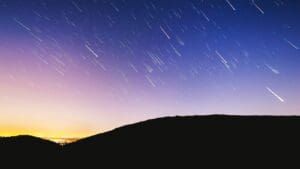
Every April, the night sky comes alive with the Lyrids Meteor Shower, an annual display that delights both seasoned astronomers and casual stargazers alike. Produced by debris from Comet C/1861 G1 (Th…
Every April, the nig…
Every April, the night sky comes alive with the Lyrids Meteor Shower, an annual display that delights both seasoned astronomers and casual stargazers alike. Produced by debris from Comet C/1861 G1 (Thatcher), the Lyrids are one of spring’s highlights, often surprising observers with bright, fast “shooting stars.” In 2025, their peak will occur on the night of April 22 into the early morning of April 23, offering a dazzling show of about 20 meteors per hour under favorable conditions. When and Where to Look The Lyrids run from April 16 to 25 each year, but the best time to catch t…
Luke Huxley
April 7, 2025

When you step outside on a crisp winter evening in Boulder, you’re greeted by a sky teeming with ancient myths and stories. One of the most compelling scenes unfolds in the southeast, where Orion ch…
When you step outsid…
When you step outside on a crisp winter evening in Boulder, you’re greeted by a sky teeming with ancient myths and stories. One of the most compelling scenes unfolds in the southeast, where Orion chases the Seven Sisters (Pleiades), with Sirius shining brightly nearby. It’s a celestial love triangle — or rather, a star-studded drama — that has fascinated skywatchers for centuries. A Tale of Pursuit: Orion and the Seven Sisters Orion, the mighty hunter, is among the most recognizable constellations in the winter sky. Its three-star “belt” points toward a faint cluster of s…
Luke Huxley
March 17, 2025

Light pollution doesn’t just rob us of starry skies — it disrupts wildlife, wastes energy, and even harms human health. Yet as bleak as this might sound, the solution is surprisingly straightforwa…
Light pollution does…
Light pollution doesn’t just rob us of starry skies — it disrupts wildlife, wastes energy, and even harms human health. Yet as bleak as this might sound, the solution is surprisingly straightforward: We can all take small steps to curb excessive lighting and restore the night sky to its natural brilliance. Here in Colorado, communities, businesses, and individuals are increasingly joining forces to tackle light pollution and safeguard our stunning celestial views. A Growing Problem — But One We Can Fix A recent Washington Post editorial highlights a stark reality: Global light po…
Luke Huxley
March 1, 2025

Colorado’s star-studded skies aren’t just a backdrop to our majestic mountains; they’re a celestial tapestry that inspires awe in everyone who ventures out after dark. From high-altitude passes …
Colorado’s star-st…
Colorado’s star-studded skies aren’t just a backdrop to our majestic mountains; they’re a celestial tapestry that inspires awe in everyone who ventures out after dark. From high-altitude passes to serene state parks, the Centennial State is home to some of the nation’s best stargazing locales. If you’re looking for places to escape city lights, reconnect with nature, or simply gaze in wonder at the cosmos, here are the top spots to consider. 1. Loveland Pass: A High-Altitude Haven Perched at over 11,000 feet, Loveland Pass offers an unparalleled view of the Milky Way and co…
Luke Huxley
February 27, 2025
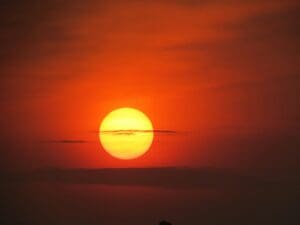
When we think about the cosmos, the Sun often gets overshadowed by the allure of distant stars, planets, and the mysteries of the universe. But this glowing sphere of plasma, positioned 93 million mil…
When we think about …
When we think about the cosmos, the Sun often gets overshadowed by the allure of distant stars, planets, and the mysteries of the universe. But this glowing sphere of plasma, positioned 93 million miles away, is not just another star—it's our star. The Sun is the beating heart of the solar system and the engine driving life on Earth. The Sun: A Stellar Giant with a Familiar Glow Accounting for a staggering 99.86% of the solar system’s mass, the Sun exerts a gravitational pull that holds planets, comets, and asteroids in their orbits. It’s a G-type main-sequence star (or yellow dw…
Luke Huxley
February 22, 2025
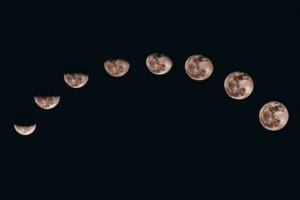
The Moon, Earth’s closest neighbor and constant companion, has inspired countless myths, scientific discoveries, and celestial adventures. While it’s easy to take its steady presence for granted, …
The Moon, Earth’s …
The Moon, Earth’s closest neighbor and constant companion, has inspired countless myths, scientific discoveries, and celestial adventures. While it’s easy to take its steady presence for granted, the Moon continues to amaze us with its dynamic interactions with Earth, its influence on tides, and its role in shaping human culture. 2025: A Year of Lunar Highlights This year, the Moon takes center stage with a series of awe-inspiring celestial events. From total eclipses to planetary conjunctions, 2025 offers plenty of opportunities to witness the Moon’s brilliance and its dance wit…
Luke Huxley
February 19, 2025
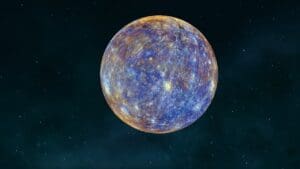
Often overshadowed by its more brilliant planetary neighbors, Mercury offers a rewarding challenge for those willing to chase it during its fleeting appearances in the twilight. As the closest planet …
Often overshadowed b…
Often overshadowed by its more brilliant planetary neighbors, Mercury offers a rewarding challenge for those willing to chase it during its fleeting appearances in the twilight. As the closest planet to the Sun, Mercury never strays far from its glare, making it one of the most elusive planets to spot. But with the right timing, patience, and preparation, 2025 offers some excellent opportunities to observe the solar system's smallest and fastest-moving planet. Mercury: A Small but Mighty Wonder Mercury’s proximity to the Sun gives it a unique role in the solar system, and its rapid 8…
Luke Huxley
February 17, 2025
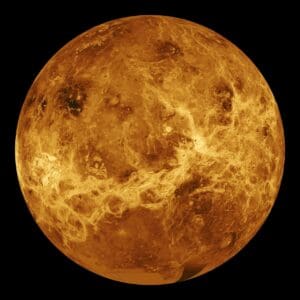
Watching the sky just after sunset, you may notice the brightest “star” gracing the western horizon. This celestial gem isn’t a star but Venus, the radiant second planet from the Sun, often refe…
Watching the sky jus…
Watching the sky just after sunset, you may notice the brightest “star” gracing the western horizon. This celestial gem isn’t a star but Venus, the radiant second planet from the Sun, often referred to as the “Evening Star” or “Morning Star.” Venus: Earth's Twin with a Fiery Personality Venus is the third brightest natural object in our sky, outshone only by the Sun and Moon. Its brilliance is due to its thick, reflective atmosphere, composed mainly of carbon dioxide, with clouds of sulfuric acid that bounce sunlight efficiently. Similar in size and composition to Earth…
Luke Huxley
February 9, 2025

After exploring the major planets of the solar system—Mars, Jupiter, Saturn, Uranus, and Neptune, we now venture to the fringes of the solar system to explore Pluto and the icy worlds of the Kuiper …
After exploring the …
After exploring the major planets of the solar system—Mars, Jupiter, Saturn, Uranus, and Neptune, we now venture to the fringes of the solar system to explore Pluto and the icy worlds of the Kuiper Belt. Though small and distant, these celestial bodies reveal a wealth of fascinating stories about the history and formation of our cosmic neighborhood. Pluto: The Dwarf Planet That Stole Our Hearts Pluto, once the ninth planet, has been a source of fascination and controversy since its discovery in 1930 by Clyde Tombaugh. In 2006, it was reclassified as a dwarf planet by the Internationa…
Luke Huxley
February 2, 2025
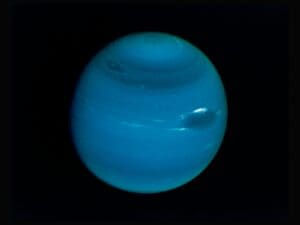
Continuing our journey through the night sky, after exploring Mars, Jupiter, Saturn, and Uranus, we arrive at Neptune—the distant blue world shrouded in mystery. Though not the easiest planet to obs…
Continuing our journ…
Continuing our journey through the night sky, after exploring Mars, Jupiter, Saturn, and Uranus, we arrive at Neptune—the distant blue world shrouded in mystery. Though not the easiest planet to observe, Neptune has fascinating features and a unique story that make it a captivating subject for any stargazer. A Discovery Guided by Math Neptune holds the distinction of being the first planet discovered through mathematics rather than direct observation. In the mid-19th century, astronomers noticed that Uranus was deviating from its expected orbit. John Couch Adams in England and Urbain…
Luke Huxley
January 27, 2025

Continuing our journey through the night sky, after exploring Mars, Jupiter, and Saturn, it’s time to turn our telescopes to Uranus—the enigmatic blue-green world with a unique tilt, fascinating m…
Continuing our journ…
Continuing our journey through the night sky, after exploring Mars, Jupiter, and Saturn, it’s time to turn our telescopes to Uranus—the enigmatic blue-green world with a unique tilt, fascinating mythology, and a quirky history. A Planet Named George? Uranus has one of the most peculiar naming stories in the solar system. Discovered in 1781 by William Herschel, it was the first planet identified with the aid of a telescope. Initially, Herschel wanted to name it "Georgium Sidus" (George's Star) in honor of King George III. While this name was well-received in Britain, it faced push…
Luke Huxley
January 22, 2025
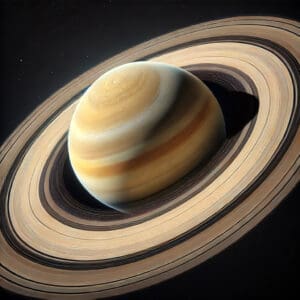
In my recent articles on Mars and Jupiter, we explored two planets that capture the imagination for their unique features and roles in human history. Now, let’s turn our attention to Saturn—the ce…
In my recent article…
In my recent articles on Mars and Jupiter, we explored two planets that capture the imagination for their unique features and roles in human history. Now, let’s turn our attention to Saturn—the celestial showstopper with its iconic rings, fascinating moons, and rich mythology. Over the next few weeks, I’ll continue spotlighting the planets in our night sky, so stay tuned! Saturn’s Rings: Beauty on Borrowed Time Saturn’s rings are among the most iconic features in the solar system, but their days are numbered. These icy marvels, composed of particles ranging from the size …
Luke Huxley
January 17, 2025
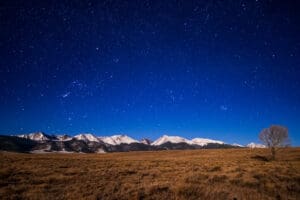
When days grow shorter and the Rocky Mountains don a fresh coat of snow, Boulder’s winter sky truly shines. Many people shy away from stargazing in the cold, but winter nights bring some of the clea…
When days grow short…
When days grow shorter and the Rocky Mountains don a fresh coat of snow, Boulder’s winter sky truly shines. Many people shy away from stargazing in the cold, but winter nights bring some of the clearest, brightest views of the cosmos — and with the sun setting so early you don’t have to stay up until midnight to enjoy them! So, bundle up, grab a warm drink, and let’s explore why winter might just be the best stargazing season of the year. 1. Earlier Nights, Easier Evenings One obvious perk of winter astronomy is that darkness falls sooner. While summer stargazers often have to wait u…
Luke Huxley
January 12, 2025
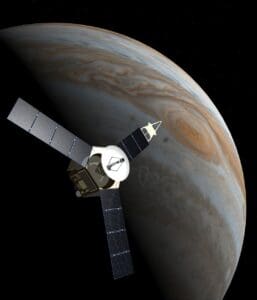
In a recent article about Mars at opposition, I mentioned Jupiter in passing without proper introduction. To remedy this, let’s take a closer look at the largest planet in our solar system. Over the…
In a recent article …
In a recent article about Mars at opposition, I mentioned Jupiter in passing without proper introduction. To remedy this, let’s take a closer look at the largest planet in our solar system. Over the next few weeks, I’ll also be spotlighting other planets visible in the night sky, providing a comprehensive tour of our celestial neighborhood. If you missed my Mars article, you can read it here. Jupiter: The Solar System’s Behemoth Jupiter is the colossus of our solar system, boasting a diameter 11.6 times larger than Earth’s—spanning 86,881 miles. Its sheer volume could house…
Luke Huxley
January 9, 2025
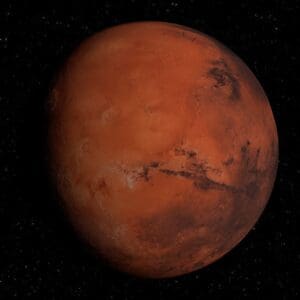
In the eastern sky, there’s a bright, distinctly red point of light that emerges soon after sunset. You’ve probably guessed it—it’s Mars! This year, Mars is particularly bright for good reason…
In the eastern sky, …
In the eastern sky, there’s a bright, distinctly red point of light that emerges soon after sunset. You’ve probably guessed it—it’s Mars! This year, Mars is particularly bright for good reason. On January 16, 2025, it will reach opposition, the best time to see it in over three years. What is Opposition? Opposition happens when Mars, Earth, and the Sun align, with Earth in the middle. This means Mars rises in the east as the Sun sets in the west, staying visible all night long. During opposition, Earth is closer to Mars than at almost any other time, making the Red Planet a…
Luke Huxley
January 7, 2025