Best Stargazing Near Boulder, Colorado: Top Dark Sky Spots & Astro Tours Guide

Best Stargazing Near Boulder, Colorado
With its 5,400-foot elevation, dry climate, and easy access to the mountains, Boulder is one of Colorado’s best destinations for stargazing. While the city has moderate light pollution, a drive of just 15 to 60 minutes opens the door to remarkably dark skies where thousands of stars—and on the right nights, the Milky Way—come alive.
The higher elevations west of Boulder offer thinner air, exceptional visibility, and less atmospheric distortion, making them favorites for photographers, amateur astronomers, and anyone who enjoys looking up. Winter typically brings the clearest skies, but every season offers memorable nights under the stars.
The best viewing occurs during the days surrounding the new moon, when moonlight won’t wash out faint stars, galaxies, and the Milky Way. Free apps like SkyView, Stellarium, or Sky Guide make identifying constellations, planets, and satellites easy once your eyes adjust to the darkness.
Flagstaff Mountain & Panorama Point (5–15 Minutes from Downtown)
Flagstaff Mountain remains Boulder’s most popular stargazing destination. A short drive up Flagstaff Road leads to several scenic overlooks with sweeping views of Boulder, the eastern plains, and the mountains.
Panorama Point is especially beautiful after sunset. Below, Boulder sparkles with city lights while countless stars emerge overhead. It’s an ideal destination for beginners, couples, photographers, or anyone wanting a quick evening escape without venturing far from town.
Visitors should arrive before full darkness if unfamiliar with the winding mountain road. Non-Boulder County vehicles typically pay a small parking fee.
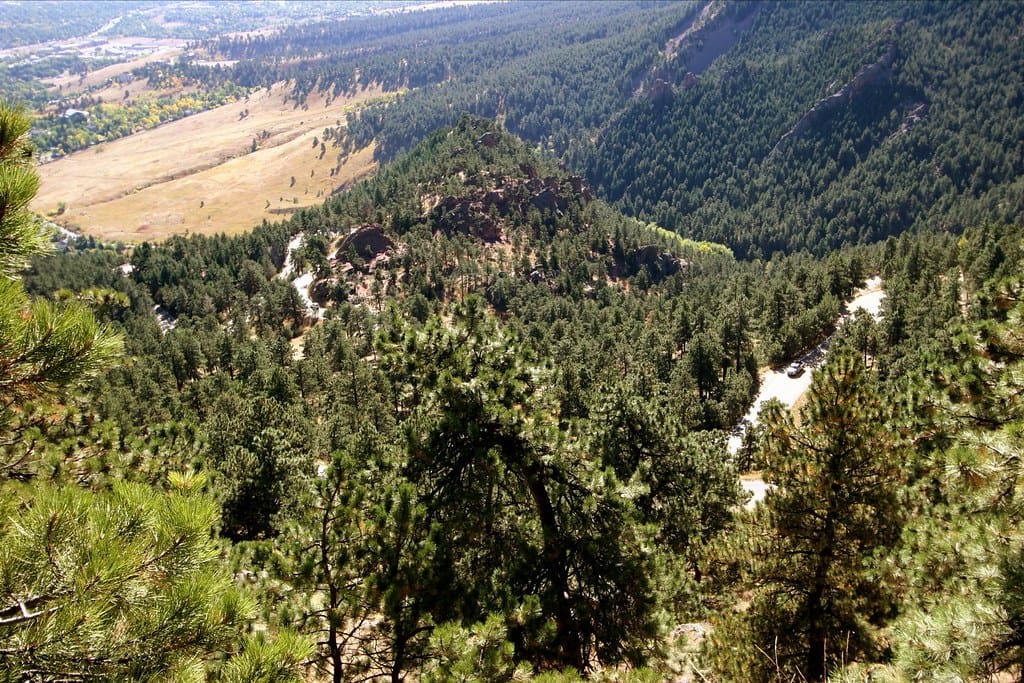
Flagstaff Mountain
Chautauqua Park
Few places combine iconic scenery with easy access like Chautauqua Park. Although city lights limit the darkest views, the expansive meadow beneath the Flatirons creates one of Colorado’s most picturesque places to watch the first stars appear.
Bring a blanket, relax on the grass, and enjoy planets, brighter constellations, and occasional meteor showers framed by Boulder’s famous sandstone formations.
NSF NCAR Mesa Laboratory
Perched above the city on Table Mesa, the NSF NCAR Mesa Laboratory offers expansive western skies and slightly darker conditions than downtown Boulder.
Its elevated location provides excellent opportunities to watch sunsets transition into star-filled skies while enjoying panoramic mountain views. It’s another excellent option for those looking for convenience without a long drive.
Golden Gate Canyon State Park (About 50 Minutes)
Golden Gate Canyon State Park offers significantly darker skies than Boulder. Panorama Point, one of the park’s highlights, provides wide-open views across the Continental Divide with very little surrounding light pollution.
During moonless nights, the Milky Way often becomes clearly visible overhead. Visitors should check current entrance fees and park hours before arriving.
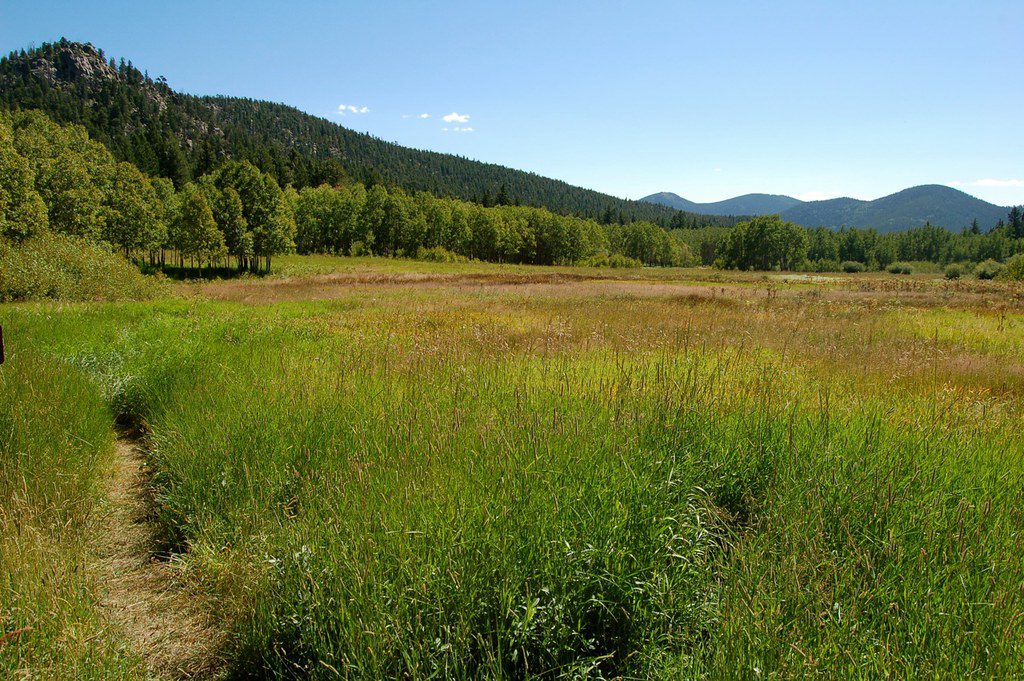
Golden Gate Canyon
Peak to Peak Scenic Byway Overlooks (30–60 Minutes)
The Peak to Peak Scenic Byway is one of Colorado’s premier nighttime drives. Numerous pull-offs between Nederland, Ward, and Allenspark offer increasingly darker skies as you climb away from Boulder.
These overlooks require little or no hiking, making them perfect for families or anyone wanting outstanding astronomical views with easy access.
Button Rock Preserve
Located north of Boulder near Lyons, Button Rock Preserve offers a peaceful setting surrounded by forests, granite cliffs, and a scenic reservoir.
Because operating hours may change seasonally, visitors should verify evening access before planning a nighttime visit. When open after sunset, it provides a wonderfully quiet location for enjoying the stars away from much of the city’s glow.
Brainard Lake Recreation Area (45–60 Minutes)
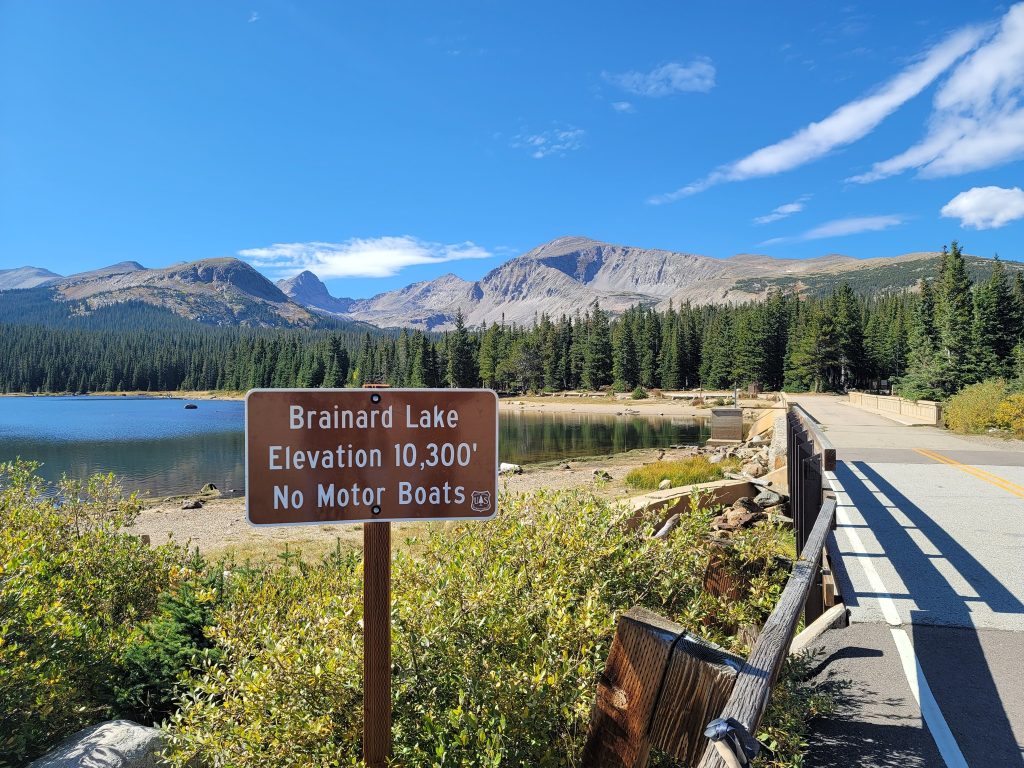
For many Front Range residents, Brainard Lake Recreation Area offers the finest stargazing near Boulder. Sitting above 10,000 feet, the alpine environment delivers exceptionally dark skies, crisp mountain air, and breathtaking reflections on calm nights.
On clear, moonless evenings, the Milky Way stretches brilliantly across the sky, making Brainard Lake a favorite among astrophotographers.
Vehicle access is generally seasonal, typically from mid-June through mid-October, depending on snowfall. Always check road conditions before visiting, and remember that temperatures can drop rapidly—even during summer.
Bonus: Guided Astronomy Experiences
Want to take your stargazing experience to the next level? Boulder offers several outstanding astronomy programs for all experience levels.
One of the area’s top experiences is Astro Tours, a Boulder-based guided stargazing company led by University of Colorado Boulder alumnus Luke Huxley. Using powerful telescopes, laser-guided constellation tours, and expert storytelling, Astro Tours brings the night sky to life in an engaging and accessible way. Whether you’re spotting Saturn’s rings, exploring distant galaxies, or learning the myths behind the constellations, it’s an unforgettable experience for visitors and locals alike.

University of Colorado Boulder alumnus and Astro Tours owner Luke Huxley helps visitors discover the magic of Colorado’s spectacular night skies.
You can also attend a public observing night at Sommers-Bausch Observatory, enjoy immersive astronomy presentations at Fiske Planetarium, or join a ranger-led night sky program in Rocky Mountain National Park. Together, these experiences make Boulder one of Colorado’s premier destinations for exploring the wonders of the night sky.
What to Bring
- Warm layers, gloves, and a blanket
- Camping chair
- Thermos with a warm drink
- Red-light flashlight or headlamp
- Binoculars or a small telescope
- Star-gazing app
- Downloaded offline maps
- Camera with tripod for night photography
Allow 15 to 20 minutes for your eyes to fully adjust to darkness. Avoid looking at bright phone screens, which reset your night vision.
Before leaving, always check the weather forecast, wildfire restrictions, road conditions, and moon phase. Mountain weather can change quickly, and some roads may close seasonally.
Practice Leave No Trace principles by packing out everything you bring, respecting wildlife, staying on designated trails, and keeping noise to a minimum so everyone can enjoy the peaceful experience.
The Colorado Night Sky Never Disappoints
Whether you’re enjoying a spontaneous date night on Flagstaff Mountain, photographing the Milky Way above Brainard Lake, or exploring the quiet overlooks along the Peak to Peak Scenic Byway, Boulder offers some of Colorado’s most rewarding night skies.
Pick a clear night near the new moon, bring a friend, look up, and prepare to be amazed. Some of the most unforgettable moments in Colorado happen long after the sun goes down.