Boulder Water Crisis 2026: How the Colorado River Drought Impacts Residents
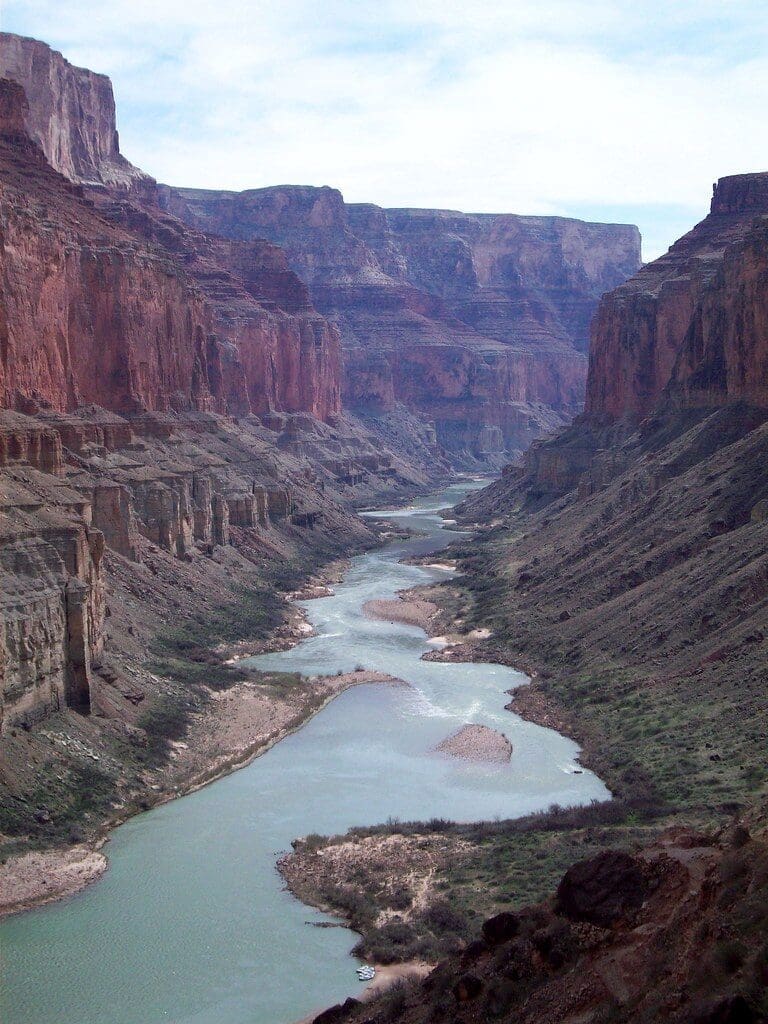
Colorado River, Marble Canyon
Boulder’s mountain lifestyle depends on water: clean creeks, healthy trees, green parks, local businesses, outdoor recreation, and reliable taps at home. In 2026, that water story feels more important than ever.
The Colorado River crisis is not just a distant problem for Arizona, Nevada, or California. Boulder is better protected than many communities because of its diverse water system, but the city is still connected to the bigger western water picture.
Where Boulder’s Water Comes From
Boulder’s drinking water comes from multiple sources, which gives the city important flexibility during dry years. Much of the supply comes from local mountain watersheds, including Barker Reservoir on Middle Boulder Creek and the Silver Lake Watershed on North Boulder Creek. Boulder also receives a smaller portion of its water through Colorado River Basin supplies connected to the Colorado-Big Thompson system.
That mix matters. A diversified supply helps Boulder manage dry years better than communities that depend heavily on one source.
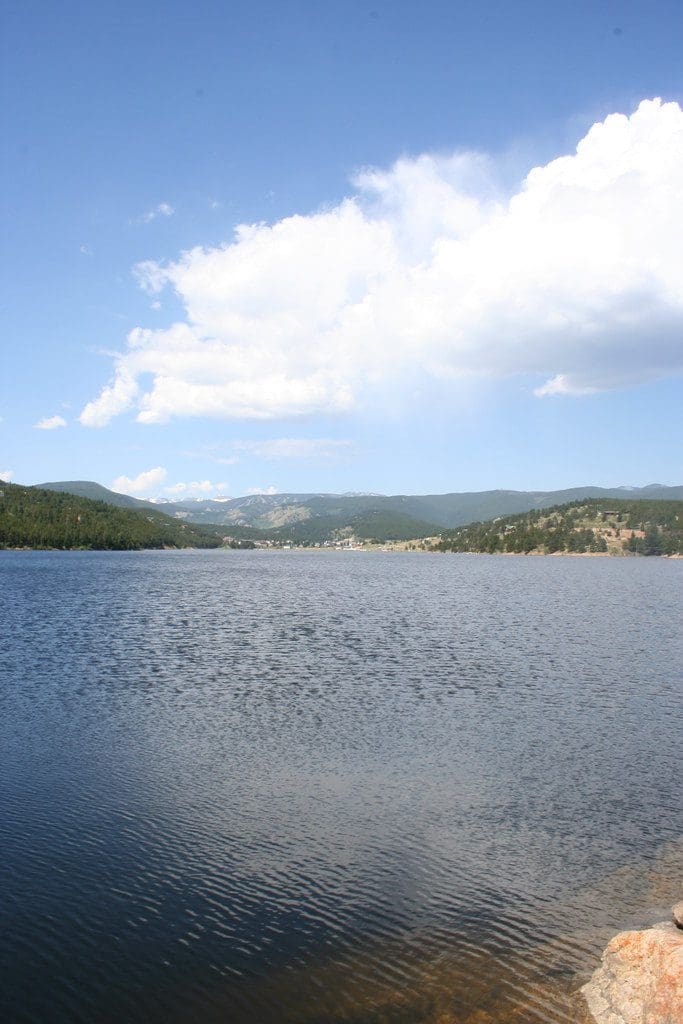
Barker Meadow Reservoir
Boulder Is Currently Under Drought Watch
The City of Boulder entered Drought Watch on April 1, 2026, after hot and dry conditions, and confirmed on May 1 that it would remain in Drought Watch through the summer. Mandatory restrictions are not currently in place, but the city is asking residents to voluntarily reduce water use.
That means this is not a panic moment. It is a pay-attention moment.
The Colorado-Big Thompson Quota Is a Bright Spot
Northern Water set the 2026 Colorado-Big Thompson Project quota at 80%, which is helpful during a dry year. That does not erase the larger Colorado River challenges, but it does give water users access to more supply than in some recent lower-quota years.
Why the Bigger Colorado River Crisis Still Matters
The Colorado River remains under major pressure from long-term drought, overuse, climate change, and stalled negotiations among the seven basin states. Federal officials are now weighing major post-2026 operating changes for Lake Powell and Lake Mead, including possible deeper cuts for Lower Basin states.
For Boulder, the most immediate impact is not empty taps. It is uncertainty, higher awareness, and the need to keep conserving before dry years become more difficult.
What Residents Can Do Right Now
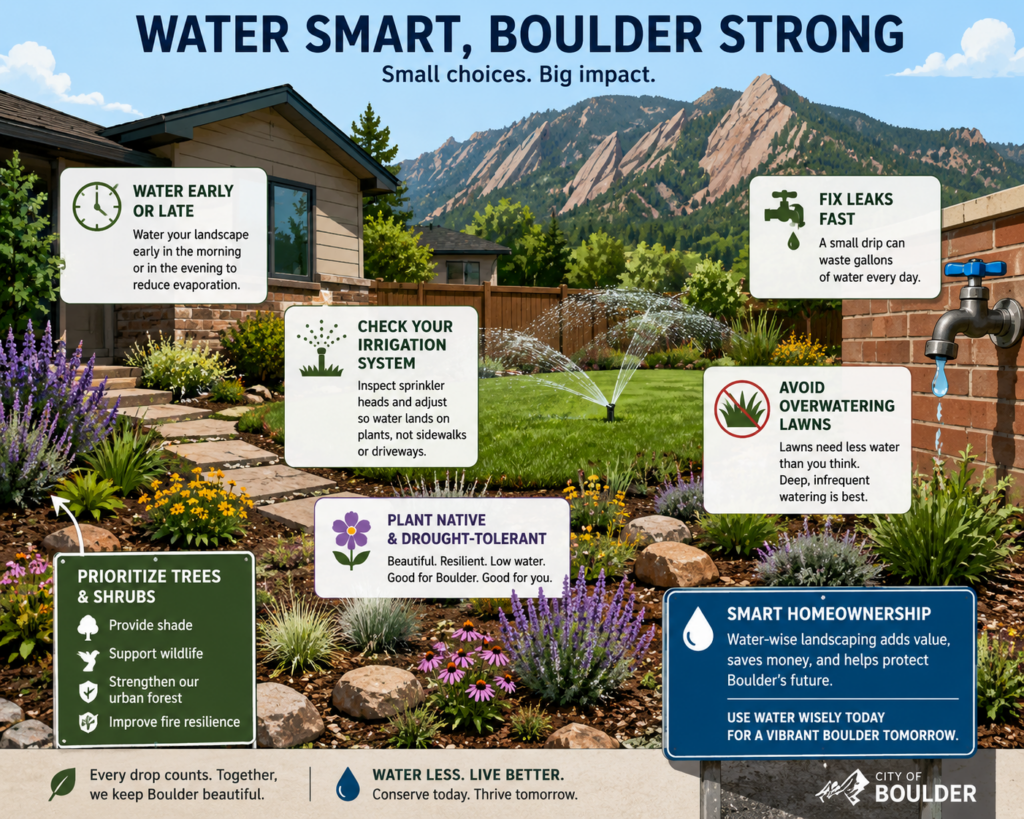
Outdoor watering is the biggest place to make a difference. Boulder residents can help by watering early in the morning or later in the evening, checking irrigation systems, fixing leaks, and avoiding overwatering lawns.
Trees and shrubs should be prioritized over grass because they support shade, wildlife, the urban forest, and fire resilience. Native and drought-tolerant landscaping is no longer just a trend. In Boulder, it is becoming part of smart homeownership.
Recreation and Local Life Are Connected to Water
Lower creek flows can affect tubing, fishing, water quality, and the health of riparian areas. Dry vegetation can increase fire danger. Local businesses, restaurants, breweries, farms, parks, and tourism all depend on reliable water.
Water is not just a utility in Boulder. It is part of the lifestyle.
Boulder’s Advantage Is Planning
The good news is that Boulder has a long history of water planning, conservation, and environmental awareness. The city’s diverse supplies and strong conservation culture put it in a better position than many places in the West.
But better positioned does not mean immune.
The Bottom Line
Boulder’s water story is not one of crisis today. It is a story of adaptation.
The Colorado River crisis reminds us that every gallon matters. By conserving now, Boulder residents help protect the creeks, trees, open spaces, homes, and mountain lifestyle that make this community special.
Smart water use is not just about getting through one dry summer. It is about protecting Boulder’s future.