Boulder’s Flagship: Why the University of Colorado Sits at the Top in the State

Colorado has plenty of strong colleges, and different lists will rank them differently depending on what they measure. But if you’re talking about the university that most completely represents Colorado on a national stage—academics, research, opportunity, and statewide influence—the University of Colorado Boulder is the school that consistently rises to the top of the conversation.
“Top” should mean more than a number. It should mean: the strongest overall platform for students to build a life.
A flagship that carries the state
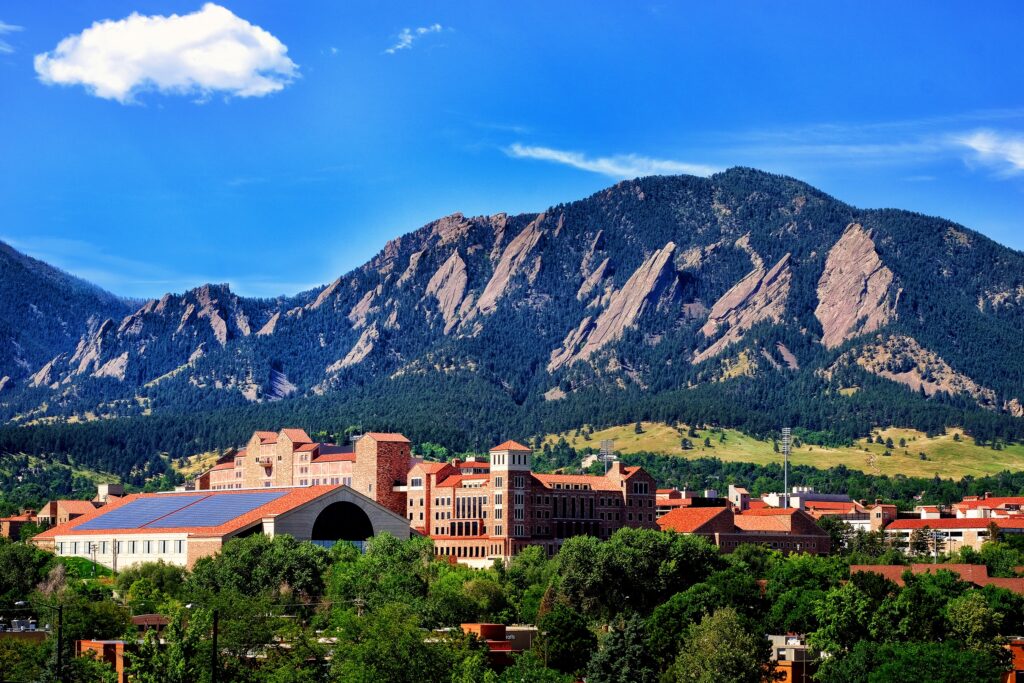
CU Boulder isn’t just a campus with a famous view. It’s Colorado’s flagship public research university, built to serve the state at scale—educating huge numbers of students, producing major research, and feeding talent into Colorado’s economy and civic life. That public mission matters, because it shapes everything from the breadth of programs to the size of the alumni network to the kind of partnerships the school can sustain.
If you want a simple, official snapshot of how CU Boulder sits inside Colorado’s higher-ed landscape, you can find it listed among Colorado institutions in the Colorado Department of Higher Education’s institution directory.

R1 research power is not a buzzword
One of the clearest signals of “top-tier” status in American higher education is research intensity. CU Boulder holds the highest research activity designation (R1) in the Carnegie Classification system, which is the most widely used national framework for categorizing U.S. institutions. That’s not marketing. It’s a structural marker that CU Boulder operates in the same research tier as the big-name public universities people immediately recognize.
You can verify the designation directly in the Carnegie Classification listing for CU Boulder.
Why research strength helps undergrads
Some people hear “research university” and assume it only benefits PhD students. In reality, research intensity often creates the best undergraduate opportunities—because the campus has more labs, more projects, more grants, and more faculty-led work that students can plug into.
That shows up in real ways:
Students can join a lab earlier, not just as seniors.
Professors are actively building new knowledge, so what you learn stays current.
Mentorship expands beyond the classroom, especially in STEM, business, and the social sciences.
Graduate students and postdocs create extra layers of tutoring, advising, and collaboration.
For a motivated student, CU Boulder offers more doors to walk through—and more people holding those doors open.
Breadth with depth: the “complete” advantage
Colorado has schools that shine in specific lanes. CU Boulder’s advantage is that it combines breadth and depth in one place. You can study engineering, business, aerospace, environmental science, psychology, communications, music, art, policy, data, design—then pivot, combine, or specialize without leaving the ecosystem.
That matters because careers rarely stay in one neat box. The modern edge is interdisciplinary: climate plus tech, business plus analytics, policy plus science, design plus engineering. CU Boulder is built for that kind of cross-pollination, and Boulder the city reinforces it with a culture that rewards curiosity and initiative.
Boulder itself is part of the education
Location isn’t a perk—it’s part of the learning environment. Boulder attracts researchers, founders, builders, scientists, athletes, and artists. That blend turns “internship hunting” into something more like network building, because opportunity is in the air: meetups, labs, startups, nonprofits, outdoor clubs, campus events, and industry connections that extend into Denver and beyond.
And yes, the outdoors matters. When your daily life includes movement, sunlight, and a community that values health and ambition, it changes the way you show up for your work. Students don’t just study here—they build stamina, confidence, and identity.
Student experience: big resources, small-world pockets
A campus this large could feel anonymous, but CU Boulder has a way of creating smaller communities inside the bigger machine: colleges and departments, cohort programs, research groups, residence-hall cultures, and hundreds of student organizations. Add in strong academic support services, career coaching, and a steady calendar of lectures, arts, and game-day energy, and students can shape a “right-sized” experience that fits their personality truly.

Outcomes and the long game
A top university should pay off for years, not just four semesters. CU Boulder’s alumni network is massive and visible across Colorado’s major industries, and it also travels well nationally. That combination—roots in Colorado with reach beyond it—creates practical advantages: internships, first jobs, mentorship, and a recognizable credential that doesn’t need a long explanation.
So, is CU Boulder “the” top school in Colorado?
If you demand a single-number answer, rankings will always shuffle based on methodology. But if “top” means the strongest all-around platform—flagship mission, R1 research strength, broad academic options, real student opportunity, and deep statewide influence—CU Boulder is the most complete answer in Colorado.
And if you want a feel for how that energy shows up in everyday Boulder life, here’s a deeper local read.