
Chautauqua Park, Boulder, Colorado: History, Hiking, and Landmark Legacy

The Birth of Colorado Chautauqua
In 1898, Boulder residents made a bold decision that would shape the city’s future. They voted to issue bonds and purchase 80 acres at the base of the Flatirons, creating a permanent home for a Chautauqua site. This partnership with Texas educators, known as the Texas–Colorado Chautauqua Association, was part of the nationwide Chautauqua Movement, which promoted education, music, and wholesome recreation.
The construction effort was remarkable. In just 53 days, workers completed a dining hall, auditorium, and water system to welcome the first visitors. On July 4, 1898, the Colorado Chautauqua opened its doors with celebrations, lectures, and concerts. Guests arrived by train to Boulder and then transferred to carriages that carried them into the foothills, where a new cultural tradition had begun.
Growth in the Foothills
Early visitors slept in canvas tents pitched on wooden platforms, but the vision for something lasting quickly took shape. By 1900, fifty cottages had been built, many of which still stand today. Over the years, additional lodging, paths, and facilities were added, blending comfort with the natural beauty of the foothills.
While most Chautauquas across the United States eventually disappeared, Boulder’s survived. Its location, strong community support, and unmatched access to the outdoors gave it staying power. Today, it remains the only continuously operating Chautauqua west of the Mississippi River, making it a rare and living link to the past.
Recognition and Preservation
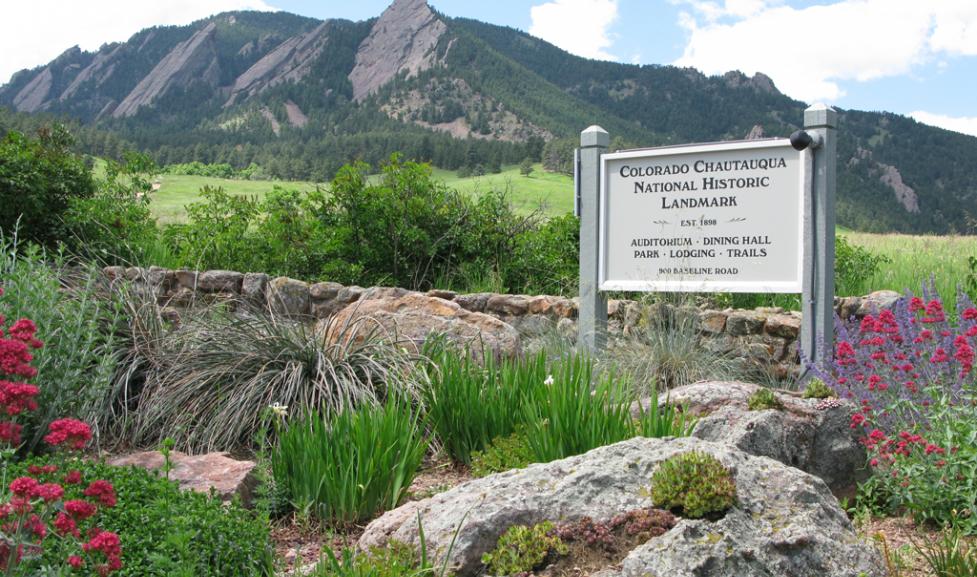
The Colorado Chautauqua has earned its place in history. It was listed on the National Register of Historic Places in 1978 and achieved the coveted status of National Historic Landmark in 2006. The designation protects roughly 40 acres, including the original Auditorium, Dining Hall, cottages, and surrounding landscape.
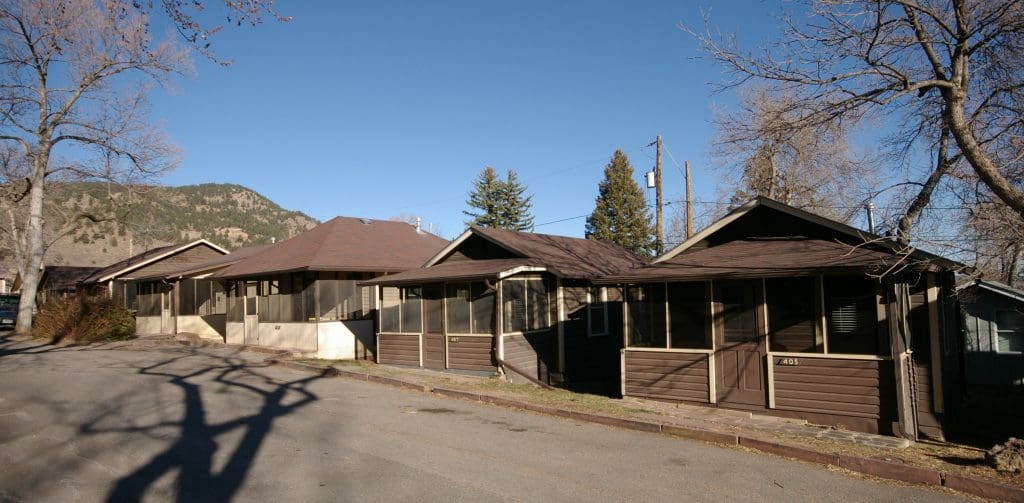
Colorado Chautauqua Cabins Boulder
This recognition reflects more than architecture. It acknowledges Chautauqua’s role as a cultural institution—one that has welcomed generations seeking knowledge, art, and connection in a breathtaking mountain setting.
Chautauqua Park Today
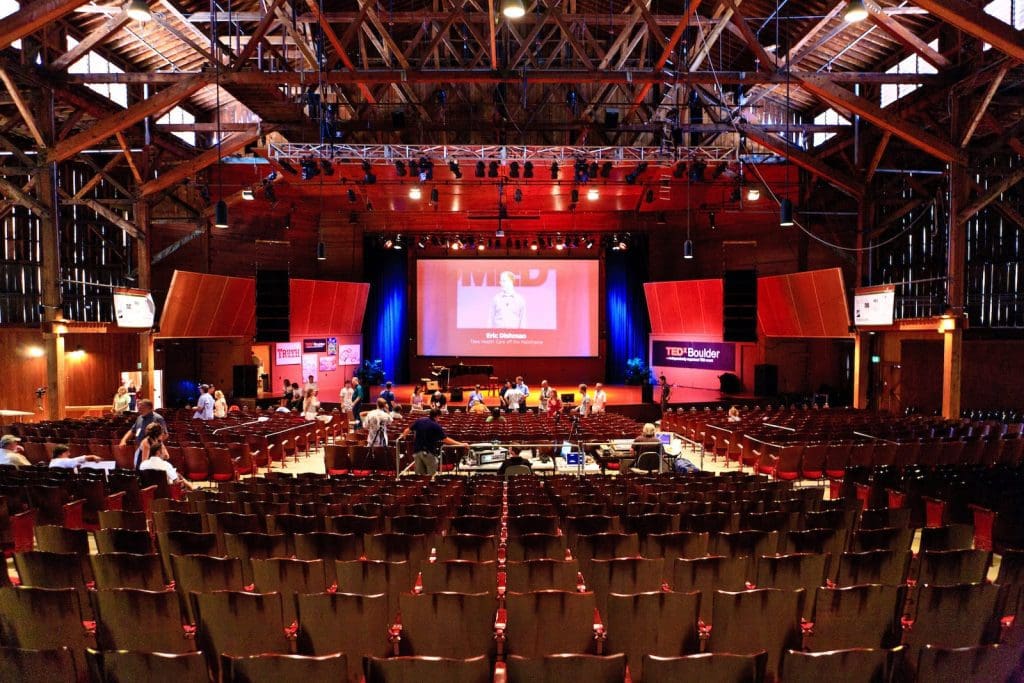
Modern visitors experience a unique blend of tradition and adventure. The Chautauqua Auditorium still hosts concerts, lectures, and film festivals, continuing a tradition of public enrichment. The Dining Hall, operating since 1898, serves locally inspired dishes with Flatiron views from its broad porch. Historic cottages and lodges offer overnight stays that preserve the rustic feel of early retreats.
Perhaps most famously, Chautauqua serves as a gateway to Boulder’s iconic trails. Paths lead hikers straight from the cottages to Bluebell Mesa, Royal Arch, and the dramatic Flatirons. It’s rare to find a place where cultural heritage and outdoor adventure meet so seamlessly.
Why Chautauqua Endures
For more than 125 years, Chautauqua Park has been a cornerstone of Boulder life. Born from a movement dedicated to culture and learning, it has adapted while keeping its original spirit alive. Today, it stands as a symbol of Boulder’s unique identity—where history, community, and nature come together in one extraordinary place.
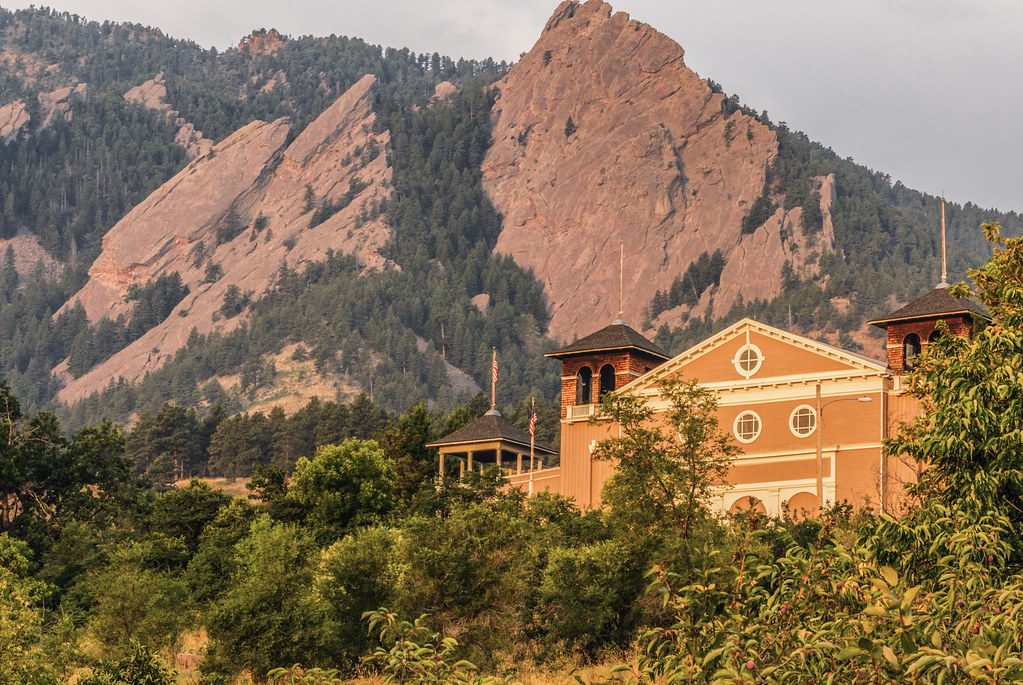
Colorado Chautauqua Auditorium