
CU Boulder’s Iconic Red Tile Roofs Shine Against the Flatirons
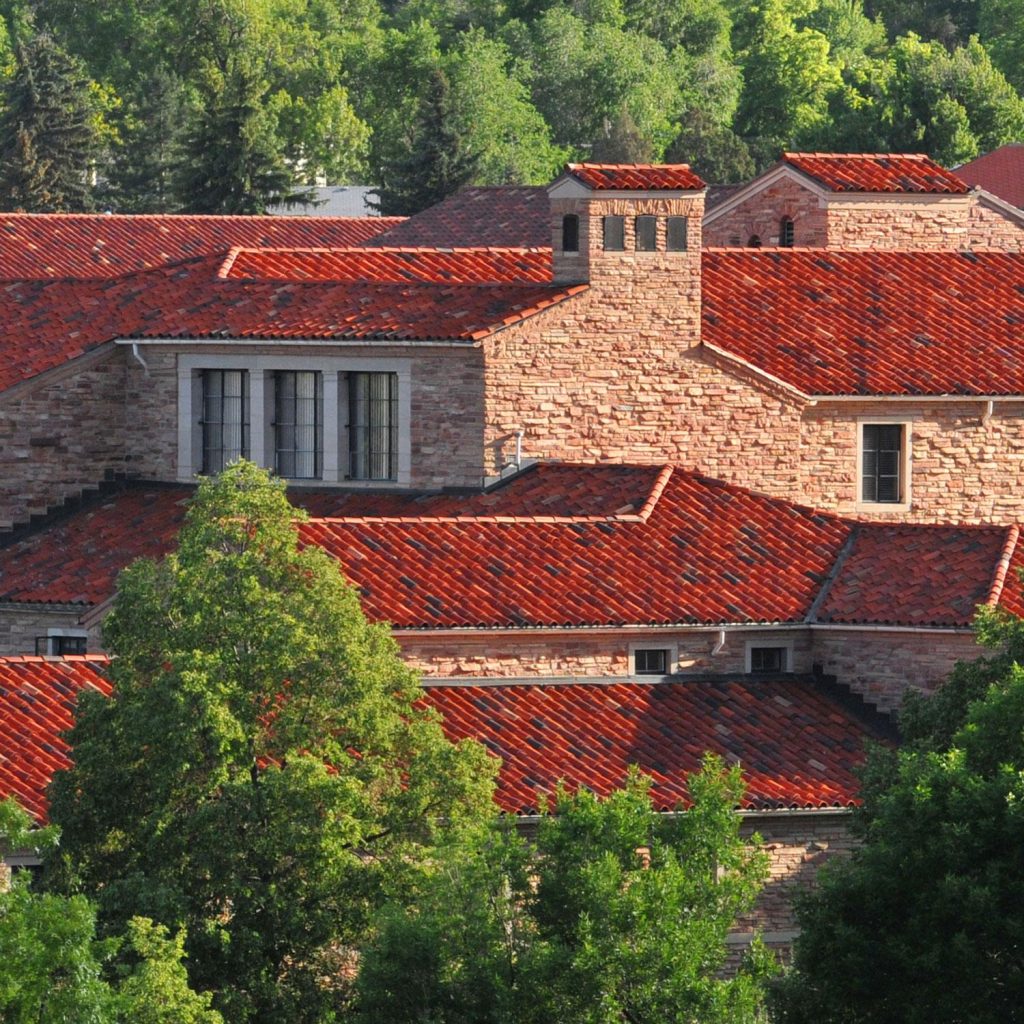
A stunning view of the University of Colorado Boulder campus, showcasing its signature red-tiled roofs and rough, textured sandstone walls, set against the breathtaking backdrop of the Flatirons
On a brilliant summer day in Boulder, Colorado, today’s Outdoor Picture of the Day captures one of the city’s most recognizable sights: the red-tiled rooftops of the University of Colorado Boulder campus beneath blue skies and the dramatic backdrop of the Flatirons.
The scene is unmistakably Boulder.
Across campus, warm red-orange roofs rise above green trees, open quads, and distinctive sandstone buildings. Together, these architectural elements create a look that has defined CU Boulder for more than a century.
The clay tile roofs are more than an attractive architectural detail. They are a central part of the university’s visual identity and one reason the campus is instantly recognizable from viewpoints throughout Boulder.
The Story Behind CU Boulder’s Red Tile Roofs
The story begins with architect Charles Z. Klauder, who developed CU Boulder’s first campus master plan in 1919.
Klauder, a Philadelphia-based architect, moved the university away from the Collegiate Gothic style commonly associated with many older American universities. Instead, he developed an architectural approach inspired by the hill towns of northern Italy and the natural landscape surrounding Boulder.
The resulting design became known as the University of Colorado style, often described as Tuscan Vernacular.
Its defining features included locally sourced sandstone walls, limestone trim, dark metal accents, and the now-famous red-orange clay tile roofs.
In 1921, Hellems Arts and Sciences became the first CU Boulder building constructed in the new architectural style. From there, the design language spread across campus and helped create the unified appearance visitors recognize today.
Millions of Tiles—and a Remarkable Record of Durability
The numbers behind CU Boulder’s roofs are almost as impressive as their appearance.
According to the university, approximately 160 clay tiles cover every 100 square feet of tiled roof area. With a large portion of the campus roofscape covered in clay, the total number of tiles reaches into the millions.
Today, replacement tiles come from the Ludowici Roof Tile Company in Ohio and carry a 75-year warranty.
The tiles are remarkably durable. CU has reported replacing only about 50 to 75 tiles in a typical year, while many historic tiles have remained in service for generations.
Their curved shape also serves a practical purpose. According to CU, the curvature helps distribute the force of hail impact, an important advantage in Colorado’s unpredictable weather.
A Boulder Summer Scene Worth Celebrating
Summer may be one of the best times to appreciate the beauty of the CU Boulder campus.
The combination of deep green foliage, brilliant blue skies, sandstone walls, and glowing red rooftops creates a scene that feels both distinctly Colorado and timeless.
For students, the rooftops represent home. For alumni, they can bring back memories of walks across campus, afternoons on Norlin Quad, and fall Saturdays near Folsom Field. For visitors, they are often among the first architectural details that make the campus unforgettable.
Today’s Outdoor Picture of the Day celebrates that view: a summer scene where architecture, history, and the natural beauty of Boulder come together.
The red roofs are more than a campus trademark. They are part of Boulder’s visual identity—a century-old architectural legacy still shining beneath the Colorado sun.