
Boulder Flatirons Climbing Guide: Gear, Routes, Safety & Adventure in 2026
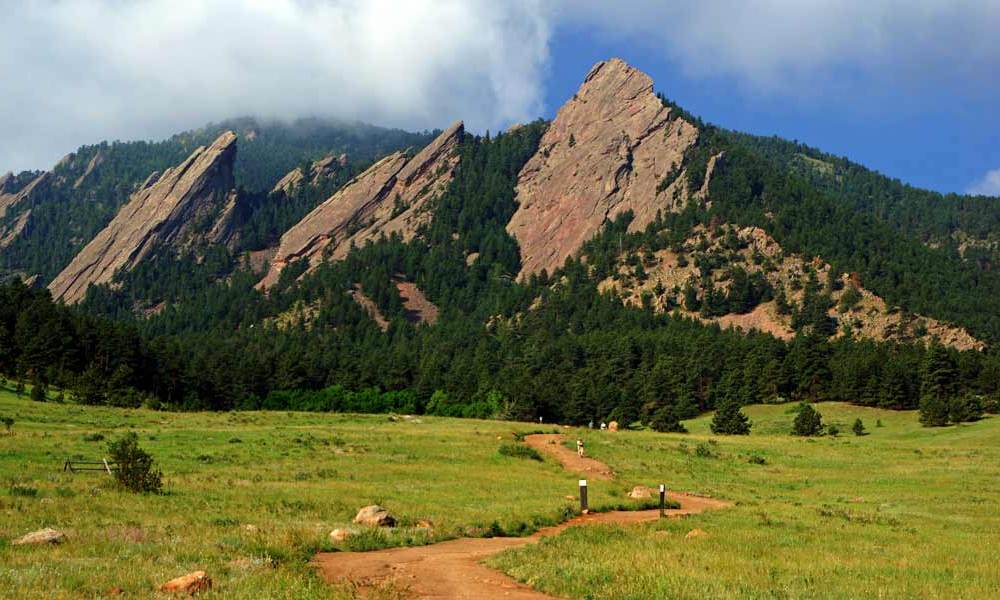
The Flatirons rising above Boulder, Colorado, are more than just one of the most photographed landscapes in the country. For climbers, they represent a legendary playground of sweeping sandstone slabs, exposed multi-pitch routes, and unforgettable summit views overlooking the city below.
Few experiences capture the spirit of Boulder more than watching the sunrise light up the Flatirons while climbers quietly move across the golden rock high above Chautauqua Park. The combination of adventure, history, and scenery has made the Flatirons one of America’s most iconic climbing destinations for well over a century.
With well over 1,000 climbing routes spread across the area, the Flatirons offer everything from beginner-friendly scrambles to long traditional climbs requiring routefinding, confidence, and endurance.
A Landscape Millions of Years in the Making
The Flatirons belong to the Fountain Formation, a unique sandstone and conglomerate rock layer formed roughly 290 to 300 million years ago during the Pennsylvanian Period. Later tectonic forces during the Laramide Orogeny tilted the massive slabs upward into the dramatic formations seen today.
The result is one of the most recognizable natural landmarks in Colorado.
Climbing history here runs deep. The first recorded ascent of the Third Flatiron’s East Face occurred in 1906 when brothers Floyd and Earl Millard completed the route long before modern climbing gear existed. Over the decades, Boulder climbers helped shape American climbing culture here through bold ascents, speed records, and groundbreaking free climbs.
Legendary climber Yvon Chouinard once called the East Face of the Third Flatiron “the finest beginner climb in the country,” and many climbers still agree today.
Getting There and Best Times to Climb
Most Flatiron adventures begin at Chautauqua Park near Baseline Road and 9th Street. On weekends and during summer, parking fills extremely early, especially during sunrise hours. Arriving before 7 a.m. is highly recommended.

The approach hikes generally take between 20 and 45 minutes depending on the route. Trails like the Bluebell-Baird Trail provide access to the First, Second, and Third Flatirons. Approach shoes with sticky rubber help tremendously on the rocky terrain.
Spring and fall are typically the best seasons for climbing. Cooler temperatures and stable weather create ideal friction conditions on the sandstone slabs.
Summer climbing often means alpine-style early starts to avoid afternoon thunderstorms and intense afternoon heat. Winter ascents are still possible, though climbers should prepare for icy trails and rapidly changing weather conditions.
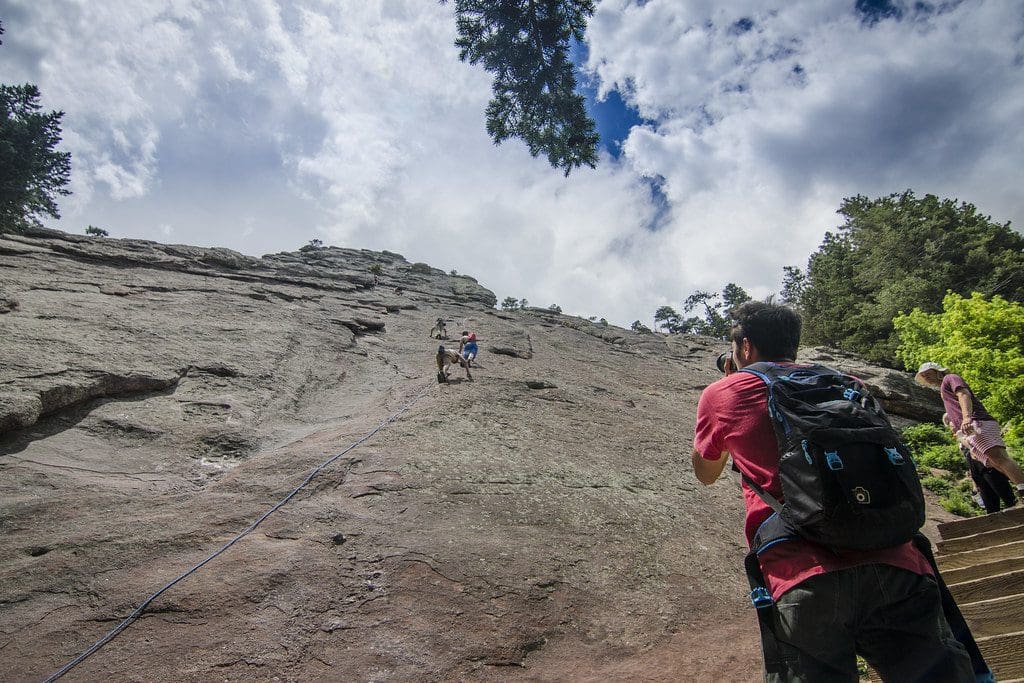
Flatirons in Boulder, Colorado
One critical note for visitors: seasonal raptor closures regularly affect climbing access. Peregrine falcon nesting closures commonly impact areas around the Third Flatiron between February 1 and July 31. Climbers should always check current Open Space and Mountain Parks regulations before heading out.
Essential Flatirons Gear
Flatiron climbing is very different from steep sport climbing gyms or bolt-protected crags. This is classic traditional slab climbing where footwork, balance, and trust in friction matter most.
A standard setup usually includes:
- 60-meter rope
- Light trad rack with cams and nuts
- Helmet
- Sticky rubber climbing shoes
- Approach shoes
- Long slings for extending protection
- Headlamp
- Rain shell
- Plenty of water and snacks
Because many pitches stretch over 150 feet, communication between climbers can become difficult quickly. Many newer teams break longer pitches into shorter sections for safety and efficiency.
Guidebooks like Jason Haas’ Climbing Boulder’s Flatirons remain among the best modern resources for route descriptions, photos, and navigation.
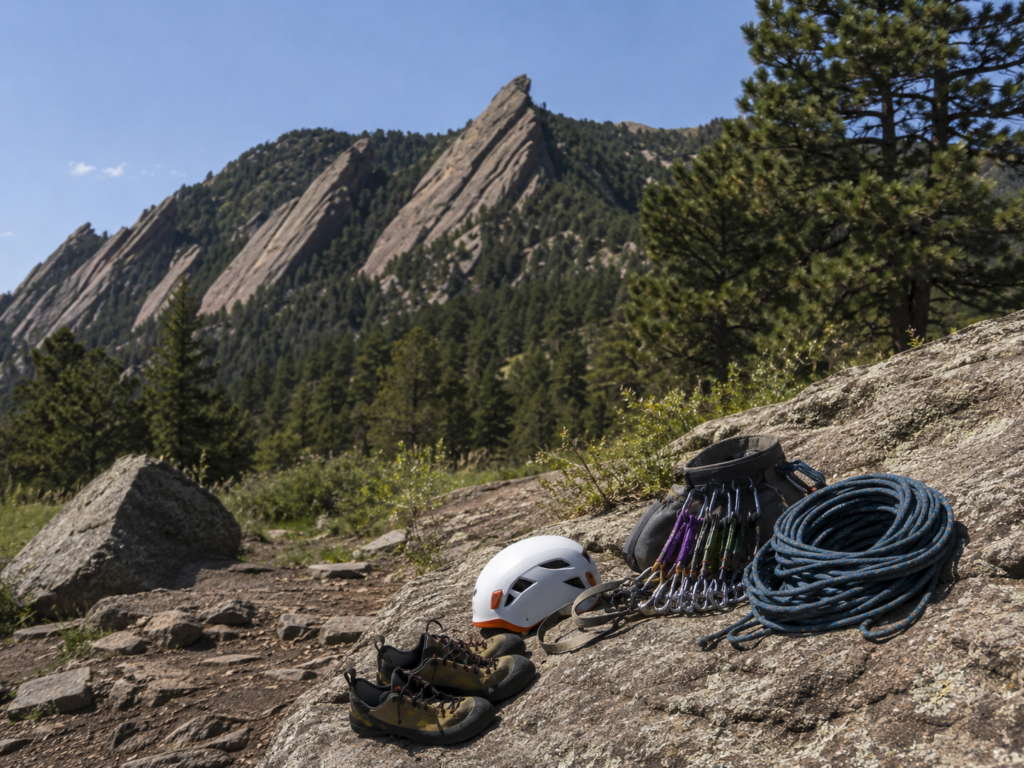
Climbing gear staged beneath Boulder’s iconic Flatirons ahead of a traditional sandstone ascent, showcasing the essential equipment and preparation required for one of Colorado’s most legendary climbing destinations.
Classic Flatiron Routes
Third Flatiron East Face (5.4)
The East Face of the Third Flatiron is the crown jewel of beginner multi-pitch climbing in Boulder. The route typically involves seven to eight pitches of beautiful exposed slab climbing with incredible views over Boulder County.
The climbing remains moderate, but the exposure and length create a true big-route feeling.
First Flatiron
The First Flatiron offers several classic lines, including the Direct East Face (5.6 R), Baker’s Way (5.3), and the North Arete (5.4). These routes deliver long stretches of clean sandstone and airy climbing high above the city.
Watching sunset light hit the First Flatiron after a summer storm is one of Boulder’s unforgettable sights.
Second Flatiron
The Second Flatiron often serves as a friendlier introduction to the area. Routes like Freeway (5.2) combine scrambling and moderate climbing, making them ideal for climbers building confidence on exposed terrain.
Safety and Respect for the Resource
Flatiron climbing rewards patience, good judgment, and preparation.
Weather can change rapidly, and lightning becomes extremely dangerous on exposed rock. Wet sandstone also becomes slippery and fragile, so climbers should avoid climbing immediately after rain.
Routefinding can be surprisingly challenging even on easier terrain. Many accidents occur during descents rather than the climb itself.
Starting early, carrying proper gear, respecting closures, and following Leave No Trace principles help preserve this incredible resource for future generations.
Long after the climb is over, most people remember the feeling: the wind on the sandstone slabs, the quiet high above Boulder, and the moment they realized why the Flatirons remain one of America’s truly legendary climbing destinations.
Final Note
Always check current weather conditions, seasonal closures, and Open Space and Mountain Parks regulations before climbing. Rock climbing involves inherent risks and should be approached with proper training and preparation.