Boulder Hail Season Survival Guide: Protect Your Car, Home, and Wallet
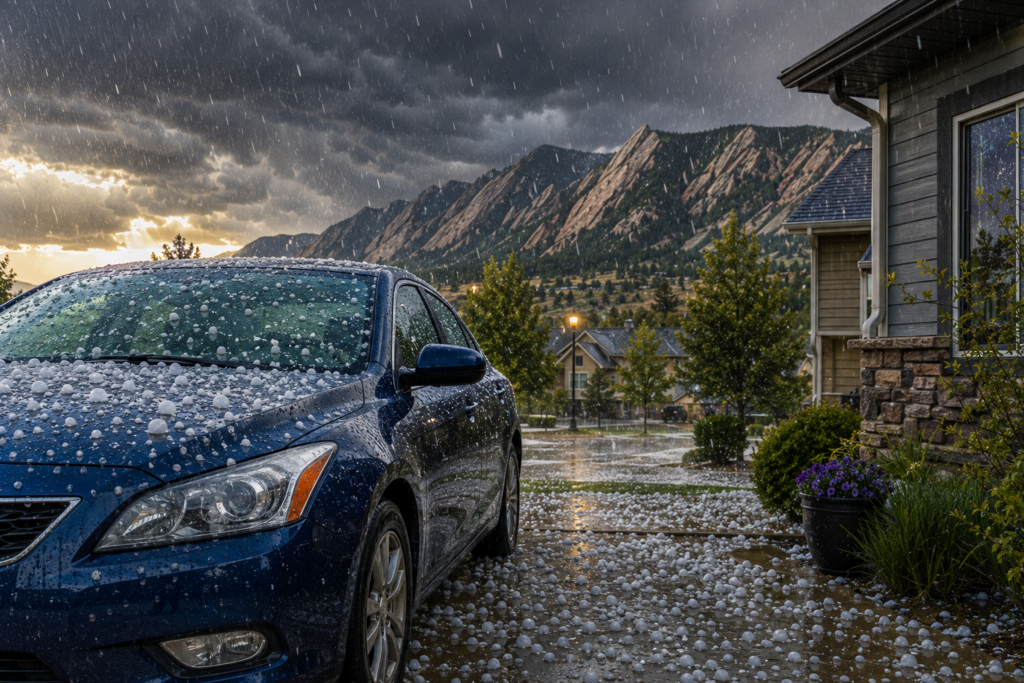
Dark clouds building over the Flatirons on a warm June afternoon can be one of the most beautiful sights in Boulder. They can also signal the arrival of one of Colorado’s most destructive weather events: a hailstorm.
With hail season now entering its peak months, Boulder residents should pay close attention. The Front Range is part of what meteorologists commonly refer to as “Hail Alley,” an area that experiences some of the highest frequencies of severe hailstorms in the country. According to the National Weather Service Boulder Forecast Office, severe thunderstorms can develop rapidly during late spring and early summer as warm air collides with cooler air descending from the mountains.
June is often the most active month, and storms can move from the foothills into Boulder County with little warning.
Why Boulder Gets So Much Hail
The same geography that gives Boulder its spectacular mountain views also creates ideal conditions for severe weather. As air rises along the foothills, thunderstorms can quickly intensify, producing large hail, damaging winds, and heavy rain.
The National Weather Service classifies hail one inch in diameter or larger as severe. While that may not sound particularly large, hailstones of that size can crack windshields, dent vehicles, damage siding, and shorten the lifespan of a roof. Some Front Range storms have produced hailstones much larger than golf balls, causing millions of dollars in damage across Colorado communities.
Residents throughout Boulder, Louisville, Lafayette, Erie, Superior, and Gunbarrel are all vulnerable when these powerful storms develop.

Your Car Is Often the First Victim
For many Boulder residents, a vehicle is the most expensive item exposed to the elements every day.
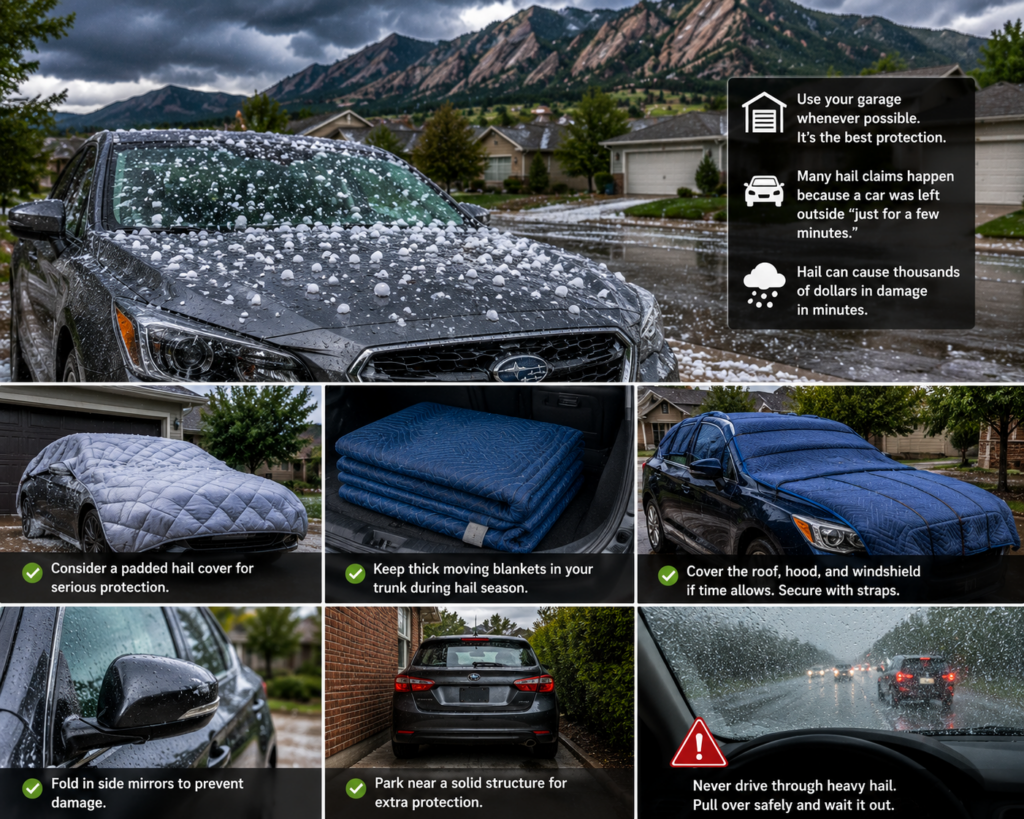
If you have access to a garage, use it whenever severe weather is possible. It sounds simple, but many hail claims happen because a vehicle was left outside “just for a few minutes.”
If garage space isn’t available, consider investing in a padded hail cover designed specifically for hail protection. Standard dust covers provide very little protection against larger hailstones.
Colorado residents have also developed a few practical tricks over the years. Keeping several thick moving blankets in your trunk during hail season can provide temporary protection if a storm develops unexpectedly. Covering the roof, hood, and windshield may help reduce damage from smaller hail.
If conditions deteriorate rapidly, avoid driving through the storm. Find a safe place to stop and wait for the hail to pass.
Protecting Your Home Before the Storm Arrives
Most of the financial damage from hailstorms occurs on rooftops.
Even when damage isn’t immediately visible, hail can remove the protective granules from asphalt shingles. According to research from the Colorado Climate Center at Colorado State University, repeated hail impacts can significantly shorten the life of roofing materials and increase the likelihood of future leaks.
Before peak hail season arrives, homeowners should inspect their property and address potential vulnerabilities.
Trim tree branches that hang over your home. Secure patio furniture and outdoor decorations. Check gutters and downspouts. Make sure skylights and windows are in good condition. Having tarps available for emergency repairs can also save valuable time if damage occurs.
For homeowners planning a roof replacement, impact-resistant Class 4 shingles are worth considering in a region where hail is a recurring threat.
What To Do During a Hailstorm
When a severe thunderstorm warning is issued, take it seriously.
The National Weather Service recommends moving indoors immediately and staying away from windows and glass doors. Large hailstones can cause serious injuries, and strong winds often accompany severe thunderstorms.
Bring pets inside, avoid unnecessary travel, and continue monitoring weather alerts until the storm has completely passed.
Many Boulder residents have learned that storms can arrive quickly and intensify even faster, making preparation the best defense.
After the Storm: Document Everything
Once conditions are safe, thoroughly inspect and document any damage.
Take photographs of vehicles, siding, gutters, windows, landscaping, and any visible roof damage. If hailstones remain on the ground, place a coin next to them before taking photos to document their size.
Detailed records can make the insurance claims process much smoother.
Homeowners should also consider scheduling an inspection with a reputable local roofing contractor if they suspect roof damage. Be cautious of out-of-town contractors who often arrive immediately after major storms and pressure homeowners into signing contracts on the spot.
Stay Prepared All Summer Long
One of the best resources available to Boulder residents is Boulder County Emergency Management, which provides preparedness information and emergency updates throughout the year.
In addition, keeping weather alerts enabled on your phone and regularly monitoring forecasts from the National Weather Service can provide valuable extra time when storms begin developing over the mountains.
Living in Boulder means embracing everything that comes with life along the Front Range. The mountain views, incredible sunsets, outdoor recreation, and changing seasons are part of what makes this area special. Hail happens to be part of the package as well.
Fortunately, a little preparation goes a long way.
Organize the garage. Review your insurance coverage. Keep a few moving blankets handy. Pay attention when those towering clouds begin building over the Flatirons.
The next hailstorm may be impossible to stop, but with the right preparation, you can dramatically reduce its impact on your home, your vehicle, and your wallet.