Best Moose Viewing Spots Near Boulder, Colorado
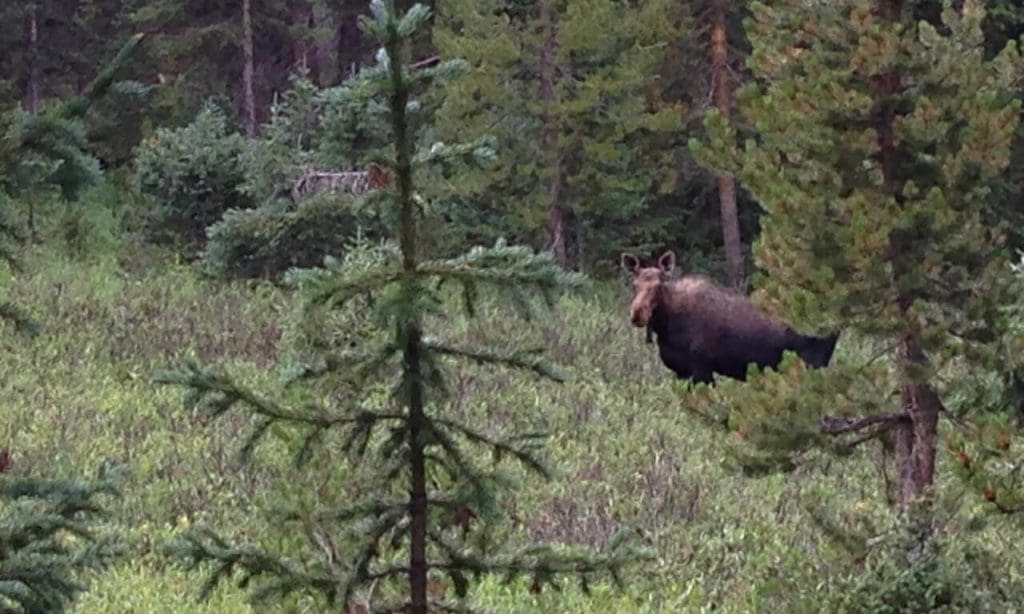
There’s something unforgettable about seeing a moose in the Colorado high country.
These massive, surprisingly quiet animals are the largest members of the deer family, and their numbers have expanded dramatically across Colorado in recent decades.
For Boulder residents, the good news is that you don’t have to cross the state to find them. Some excellent moose habitat begins practically in Boulder’s backyard, especially in the higher country west of town where wetlands, willow bottoms and alpine lakes create ideal conditions.
Safety First: Give Moose Plenty of Room
Moose may look calm, but they are powerful wild animals.
Colorado Parks and Wildlife advises visitors to observe moose from a safe distance, using binoculars or telephoto lenses instead of moving closer.
Dogs require particular caution. Moose can perceive dogs as a threat, and encounters involving dogs have resulted in injuries to both people and pets. Keep dogs leashed and under control in moose country, or consider leaving them home.
Never feed a moose, crowd one for a photograph or get between a cow and her calf.
Brainard Lake: Boulder’s Backyard Moose Country
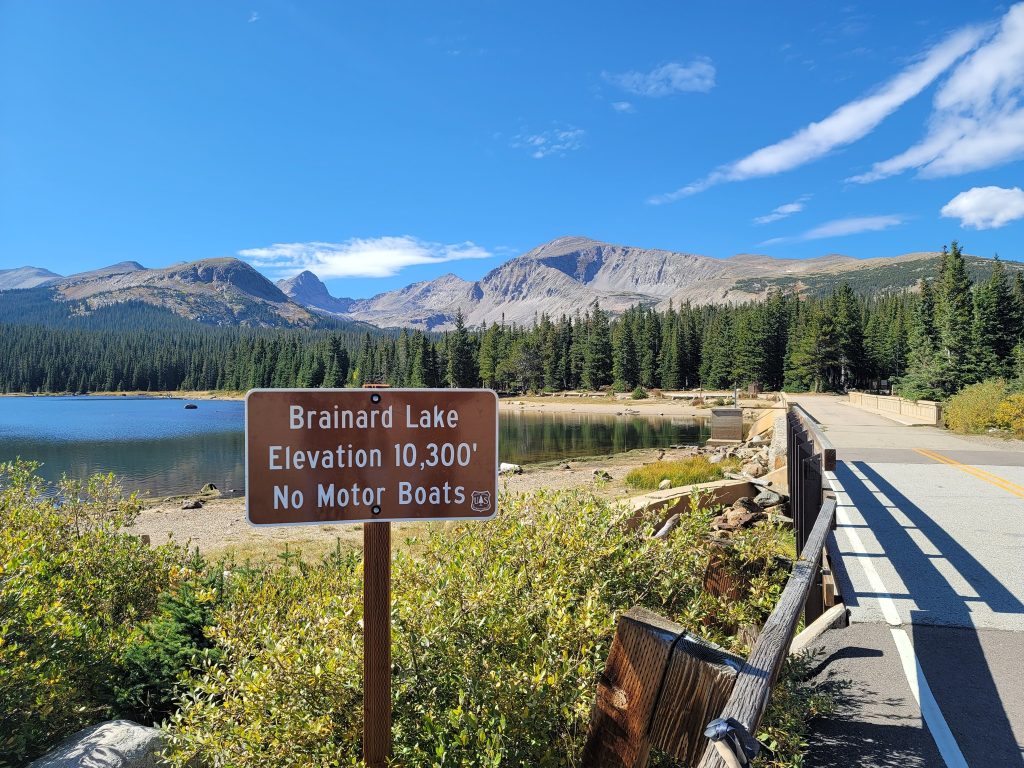
For Boulder residents, Brainard Lake Recreation Area near Ward is one of the best places to start.
The area offers exactly the kind of habitat moose favor: willow bottoms, wetlands, lakes, forests and high-elevation meadows. The surrounding trail system also leads toward Long Lake, Mitchell Lake and Lake Isabelle, making Brainard an outstanding destination even when the moose don’t cooperate.
The secret is patience.
Arrive early, walk quietly and spend some time scanning the willows and wetlands rather than expecting an animal to conveniently walk across the trail.
Brainard Lake also makes a natural companion to many of the other great outdoor destinations near Boulder, where short drives can quickly lead into dramatically different mountain environments.
During the summer operating season, visitors should check current access and parking requirements before making the drive.
Nederland and the Peak to Peak
Don’t overlook the mountains immediately west of Boulder.
The Nederland area and the Peak to Peak corridor contain wetlands, ponds, willow habitat and mountain forests where moose can appear.
Rather than racing from one location to another, slow down and watch promising habitat.
A dark shape among the willows can look like a stump until suddenly it lifts its head.
And there’s your moose.
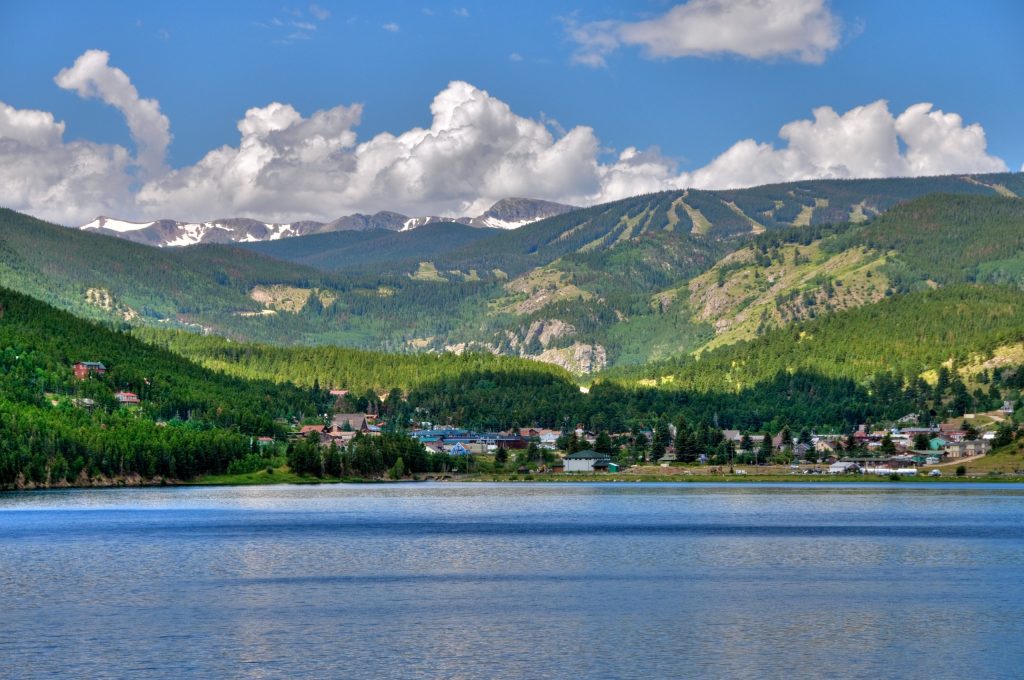
Nederland, Colorado
North Park: Colorado’s Moose-Viewing Capital
If seeing a moose is the primary mission, head north.
North Park, surrounding Walden near the Wyoming border, has earned a reputation as one of Colorado’s premier moose-viewing regions.
At the heart of the area is State Forest State Park, a sprawling landscape of mountains, forests, alpine lakes and wildlife habitat. Colorado Parks and Wildlife says more than 600 moose can be observed year-round in North Park, making the region one of the strongest bets in the state.
Even without a sighting, the scenery alone makes the trip worthwhile.
Rocky Mountain National Park
Rocky Mountain National Park has also become outstanding moose country.
The west side near Grand Lake is particularly well known for sightings. The Kawuneeche Valley contains broad wetlands and willow habitat along the headwaters of the Colorado River, creating classic moose territory.
Moose can also appear elsewhere in the park, including the east side, so keep watching whenever you encounter suitable habitat.
National Park Service research has documented the species’ growing presence throughout the park, with moose now found across its major drainages.
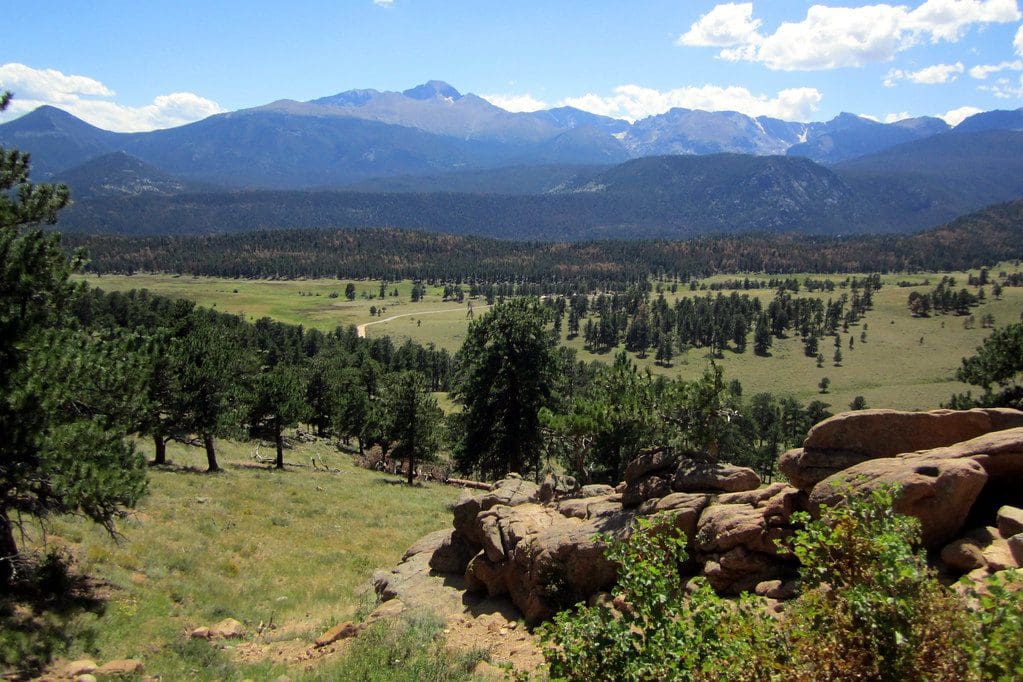
Colorado – Rocky Mountain National Park: View across Upper Beaver Meadows from Trail Ridge Road
When Should You Look?
Early morning and evening are excellent times to watch for wildlife.
Bring binoculars and scan wetlands, lakeshores and willow-filled drainages carefully. Despite their enormous size, moose can be remarkably difficult to spot.
Instead of covering as much ground as possible, stop occasionally and watch one promising area for several minutes.
Movement often gives the animal away.

Colorado’s Moose Story Just Got More Interesting
There’s another reason Boulder readers should be fascinated by Colorado’s moose.
Recent research led by CU Boulder archaeologist William Taylor and an interdisciplinary team challenges the familiar idea that moose are simply newcomers brought to Colorado in the late 1970s.
The researchers examined archaeological evidence, historical records, museum collections, photographs and Indigenous traditional knowledge. Their findings indicate that moose inhabited the southern Rocky Mountains for centuries — and likely much longer — before Colorado’s modern relocation efforts began in 1978.
CU Boulder’s research on Colorado’s deeper moose history adds a fascinating new layer to the story.
Colorado’s modern moose population certainly expanded following wildlife relocation efforts. But emerging evidence suggests these animals have a much deeper connection to the southern Rocky Mountains than many people previously realized.
Boulder to the High Country
Whether it’s an early-morning trip to Brainard Lake, a drive through Rocky Mountain National Park or a dedicated wildlife weekend in North Park, seeing a moose remains one of Colorado’s great wildlife experiences.
Bring binoculars. Keep dogs controlled. Give the animal plenty of room. And let the moose decide how long the encounter lasts.
From the mountains above Boulder to the wetlands of North Park, Colorado still has plenty of wild places.
Sometimes you just have to slow down long enough to see what’s standing in the willows.