
Boulder Outdoor Picture of the Day: NCAR in Summer
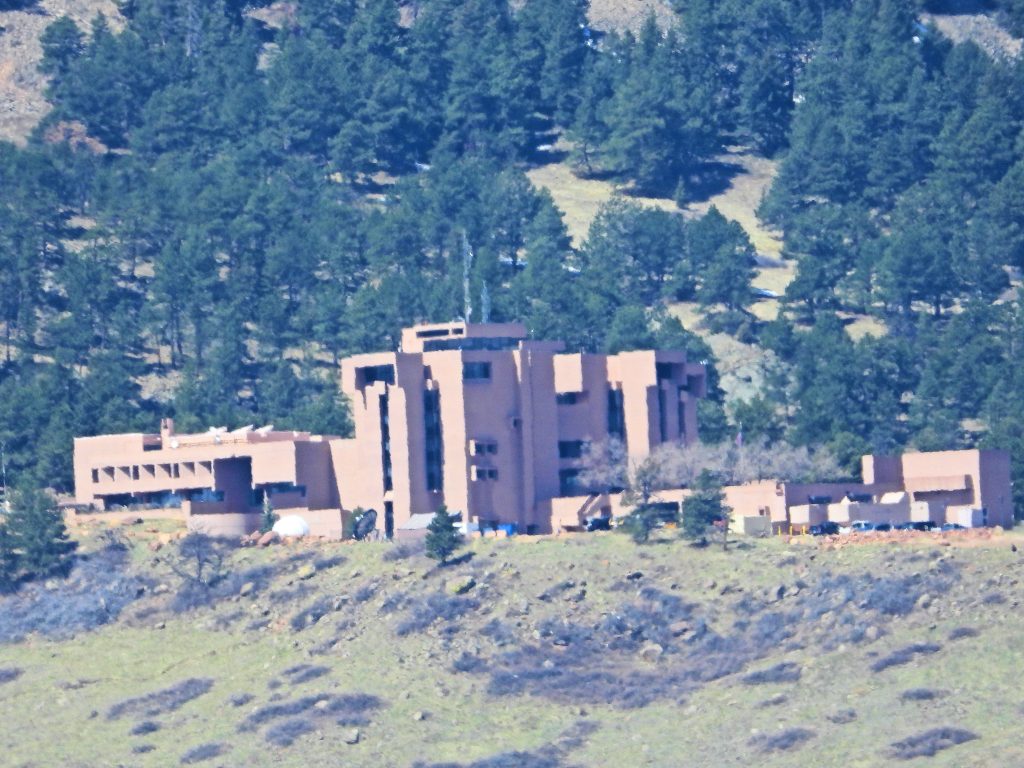
On a beautiful summer day in Boulder, the National Center for Atmospheric Research rises dramatically above the city from its home on Table Mesa. With blue skies overhead, green foothills surrounding it, and the Colorado plains stretching toward the horizon, NCAR looks less like a conventional laboratory and more like a monument carved directly from the landscape.
Today’s Outdoor Picture of the Day captures one of Boulder’s most unusual and recognizable buildings—a landmark where architecture, science, and nature meet.
The Vision of Architect I. M. Pei
The Mesa Laboratory was designed by I. M. Pei, one of the most celebrated architects of the modern era. Pei later became internationally famous for projects such as the glass pyramid at the Louvre Museum in Paris, the East Building of the National Gallery of Art in Washington, D.C., and the Bank of China Tower in Hong Kong.
Pei was unanimously selected to design the Boulder laboratory in 1961. According to the UCAR Archives’ history of the architect’s selection, the committee wanted a building that would harmonize with its extraordinary foothills setting. Pei’s sensitivity to light, texture, and shadow helped him create a structure that changes character throughout the day.
Construction began in 1964, and the Mesa Laboratory was officially dedicated on May 10, 1967.
A Building Designed for Boulder
Rather than competing with the Flatirons, Pei designed the laboratory to feel like part of the mountain environment. Its massive towers, geometric openings, deep shadows, and warm-colored concrete evoke the ancient cliff dwellings of the American Southwest.
To create the building’s distinctive color and texture, crushed aggregate from local stone was incorporated into the concrete. Bush-hammering the finished surfaces exposed the stone beneath, giving the laboratory its rugged, weathered appearance.
From below, the building seems imposing and mysterious. Up close, however, it reveals courtyards, fountains, walkways, terraces, and carefully framed views of the surrounding mountains and plains.
Fun Facts About Boulder’s NCAR Landmark
NCAR’s futuristic appearance earned it a memorable role in popular culture. Parts of Woody Allen’s 1973 science-fiction comedy Sleeper were filmed at the laboratory, where the building served as an ideal vision of the future.
The site is also much more than an architectural attraction. Scientists working through NCAR study weather, climate, wildfires, atmospheric chemistry, space weather, and other forces affecting the planet.
Visitors can explore interactive exhibits, learn about Earth-system science, and enjoy the surrounding trails. The NSF NCAR Visitor Center is generally open to the public and offers free admission, although visitors should confirm current hours before arriving.
Visitors can also discover more about NCAR’s remarkable architecture, scientific research, and Boulder history.
On a clear summer day, NCAR remains one of Boulder’s greatest visual symbols: bold yet grounded, scientific yet artistic, and unmistakably connected to the landscape around it.