
Devil’s Thumb: Boulder’s Most Mysterious Rock Formation Towers Above the Flatirons
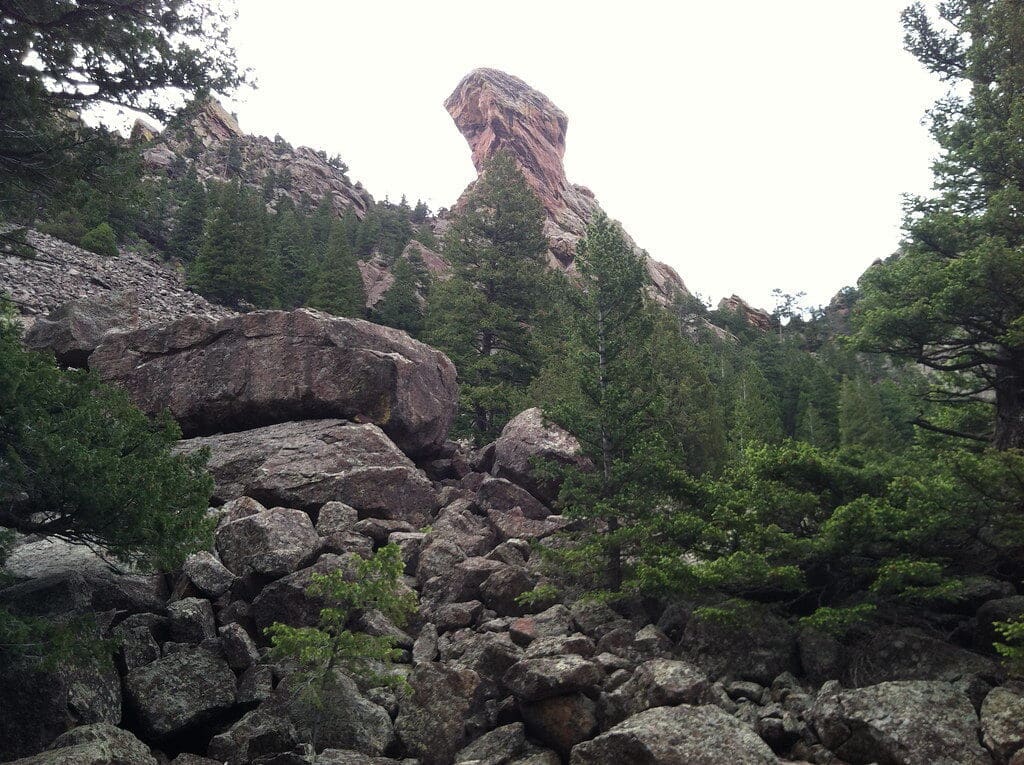
Few landmarks in Boulder spark curiosity quite like Devil’s Thumb.
Rising dramatically above the southern skyline just south of Bear Peak, this thumb-shaped sandstone spire has become one of Boulder’s most recognizable and mysterious natural landmarks. While the famous numbered Flatirons steal much of the spotlight, Devil’s Thumb quietly stands apart—rugged, steep, and impossible to ignore.
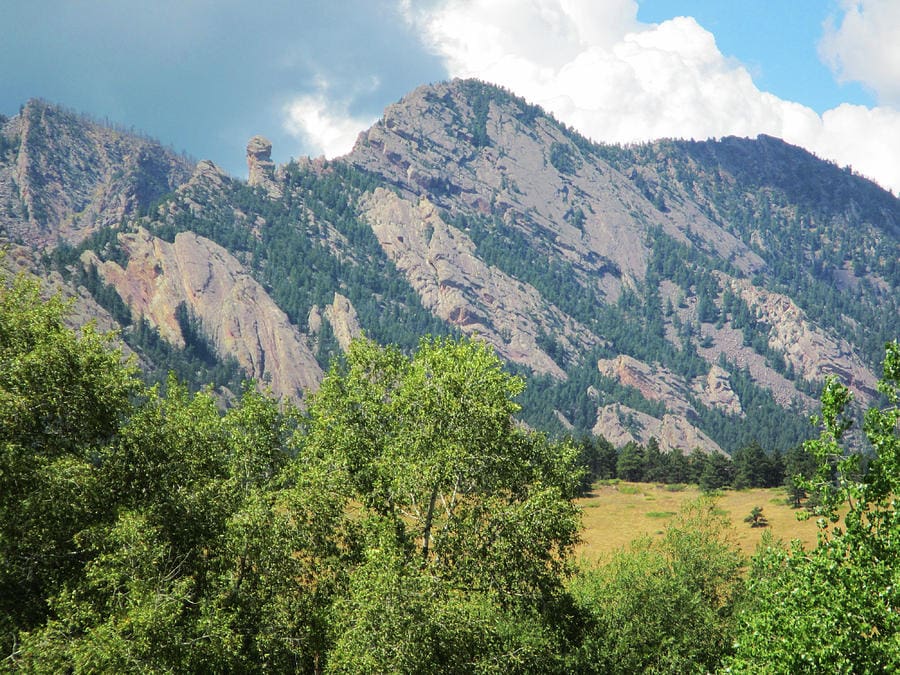
If you’ve ever looked west from South Boulder or driven along Broadway and spotted a strange rock finger jutting into the sky, chances are you were looking at Devil’s Thumb.
Where Is Devil’s Thumb?
Devil’s Thumb is located in the Southern Flatirons area within Boulder’s vast open space system, perched high on the shoulder of Bear Peak.
Unlike the First, Second, and Third Flatirons near Chautauqua Park that attract large crowds, Devil’s Thumb feels wilder and more remote. It’s most commonly seen from trails near South Mesa, Shadow Canyon, and from neighborhoods throughout South Boulder.
Its steep cliffs and overhanging faces make it stand out from the surrounding formations.
Why Is It So Famous?
Part of Devil’s Thumb’s appeal is its unmistakable shape.
The rock formation really does resemble a giant thumb rising from the mountain.
For decades, hikers, climbers, and photographers have been drawn to it for both its unusual appearance and the challenge it presents. It’s one of those Boulder landmarks that almost everyone recognizes, even if they don’t know its name.
There’s also a bit of lore attached to it.
Long ago, a steel ladder was reportedly installed on the formation to make climbing easier. That ladder has since been removed, adding to the legend and mystique of the rock. Today, climbing Devil’s Thumb is considered technical and is only recommended for experienced climbers.
A Photographer’s Dream
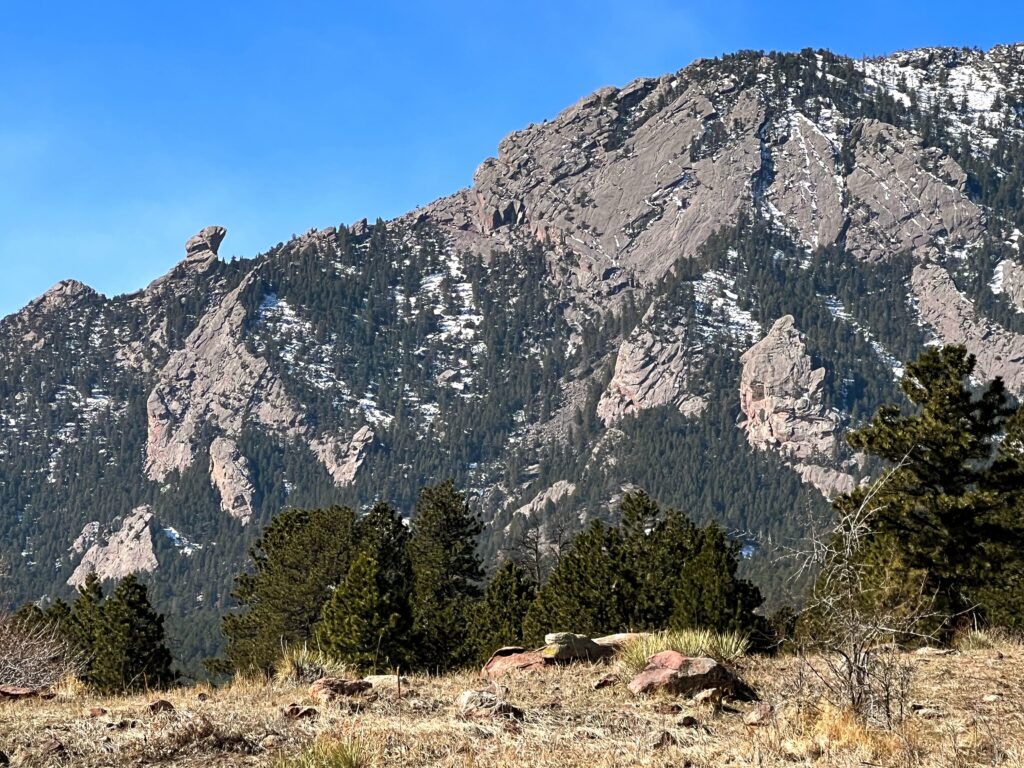
Devil’s Thumb may be one of the most photogenic rock formations in Boulder County.
At sunrise, it catches the first warm glow of light. At sunset, it often silhouettes dramatically against fiery Colorado skies.
The best places to photograph Devil’s Thumb include:
South Mesa Trailhead
A classic view with open meadows in the foreground.
Shadow Canyon Trail
A closer, more dramatic angle as you climb.
NCAR and South Boulder
Great distant skyline shots.
Broadway and Table Mesa Area
Perfect for iconic city-meets-mountains compositions.
For AboutBoulder readers, Devil’s Thumb is exactly the kind of local hidden gem that performs well as an Outdoor Picture of the Day.
A Boulder Symbol of Adventure
Boulder is known for adventure, and Devil’s Thumb represents the city’s wild side.
It’s not polished.
It’s not easy.
It doesn’t have gift shops or paved paths leading to it.
It stands raw, rugged, and bold—much like Boulder itself.
For hikers, it symbolizes exploration.
For climbers, challenge.
For photographers, beauty.
And for locals, it’s simply part of the everyday skyline that makes Boulder one of the most beautiful places in America.
Next time you’re outside in Boulder, look toward the southern skyline.
You’ll see it.
A giant stone thumb reaching into the Colorado sky.
And once you notice Devil’s Thumb…
you’ll never stop looking for it.