
Faces of Boulder: Winter Climbing Edition — How Boulder’s Climate Shapes Its Climbers
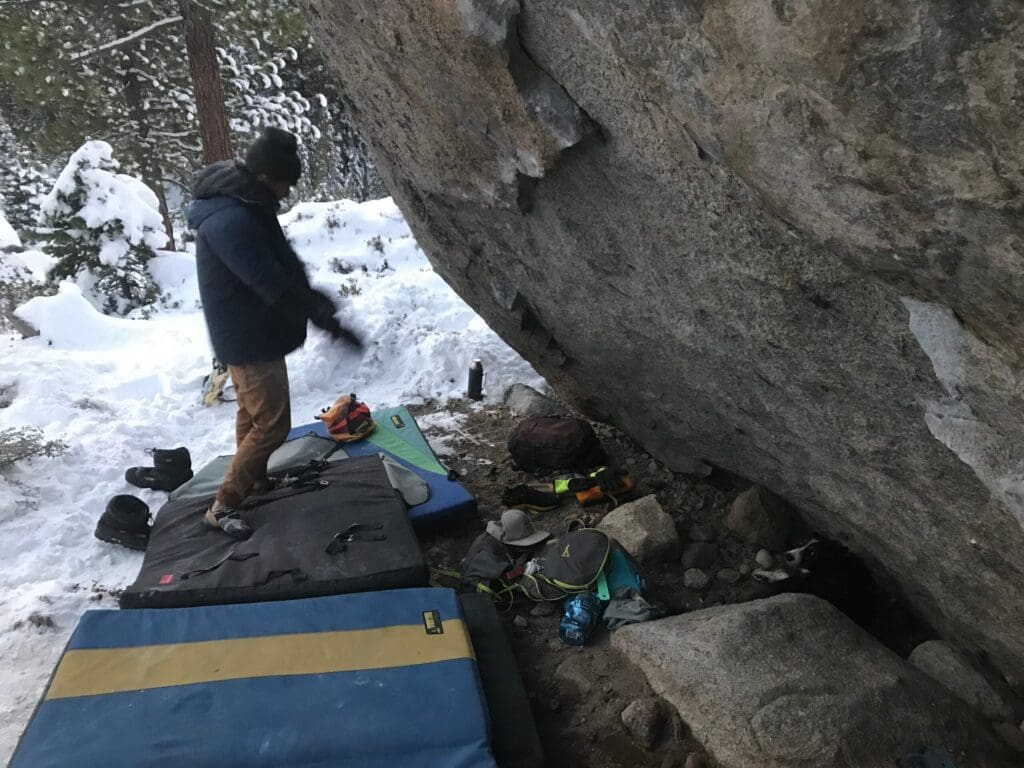
Winter in Boulder doesn’t slow climbers down — it sharpens them. On a cold, clear day, a Boulderite sets down multiple crash pads beneath a weathered boulder, takes a moment to feel the air, and begins to move. This is Faces of Boulder: Climate Edition — Winter Climbing, where preparation, patience, and respect for conditions matter just as much as strength.
Boulder’s winter climate creates a unique training ground. Cold temperatures improve friction, dry air preserves holds, and the changing light forces climbers to be intentional about when and where they climb. For many locals, winter isn’t a break from climbing — it’s a season of refinement.
Crash Pads: Essential Tools for Winter Sessions
Today’s climber arrives with more than one pad, carefully arranging them beneath the problem. In winter, crash pads become even more important. Cold muscles react slower, ground conditions can be uneven or frozen, and bulky layers slightly change balance and movement.
Boulder climbers are meticulous about pad placement. Multiple pads are overlapped to eliminate gaps. Corners are secured. Spotters stay alert. This attention to detail reflects Boulder’s broader climbing culture — one built on responsibility, awareness, and community support rather than ego.
Winter climbing rewards those who take the time to prepare before leaving the ground.
Boulder’s Favorite Winter Practice Areas
Boulder offers an incredible range of winter-friendly climbing zones, many of which stay accessible even when higher elevations are snow-covered.
- Flagstaff Mountain remains one of the most popular winter training areas. South-facing boulders catch early sunlight, warming rock surfaces and making short sessions possible even on cold days. The variety of problems makes it ideal for both experienced climbers and beginners.
- Eldorado Canyon State Park is another cold-season favorite when conditions are right. Known for its climbing history, the park offers sun exposure, solid landings, and terrain that encourages thoughtful movement.
- Lower foothill zones closer to town provide sheltered pockets where climbers can practice technique without battling strong winds.
Each area teaches climbers how to read rock, light, and temperature — skills that carry over into every season.
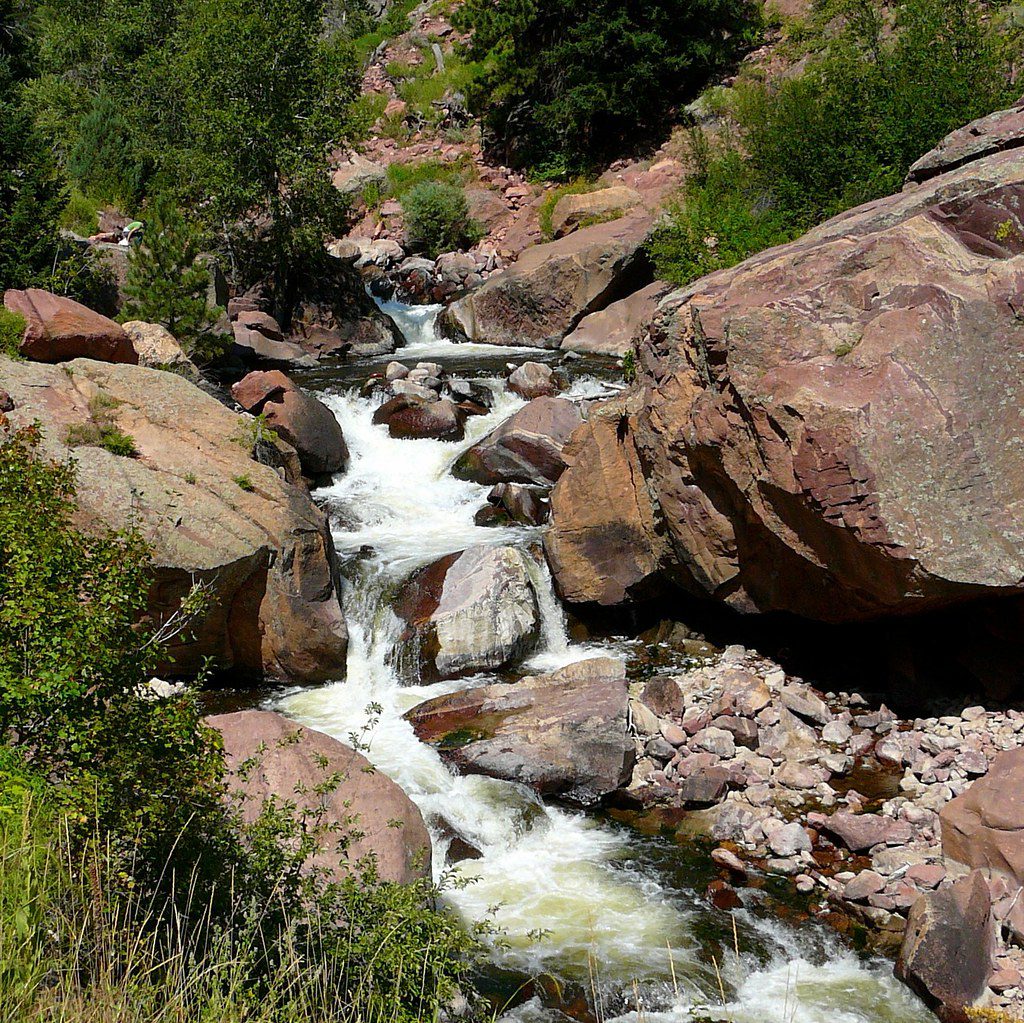
Eldorado Canyon State Park
Faces of Boulder: Beginners Edition
Winter is one of the best times for beginners to start climbing in Boulder. Fewer crowds mean less pressure. Lower-angle problems encourage balance and footwork. Shorter daylight windows promote focused sessions rather than marathon attempts.
Beginners often start with low-height boulders where multiple pads can fully protect landings. Winter climbing emphasizes fundamentals: controlled movement, precise foot placement, and efficient body positioning. Watching experienced Boulder climbers warm up slowly and deliberately offers a powerful lesson in patience and longevity.
In Boulder, beginners aren’t rushed. They’re welcomed.
How Boulder’s Climate Shapes Its Climbers
This is the heart of Faces of Boulder: Climate Edition. Boulder’s environment actively shapes the people who climb here. Cold days teach restraint. Wind demands control. Sun exposure dictates timing. Climbers learn to adapt, to listen, and to respect the landscape rather than fight it.
The Boulderite practicing today with pads spread beneath him represents something larger than a single session. He reflects a community that embraces challenge thoughtfully and values preparation over bravado.
In Boulder, winter climbing isn’t about pushing through harsh conditions. It’s about learning from them — one careful move at a time.