How Boulder Became America’s Foodiest Town (And Why It Still Dominates Today)

Pearl Street Mall, one of the most famous outdoor malls in the country, set against the stunning backdrop of the Rocky Mountains in Boulder, Colorado.
Step onto Pearl Street Mall in Boulder on a sunny afternoon. The air hums with laughter, clinking glasses, and the irresistible aroma of wood-fired pizza, fresh herbs, and Colorado lamb. Snow-capped peaks frame the scene, but your focus quickly shifts to the plate in front of you—ingredients sourced from farms just minutes away.
This isn’t a big-city food destination. This is Boulder, Colorado, where trail runners, students, and entrepreneurs chase world-class meals as passionately as they chase summits.
In 2010, Bon Appétit named Boulder “America’s Foodiest Town,” and it wasn’t a fluke. What started as a perfect storm of visionary chefs, local agriculture, and an engaged community has evolved into one of the most respected food scenes in the country.
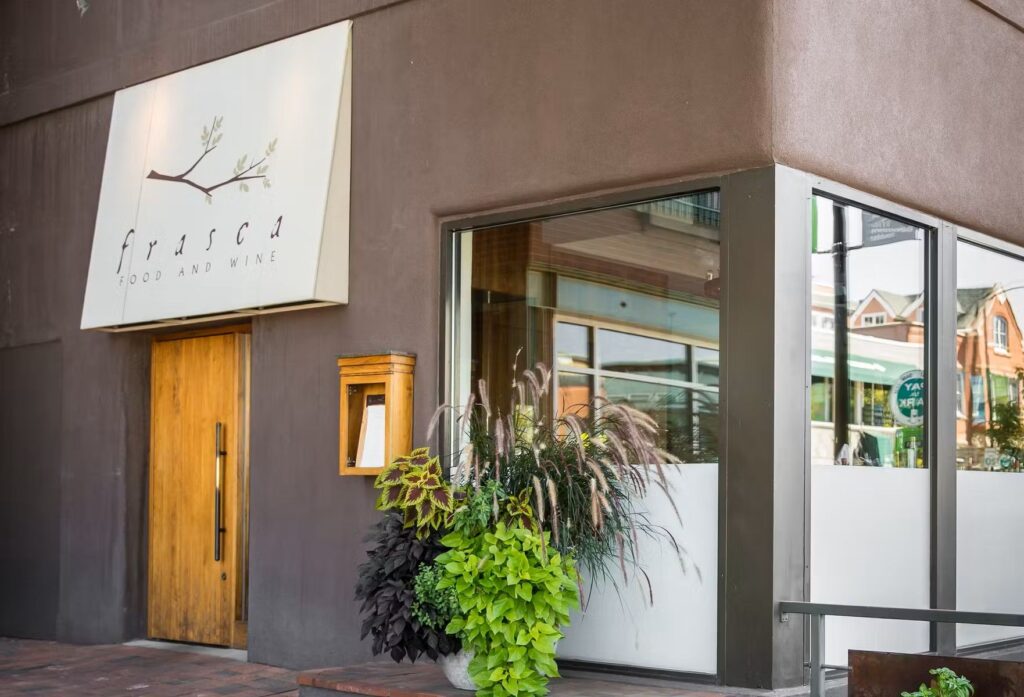
Frasca in Boulder, Colorado
Today, Boulder continues to earn national recognition, led by restaurants like Frasca Food and Wine, which has received multiple honors from the James Beard Foundation along with Michelin recognition—cementing its place among America’s elite dining destinations.
Roots in the Soil
Boulder’s food story starts with its land.
Surrounded by one of the most productive agricultural regions in the Rocky Mountains, Boulder County is home to more than 1,000 farms and ranches. The city’s long-standing commitment to open space preservation has protected this farmland, allowing a true farm-to-table ecosystem to thrive.
Rather than relying on distributors, many Boulder chefs build direct relationships with local growers and ranchers. Some go even further, operating their own farms and sourcing ingredients just miles from their kitchens.
Chefs like Hosea Rosenberg and Eric Skokan have helped define this movement, turning hyper-local sourcing into a way of life rather than a trend.
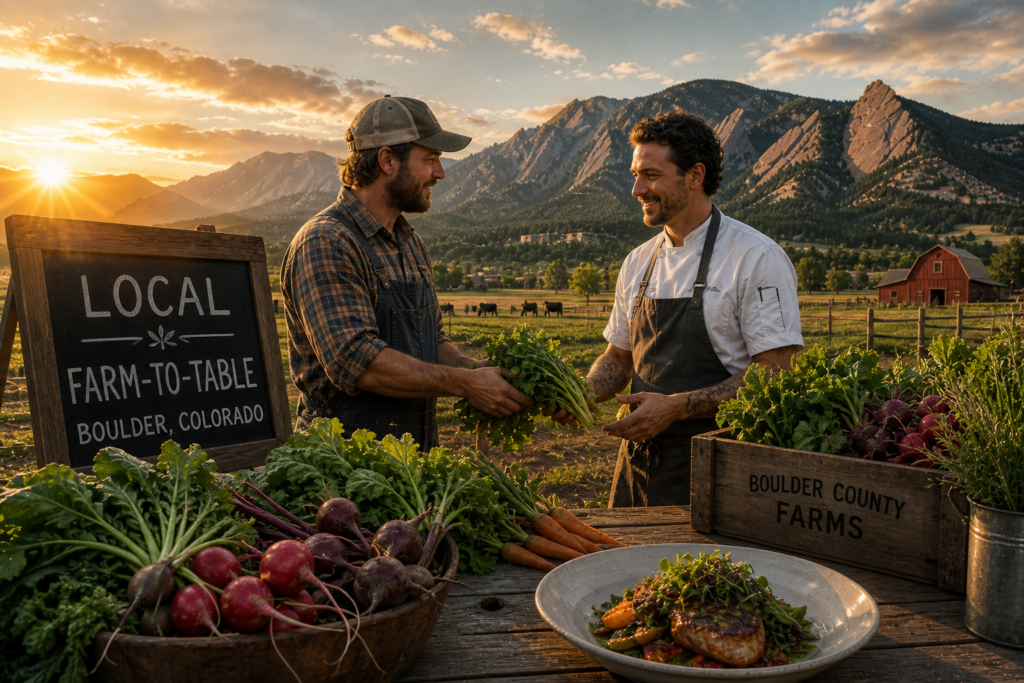
Boulder’s food story begins in the fields—where local farmers and chefs work side by side, turning fresh, nearby ingredients into a true farm-to-table way of life.
What Powers Boulder’s Culinary Engine
Boulder’s rise as a food destination isn’t accidental. It’s driven by a unique combination of factors that continue to push the scene forward.
Hyper-Local Ingredients
Restaurants across Boulder showcase seasonal menus built around locally grown produce, responsibly raised meats, and sustainable practices. The connection between farm and plate is immediate and authentic.
Exceptional Talent
Chefs are drawn to Boulder for its quality of life and creative freedom. The result is a concentration of culinary talent that rivals much larger cities.
Walkable, Food-Focused Culture
Areas like Pearl Street turn dining into an experience. Outdoor patios, street performers, farmers markets, and artisan shops create an energy that makes every meal feel like an event.
A Perfect Boulder Food Day
Morning begins with fresh coffee and a warm bagel before heading out beneath the Flatirons for a hike or run. By midday, Pearl Street is alive with energy—locals and visitors filling patios, live music echoing down the brick walkway, and the scent of something incredible coming from every direction.
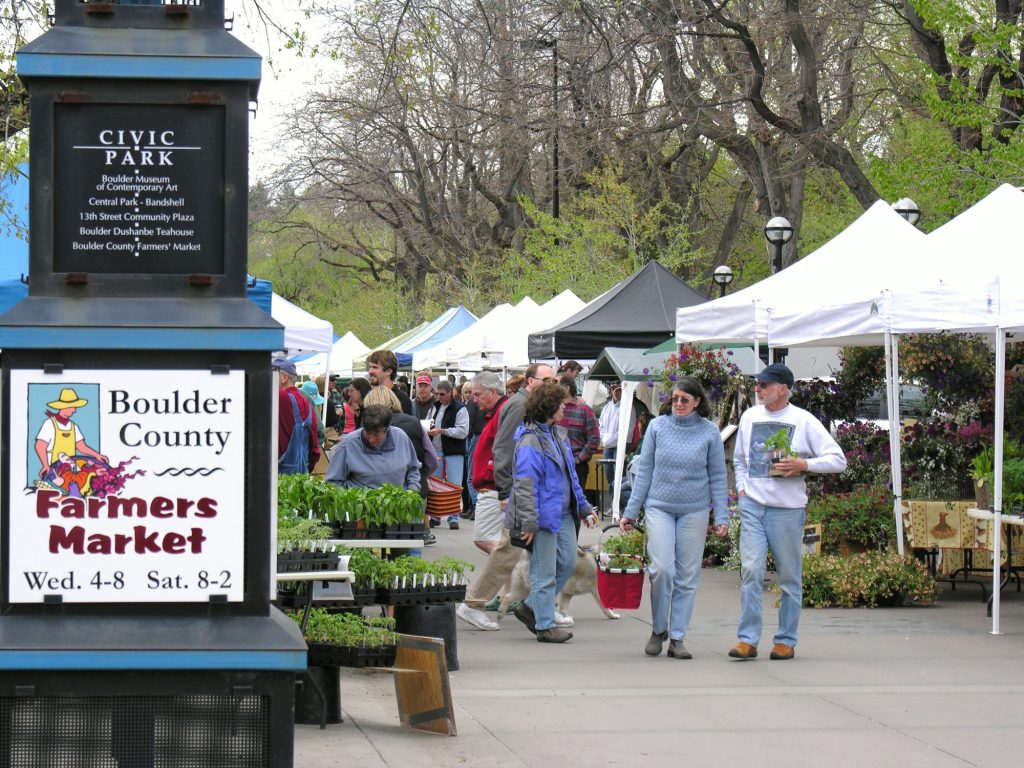
Afternoon might mean a quick stop at a farmers market or a casual bite made with ingredients picked that same morning. As the sun sets, dinner becomes the main event—perhaps handmade pasta, locally raised lamb, or a thoughtfully crafted tasting menu that tells the story of the region.
In Boulder, food isn’t just something you eat. It’s something you experience all day long.
Icons of the Scene
At the center of Boulder’s culinary identity is Frasca Food and Wine, widely recognized for its refined approach to Italian cuisine and outstanding hospitality. Its continued national acclaim reflects the consistency and excellence that define Boulder dining.
Beyond Frasca, a wide range of restaurants—from farm-driven kitchens to innovative casual spots—deliver quality that feels on par with major metropolitan areas.
Pair that with Boulder’s thriving craft beer, wine, and spirits scene, and the dining experience becomes even more complete.
Why Boulder Feels Like a Big-City Food Capital
Boulder offers something rare: the culinary depth of a major city combined with immediate access to nature.
You can spend the morning on a mountain trail and sit down to a world-class meal that evening—all within minutes. The community’s focus on health, sustainability, and quality drives demand for exceptional food at every level, from quick bites to fine dining.
The recognition from Bon Appétit in 2010 helped put Boulder on the map. What’s happened since has only strengthened its reputation.
The Bottom Line
Boulder didn’t become America’s “foodiest town” overnight—and it hasn’t slowed down since.
With its deep agricultural roots, nationally recognized chefs, and a culture that values quality and creativity, Boulder continues to set the standard for what a modern food destination can be.
Follow the scent of fresh bread or grilled local produce through Pearl Street or out to a farm dinner under the stars, and you’ll quickly understand why.