
South Boulder Creek: Eldorado Canyon’s Summer Gold
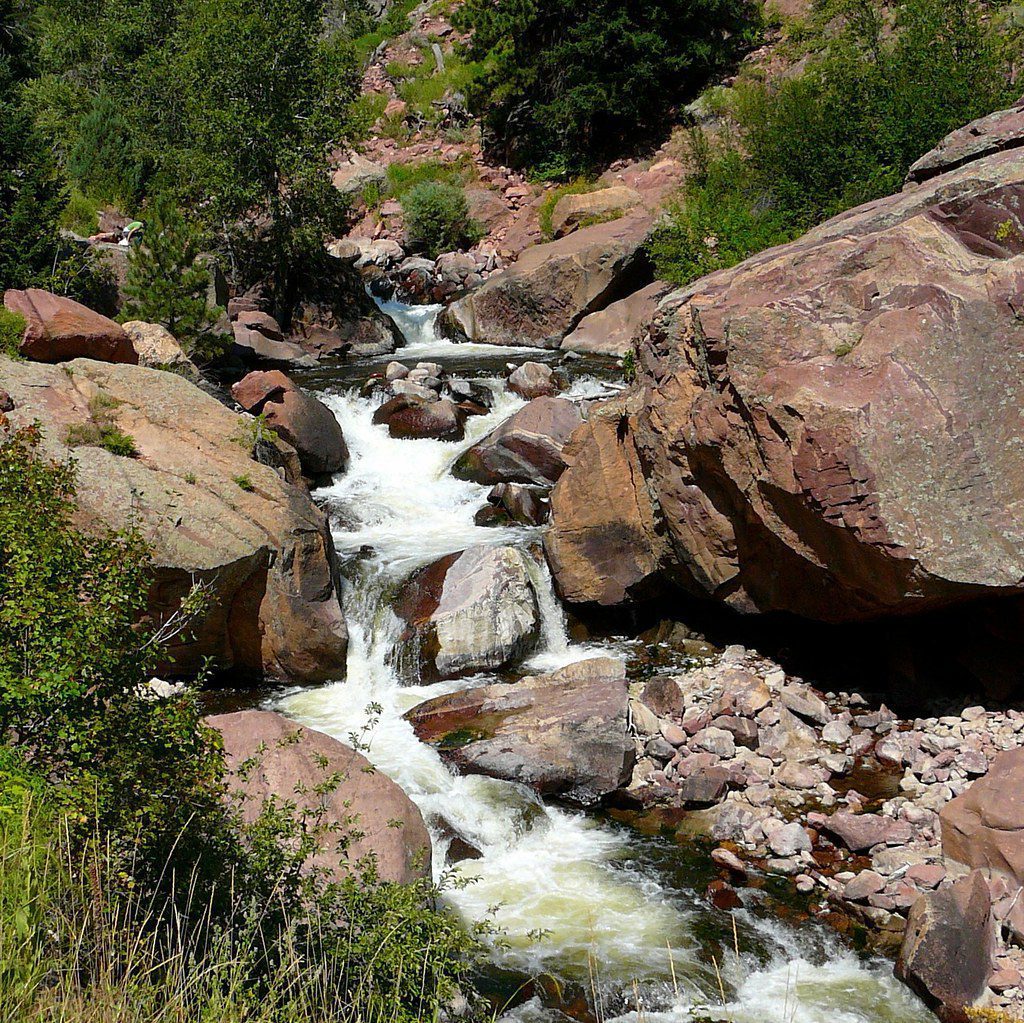
There is something about a clear summer day in Eldorado Canyon that stops you in your tracks. Golden sandstone walls rise dramatically above South Boulder Creek as the water catches the sunlight, tumbles over rocks, and moves through willows along the canyon floor. It is pure Front Range summer—water, stone, and sky coming together in one unforgettable scene.
South Boulder Creek begins high along the Continental Divide near Rogers Pass, where snowmelt and alpine runoff collect in the mountains west of Boulder. The creek flows east through rugged terrain before reaching Gross Reservoir, a Denver Water storage and regulating facility completed in 1954. Below the reservoir, the water continues through the narrow gorge of Eldorado Canyon, passes Eldorado Springs, and eventually joins Boulder Creek east of the city.
That long journey helps explain what makes the creek feel so refreshing in summer. Its mountain water remains relatively cold while the surrounding plains heat up, creating a cooler microclimate beneath the canyon walls. Willows, cottonwoods, shrubs, and other streamside vegetation flourish along its banks, providing valuable habitat in an otherwise rugged landscape.
The creek is also one of the forces responsible for the canyon itself. According to Colorado Parks and Wildlife’s geology and history of Eldorado Canyon, the cliffs reveal approximately 1.6 billion years of geologic history within the space of a single mile. South Boulder Creek slowly eroded through tilted rock layers, exposing ancient granite, quartzite, and the Fountain Formation sandstone that forms many of the canyon’s celebrated climbing walls.
The Bastille, Wind Tower, Redgarden Wall, and several other towering formations are composed largely of Fountain Formation rock deposited roughly 300 million years ago. Their reddish-gold color comes from hematite, an iron mineral that gives the canyon its signature glow—especially in the early morning and late-afternoon light.
Human history runs nearly as deeply through this landscape. Ute people visited the canyon and its nearby warm springs for health and spiritual renewal long before European settlement. During the early 1900s, Eldorado Springs became a thriving resort destination, attracting visitors with its spring-fed swimming pool, hotels, entertainment, and mountain setting.
By the 1950s, technical climbers were discovering the canyon’s walls. When the property’s owner later threatened to sell the area for quarrying, public concern helped spur Colorado’s purchase of the land. Eldorado Canyon State Park was officially created in 1978, preserving its cliffs, creek, trails, and extraordinary natural character.
Today, hikers, anglers, climbers, photographers, and families continue to experience the canyon in their own ways. The sound of moving water follows visitors through the park while climbers trace routes high above. Like the reflections found at Boulder’s beautiful hidden lake, South Boulder Creek demonstrates how water can transform an already spectacular mountain landscape.
South Boulder Creek is more than a scenic waterway. It carries alpine snowmelt through ancient stone, connects generations of Boulder-area history, and gives Eldorado Canyon its unmistakable energy. One summer photograph is enough to show why this meeting place of water and rock remains truly one of a kind.