5 Summer Wellness Rituals Boulder Locals Are Embracing in 2026
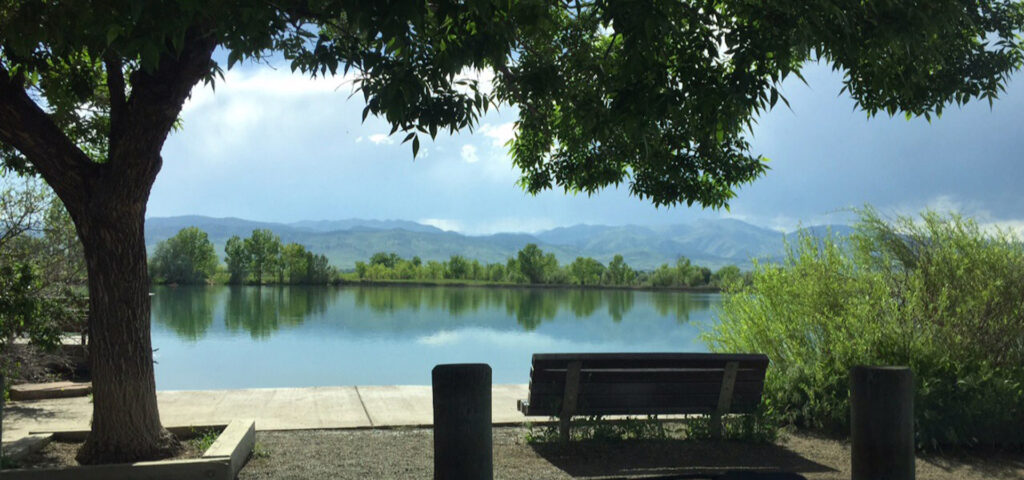
Coot Lake, Boulder, Colorado—A stunning lakeside retreat with breathtaking views of the Rocky Mountains, where nature and adventure come together.
Imagine standing at the base of the Flatirons just after sunrise, the summer air still cool against your skin. The sky shifts through shades of pink and gold as the first light reaches Boulder’s famous sandstone formations.
This is summer in Boulder, where outdoor movement, fresh food, recovery, and time in nature are woven into everyday life.
In 2026, wellness does not necessarily mean adding another complicated routine to an already busy schedule. Some of the most appealing practices are surprisingly simple: getting outside early, slowing down the breath, eating seasonally, and recovering intentionally after long days of hiking, cycling, climbing, or running.
Here are five summer wellness rituals that fit naturally into the Boulder lifestyle.
1. Starting the Day on a Chautauqua Trail
There may be no more distinctly Boulder way to begin a summer day than getting outside before the midday heat arrives.
The trails around Chautauqua offer everything from a short morning walk to a serious workout. Bluebell Mesa is a particularly approachable option, branching from the main Chautauqua Trail and traveling through sections of ponderosa pine with expansive views toward Boulder and the foothills.

The City of Boulder describes the main Chautauqua Trail as an easy-to-medium route, but it also warns that exposed sections can become hot and recommends carrying extra water. Summer mornings offer a chance to enjoy the landscape before the strongest heat of the day.
Beyond exercise, morning outdoor activity has another advantage: natural light exposure helps provide the body with an important time cue for its circadian system. Combine that with walking, fresh air, and a temporary break from screens, and an early hike can become more than a workout.
For many Boulder residents, the ritual is not about chasing a summit. It is simply about beginning the day outside.
2. Cooling Down Around Boulder Creek—With Respect for Cold Water
Boulder Creek becomes a natural gathering place during summer, but the smartest wellness ritual is not an extreme or impulsive plunge into fast-moving snowmelt.
Cold-water immersion has attracted significant attention in the wellness world. Research has explored possible effects on mood, stress, recovery, and well-being, but the evidence remains developing and varies according to water temperature, exposure time, and the individual.
There are also real risks.
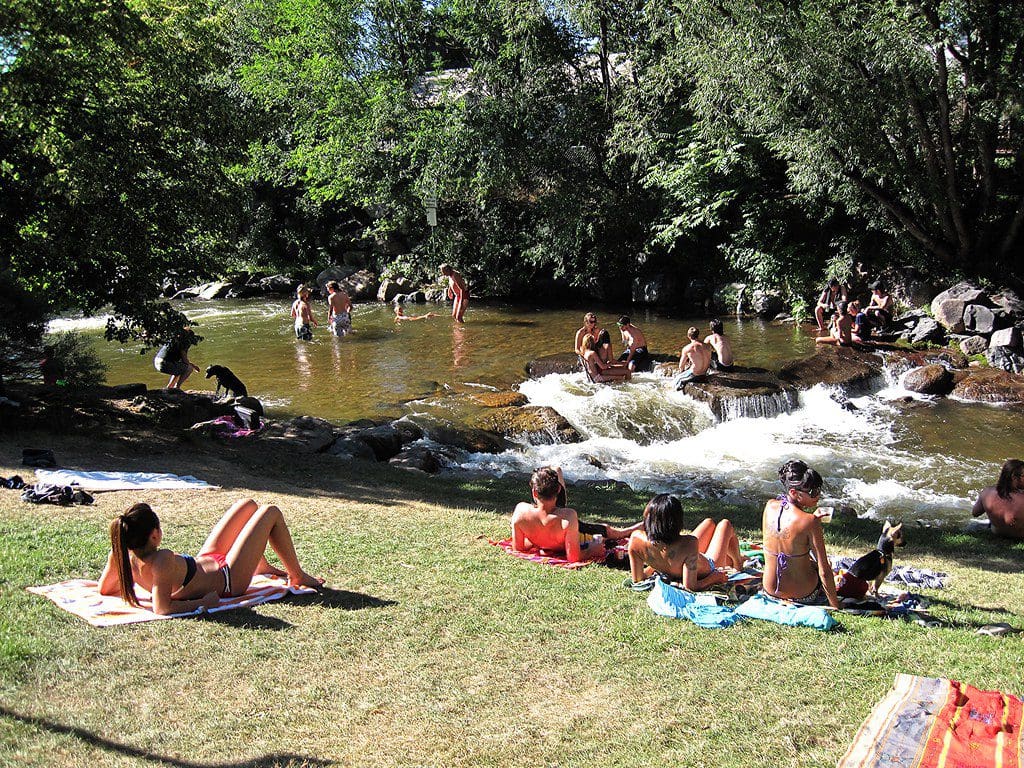
Boulder Creek
Sudden immersion in cold water can trigger a cold-shock response involving rapid breathing and changes in heart rate and blood pressure. Anyone experimenting with deliberate cold exposure should approach it gradually and carefully, and natural waterways require additional awareness of current, rocks, water levels, and changing conditions.
The broader Boulder ritual can be much simpler: spend time beside the creek, cool your feet in a safe area, sit beneath a cottonwood tree, or simply listen to moving water for a while.
Wellness does not have to be extreme to be meaningful.
3. Making the Farmers Market a Weekly Ritual
Saturday morning at the Boulder Farmers Market is practically a summer ritual of its own.
The 2026 Boulder market runs Saturdays from 8 a.m. to 2 p.m. from April 4 through November 21, with a Wednesday evening market operating from May into October. Located at 13th Street and Canyon Boulevard, the market emphasizes seasonal food from local and regional producers.
Instead of focusing exclusively on supplements or trendy ingredients, a more evidence-based wellness approach starts with something straightforward: filling the kitchen with a variety of fresh, seasonal foods.
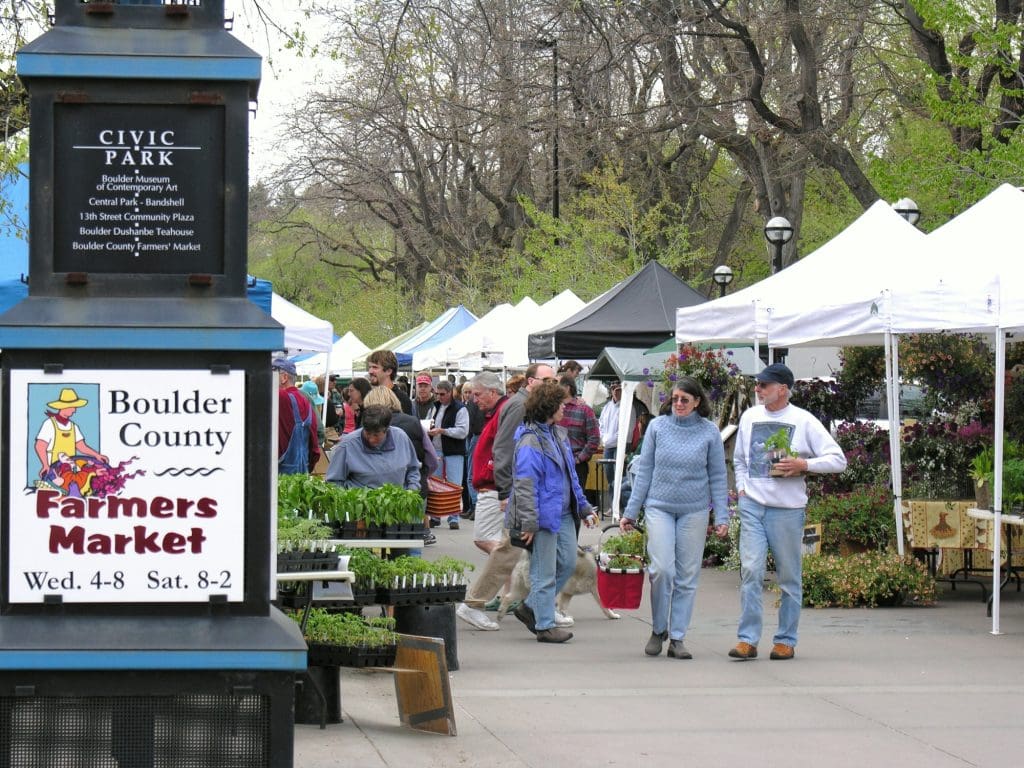
Colorado summer makes that especially easy. Greens, herbs, vegetables, berries, and eventually the arrival of famous Colorado peaches can turn a market visit into both a social ritual and a nutritional reset for the week ahead.
Functional mushrooms such as lion’s mane have also become part of the larger wellness conversation. Early human research is interesting, but studies remain relatively small and findings should be interpreted cautiously. Fresh culinary mushrooms can certainly be part of a varied diet, but claims about dramatic improvements in focus, inflammation, or stress should not outrun the science.
The best ritual may be the simplest one: buy good food, meet the people who grow it, and build meals around what is actually in season.
4. Ten Minutes of Slow Evening Breathing
After a full Boulder summer day, slowing down can sometimes be more challenging than working out.
That is where a simple evening breathing practice can help.
Slow-paced breathing has been studied for its effects on stress and autonomic regulation. The practice does not need to be complicated. A beginner can sit comfortably and breathe slowly and gently for five to ten minutes, without forcing unusually deep breaths or turning the session into another performance goal.
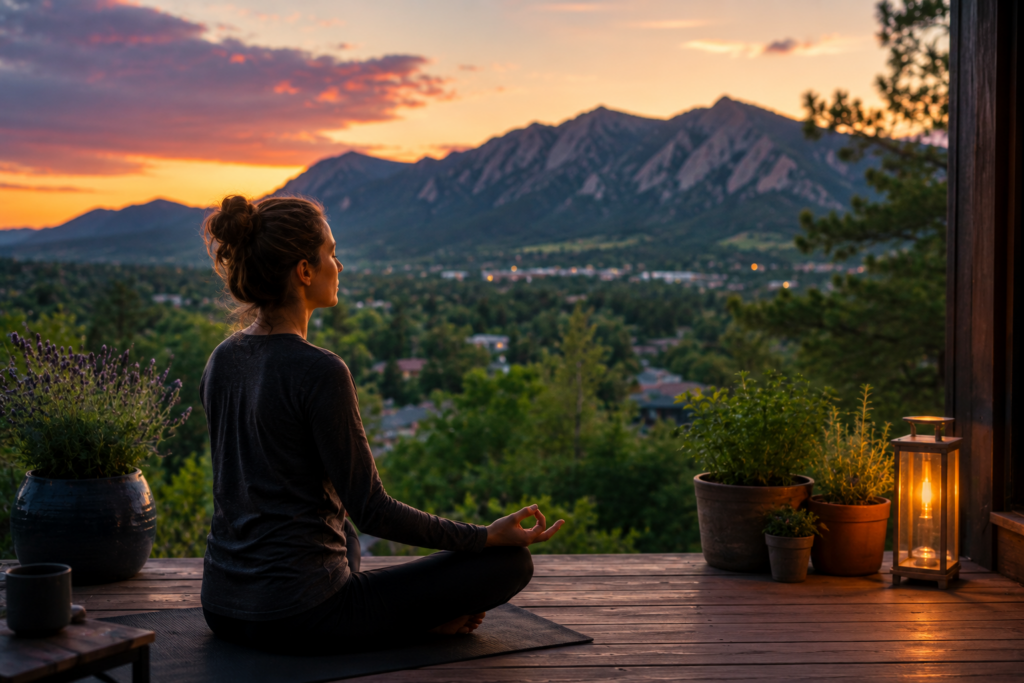
Some people prefer equal inhales and exhales. Others find a slightly longer, comfortable exhale relaxing. The key is ease and consistency.
Boulder offers plenty of settings for the ritual: a quiet backyard, a porch, a shady park, or an open window as the evening air finally begins to cool.
After a day of activity and stimulation, a few quiet minutes can create a useful transition toward rest.
5. Exploring Boulder’s Growing Sauna and Cold-Plunge Culture
Heat-and-cold recovery has become increasingly visible in modern wellness culture, and the Boulder area now has local businesses offering sauna and cold-plunge experiences.
The attraction is understandable. A sauna session encourages sweating and creates significant cardiovascular and thermoregulatory demands, while cold-water immersion creates a very different physiological response. Some people enjoy alternating between the two as part of a social or recovery ritual.
The science, however, deserves careful language. Sauna bathing and cold-water immersion have each been studied independently, but sweeping claims that contrast therapy automatically “resets the nervous system,” eliminates inflammation, or guarantees faster recovery go beyond the evidence.
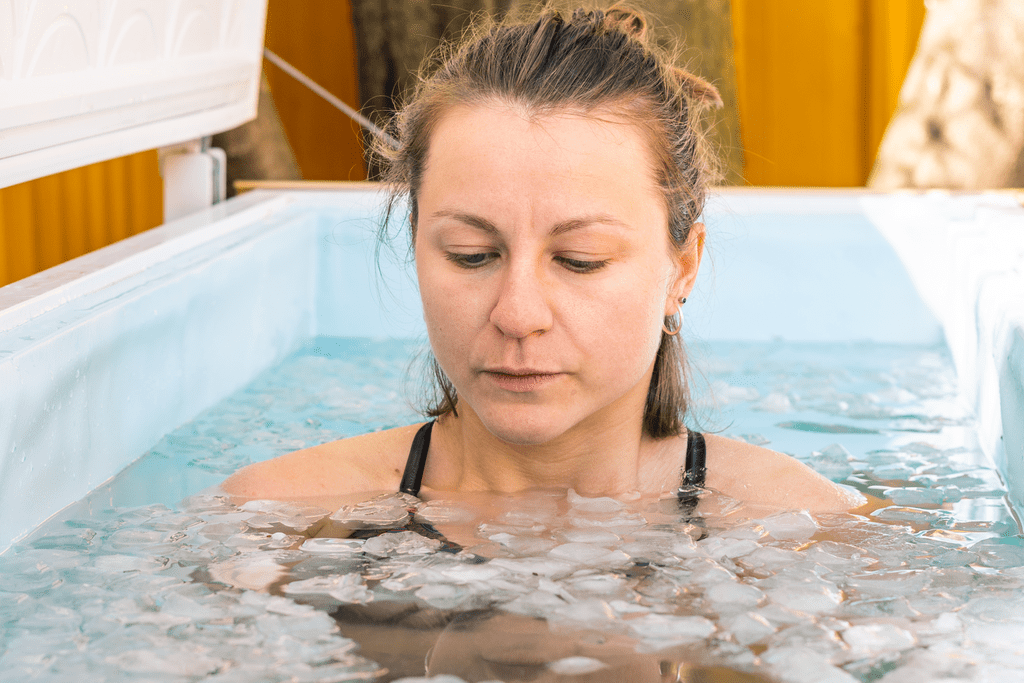
There are also important safety considerations. Rapid transitions between extreme heat and cold can place significant demands on the cardiovascular system. People with heart conditions, blood-pressure concerns, or other medical issues should seek appropriate medical guidance before experimenting with extreme temperature exposure.
For healthy people who enjoy the practice and approach it responsibly, the appeal may be as much about the ritual as the physiology: disconnecting from the phone, sitting quietly, recovering, and sharing a wellness experience with others.
The Boulder Wellness Advantage
What makes these five rituals interesting is that none requires completely reinventing your life.
Walk outside early. Spend time near water. Shop for seasonal food. Breathe slowly for a few minutes. Make room for recovery.
Boulder has always been a place where outdoor activity and wellness intersect, but the best summer rituals may be the ones that feel sustainable rather than extreme.
The Flatirons do not ask anyone to optimize every minute of the day. Boulder Creek does not require a stopwatch. A farmers market peach does not need a wellness label.
Sometimes the healthiest summer ritual is simply paying attention to where you are—and enjoying it.