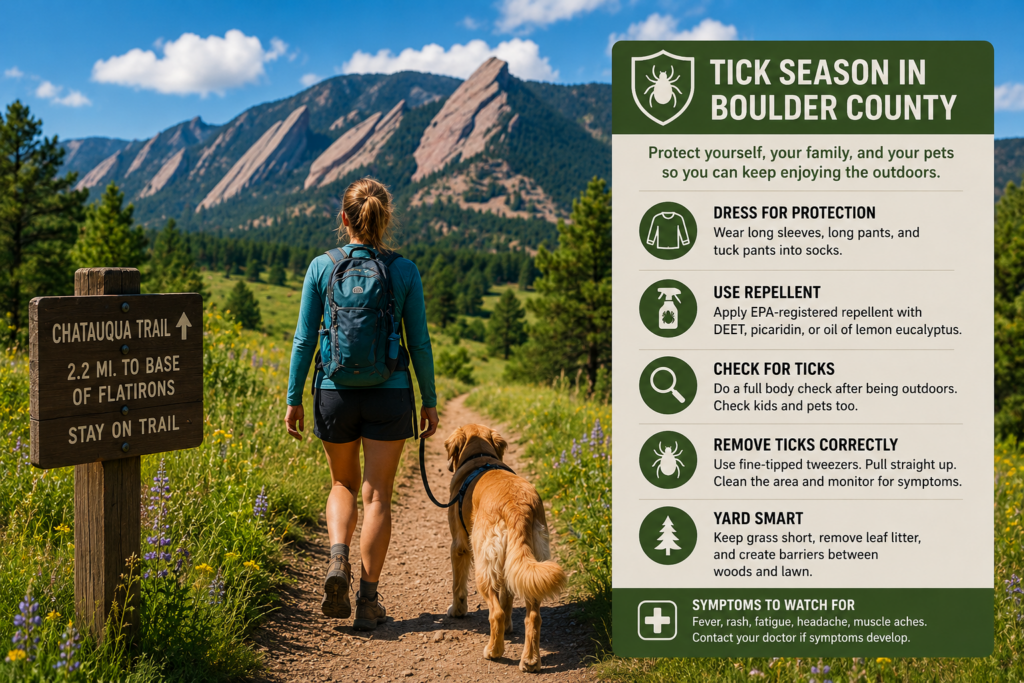
Boulder Tick Season Survival Guide: What Most People Still Get Dangerously Wrong

Tick Season Is Here
Summer in Boulder means trail runs, mountain hikes, backyard barbecues, dog walks, and long days spent enjoying the outdoors. It also means tick season has arrived.
Many people still think ticks are only a problem in heavily wooded areas or on remote wilderness adventures. The reality is that ticks can be found much closer to home. They often live in grassy areas, brush, open spaces, and locations where wildlife regularly travels. In Boulder County, that can include everything from neighborhood trails to foothill hikes and local parks.
As outdoor activity increases during the warmer months, so does the likelihood of encountering ticks. While Colorado does not experience the same Lyme disease rates seen in some parts of the Northeast, tick bites still pose health risks and should never be ignored.
The good news is that a few simple precautions can dramatically reduce your chances of being bitten.
Why Tick Activity Is Increasing
Across much of the country, experts have observed growing tick populations. Several factors appear to be contributing to the trend.
Milder winters allow more ticks to survive into the spring. Expanding suburban development creates more overlap between people and wildlife. Deer populations have increased in many regions, providing an important host for ticks. At the same time, more people are spending time outdoors than ever before.
The result is simple: more opportunities for human and tick encounters.
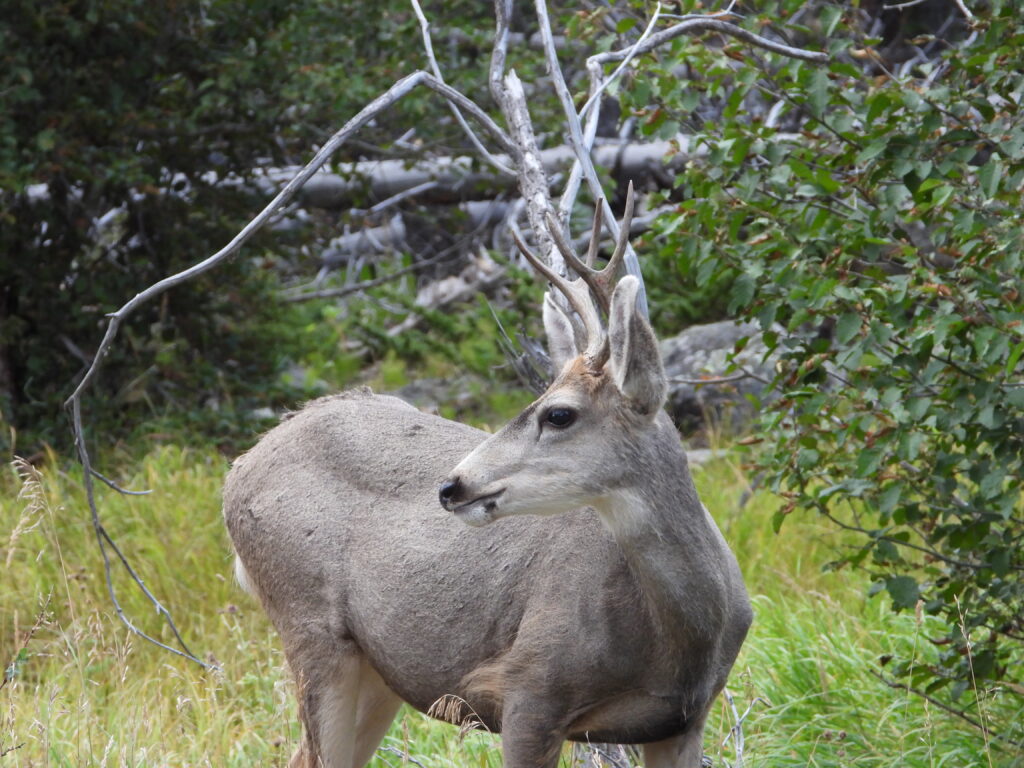
A deer showing off its natural beauty. Pic by Lenny “Lensworth” Frieling
Where Ticks Are Most Common
Ticks typically wait on tall grass, brush, shrubs, and low vegetation. Contrary to popular belief, they do not jump or fly. Instead, they latch onto passing animals or people as they brush against vegetation.
Common locations where people pick up ticks include:
- Hiking trails
- Open space areas
- Campgrounds
- Dog parks
- Neighborhood greenbelts
- Gardens and backyards
- Areas frequented by deer and wildlife
Many tick bites occur surprisingly close to home.
Understanding the Risks
Different species of ticks can carry different diseases. Depending on the tick and the region, potential illnesses include Lyme disease, Rocky Mountain spotted fever, ehrlichiosis, anaplasmosis, babesiosis, and tularemia.
Fortunately, not every tick carries disease, and not every tick bite results in illness. However, early detection and prevention remain the best defenses.
Anyone experiencing symptoms such as fever, rash, fatigue, muscle aches, or flu-like symptoms after a tick bite should contact a healthcare provider.
Prevention That Actually Works
Many people know the basics of tick prevention, but a few strategies are especially effective.
Dress for Protection
When spending time in grassy or wooded areas, wear:
- Long sleeves
- Long pants
- Closed-toe shoes
- Socks that cover your ankles
Light-colored clothing can make ticks easier to spot before they attach.
Use Tick Repellents
EPA-registered insect repellents containing DEET, picaridin, or oil of lemon eucalyptus can help reduce the likelihood of bites.
For clothing and gear, many outdoor enthusiasts use permethrin-treated products. Permethrin is designed for clothing and equipment only and should never be applied directly to the skin.
Stay on Established Trails
Whenever possible, walk in the center of trails and avoid brushing against tall grass and dense vegetation where ticks commonly wait for passing hosts.
Protect Your Yard
Ticks do not only live in remote outdoor areas. They can also thrive around homes.
To help reduce tick habitat:
- Keep grass trimmed
- Remove leaf litter
- Clear brush piles
- Create separation between wooded areas and lawns
- Discourage deer from entering landscaped areas
Simple yard maintenance can make a significant difference.
The Most Important Habit: Tick Checks
Perhaps the most effective prevention strategy is performing a thorough tick check every time you come indoors after outdoor activity.
Pay close attention to:
- Hair and scalp
- Behind the ears
- Underarms
- Waistline
- Behind the knees
- Groin area
- Around socks and footwear
Children and pets deserve extra attention because ticks can be difficult to spot.
Taking a shower soon after being outdoors can also help remove ticks before they become attached.
What to Do If You Find a Tick
If you discover an attached tick, remove it as soon as possible.
Use fine-tipped tweezers and grasp the tick as close to the skin as possible. Pull upward using steady, even pressure. Avoid twisting, crushing, or squeezing the tick.
After removal:
- Wash the area with soap and water
- Clean the bite area with rubbing alcohol if available
- Wash your hands thoroughly
- Monitor for symptoms over the following days and weeks
If unusual symptoms develop, contact your healthcare provider.
Don’t Forget Your Pets
Dogs are particularly susceptible to picking up ticks during outdoor adventures.
After walks or hikes, check around:
- Ears
- Neck
- Collar area
- Between toes
- Under the legs
Veterinarians can recommend effective tick prevention products to help keep pets protected throughout the season.
Enjoy Boulder’s Outdoors Safely
One of the greatest benefits of living in Boulder is easy access to some of the best outdoor recreation in America. From Chautauqua and Mount Sanitas to neighborhood trails and local parks, there is no shortage of places to explore.
Tick awareness should not keep anyone indoors. Instead, it should become part of a healthy outdoor routine, just like bringing water, applying sunscreen, and checking the weather before a hike.
A few extra minutes of preparation can help protect you, your family, and your pets while allowing you to fully enjoy everything Boulder has to offer this summer.
Stay aware, stay prepared, and keep enjoying the outdoors safely.