
Boulder Bobcats: History, Hotspots, and How to Photograph Them
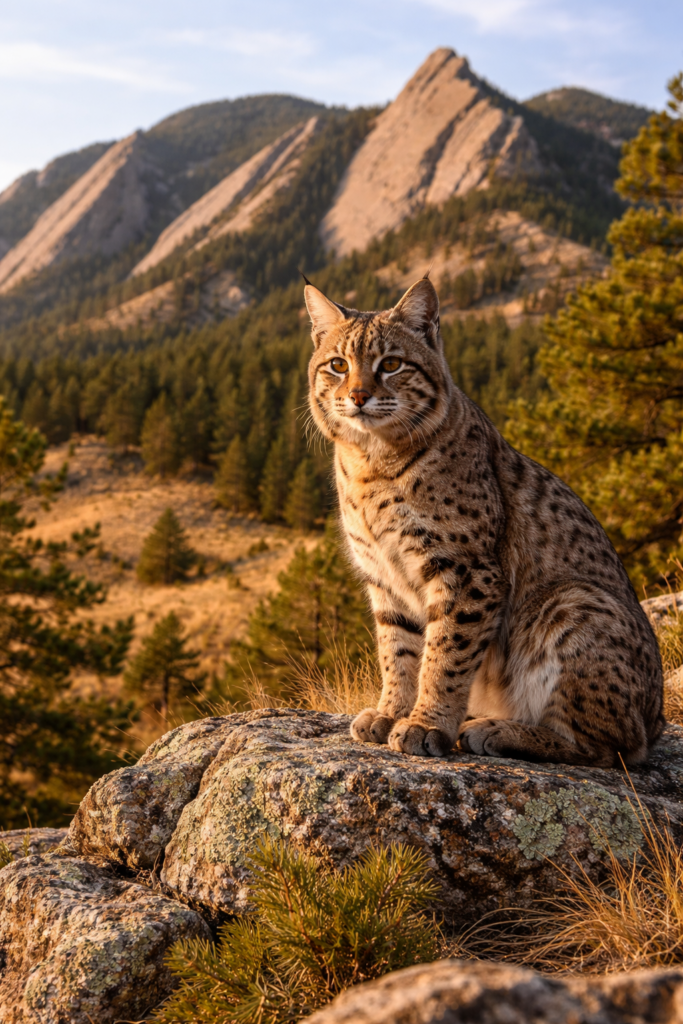
Bobcats have quietly roamed Boulder’s foothills for centuries, moving like shadows through rocky outcrops, dense brush, and pine-covered slopes. Weighing between 15 and 30 pounds, these medium-sized wild cats are instantly recognizable by their tufted ears, spotted coats, and short “bobbed” tails.
For much of Colorado’s early history, bobcats faced heavy trapping and bounty hunting. That changed in the late 1990s when voters banned leg-hold traps, leading to a significant shift in wildlife management and public perception. Since then, bobcat populations around Boulder have steadily rebounded, reclaiming territory that had long been pressured by human activity.
A groundbreaking study conducted between 2010 and 2012 by Colorado State University researcher Jesse Lewis revealed just how remarkable these animals are. By tracking radio-collared bobcats in and around Boulder, researchers discovered one male made an astonishing journey from the city all the way to the Continental Divide and back. While their typical daily range is about half a mile to two miles, this proved that bobcats are capable of far greater movement when needed.

Today, sightings are on the rise. Local organizations like Greenwood Wildlife Rehabilitation Center and Boulder County Open Space have reported increased encounters, even in residential neighborhoods. Experts believe this is due to a combination of habitat pressure and shifting prey patterns, though bobcats remain highly elusive and primarily active at dawn and dusk.
Where to Look for Bobcats in Boulder
Boulder offers one of the most extensive and accessible open space systems in the country, making it prime habitat for bobcats. However, spotting one still requires patience, awareness, and a bit of luck.
Focus your search on areas that provide natural cover and hunting opportunities. Bobcats prefer environments where they can stay hidden while stalking prey.
Top locations to increase your chances:
• Boulder Open Space and Mountain Parks, especially around Chautauqua, the Flatirons, and Gregory Canyon
• Foothill trails including Flagstaff Mountain, Sunshine Canyon, Fourmile Canyon, and Lefthand Canyon
• Betasso Preserve, Hall Ranch, and Heil Valley Ranch, all known from tracking studies
• North Boulder riparian zones and quieter areas like Walden Ponds
When you’re out, timing is everything. Early morning and late evening offer the best odds. Move slowly, stay quiet, and scan rocky ledges, tall grasses, and thick shrubs. Often, it’s not about spotting the whole animal, but catching a flick of movement or the outline of ears against the landscape.
Most hikers never see a bobcat. That rarity is exactly what makes the experience so powerful when it happens.
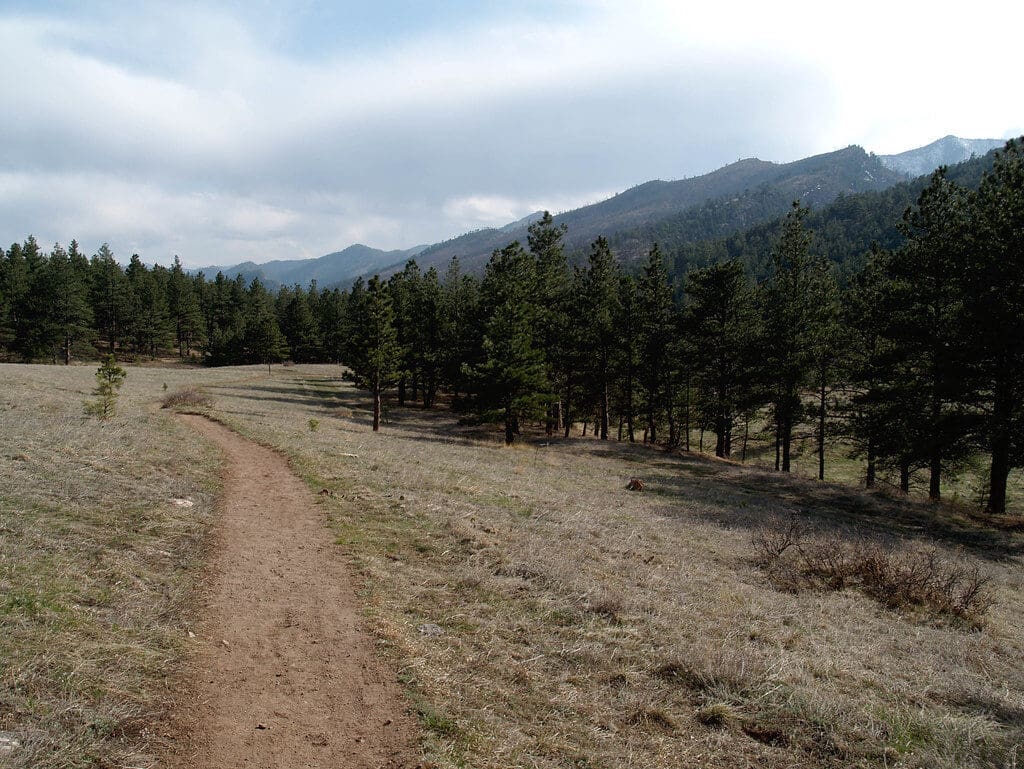
Betasso Preserve
Photographing Boulder Bobcats: Angles, Gear, and Patience
Photographing a bobcat is one of the most rewarding challenges in Colorado wildlife photography. These animals are incredibly alert and will disappear the moment they sense human presence.
The right gear makes all the difference. A telephoto lens of at least 400mm is essential, allowing you to keep a safe and respectful distance while still capturing detail. Bobcats should never be approached or pressured for a shot.
Golden hour is your best friend. The soft, warm light enhances the rich tones of their coat and creates a more dynamic, professional image. Positioning is equally important. Getting low to the ground brings your perspective closer to the animal’s eye level, creating a more intimate and engaging composition.
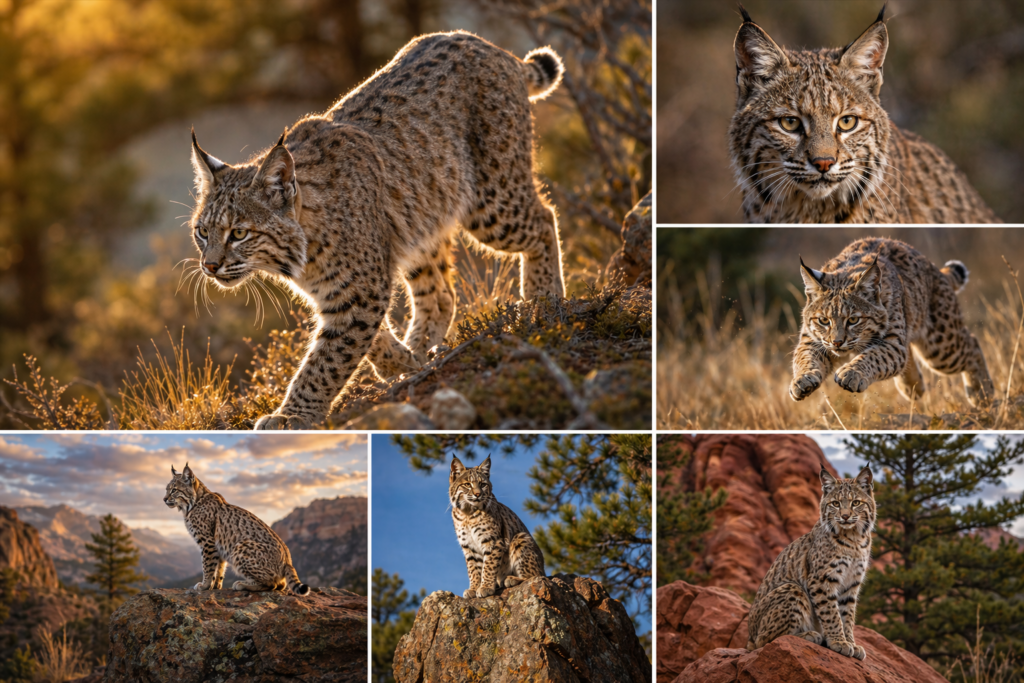
Golden-hour silence, razor-sharp focus—Boulder’s elusive bobcats move like shadows through rock and pine, rewarding only the most patient photographers.
Five strong photographic angles to aim for:
• A clean profile highlighting ear tufts and the black-tipped tail
• A three-quarter face capturing the intensity of their eyes and whiskers
• Action shots such as stalking or pouncing through grass
• Elevated “lookout” shots with the bobcat perched on rocks
• Environmental portraits framed by red rock formations and ponderosa pines
If you encounter a bobcat near a roadway, your vehicle can act as an effective blind. Inside a car, animals often feel less threatened, giving you a better chance at natural behavior shots.
Keep your shutter speed high. Bobcats move fast, and moments happen in an instant.
Living Alongside Boulder’s Bobcats
Bobcats play a critical role in Boulder’s ecosystem, helping control populations of rabbits, rodents, and other small animals. Despite their wild nature, they pose very little threat to humans.
Coexistence is simple with a few mindful practices.
Tips for living safely alongside bobcats:
• Keep pets indoors or supervised, especially at dawn and dusk
• Secure garbage and remove outdoor pet food
• Never feed wildlife, directly or indirectly
• Maintain awareness when walking in open space areas
If you’re lucky enough to see one, pause and take it in. There’s something unforgettable about watching a bobcat move through the landscape, completely at ease, completely wild.
Coexist with Wildlife
Bobcats are part of what makes Boulder special. They remind us that even in a growing city, true wilderness still exists just beyond the trail.
Respect their space. Appreciate their presence. And if you get that rare glimpse, consider it a moment you’ve earned.
Because in Boulder, the wild is never as far away as it seems.