The Boulder Sanitarium Effect: How One Institution Shaped a Culture of Healing

A stunning aerial view of Boulder, Colorado, featuring the iconic Flatirons, the red rooftops of the University of Colorado campus, and the Rocky Mountains. To the far left, on a clear day like this one, you can see Pikes Peak (elevation 14,115 feet) rising in the distance—just another reason Boulder is considered one of the world’s most beautiful towns.
Roots of Wellness: How Boulder Became a Hub for Healing
Long before Boulder, Colorado, was known for its yoga studios, farmers markets, and green juice cafés, it held a different kind of health reputation—a reputation that helped define the city’s culture for generations to come.
In the late 19th century, the American Southwest became a destination for those suffering from tuberculosis, a disease that had no known cure at the time. The best “prescription” doctors could offer was a change in climate—specifically a high altitude, dry air, plenty of sunshine, and nutritious food. Boulder, with its crisp mountain air and panoramic views of the Rockies, quickly emerged as one of the most desirable places to seek treatment.

A Home for Healing: University Hill’s First Sanitarium
In 1893, Dr. John Harvey Kellogg—yes, the cereal guy—alongside the Seventh-day Adventist Church, opened the Sanitarium Boarding Home on University Hill. The facility was small but progressive, emphasizing rest, clean air, and whole foods to aid recovery. The idea of healing the body through natural means and nutrition wasn’t mainstream at the time, but it struck a chord in Boulder.
The little sanitarium quickly filled up, and just three years later, in 1896, a much larger institution was built: the Boulder Colorado Sanitarium, perched gracefully on Mapleton Hill. This new facility marked a turning point not just for healthcare in Boulder, but for the future culture of the city itself.
More Than Medicine: The Rise of Holistic Health in Boulder
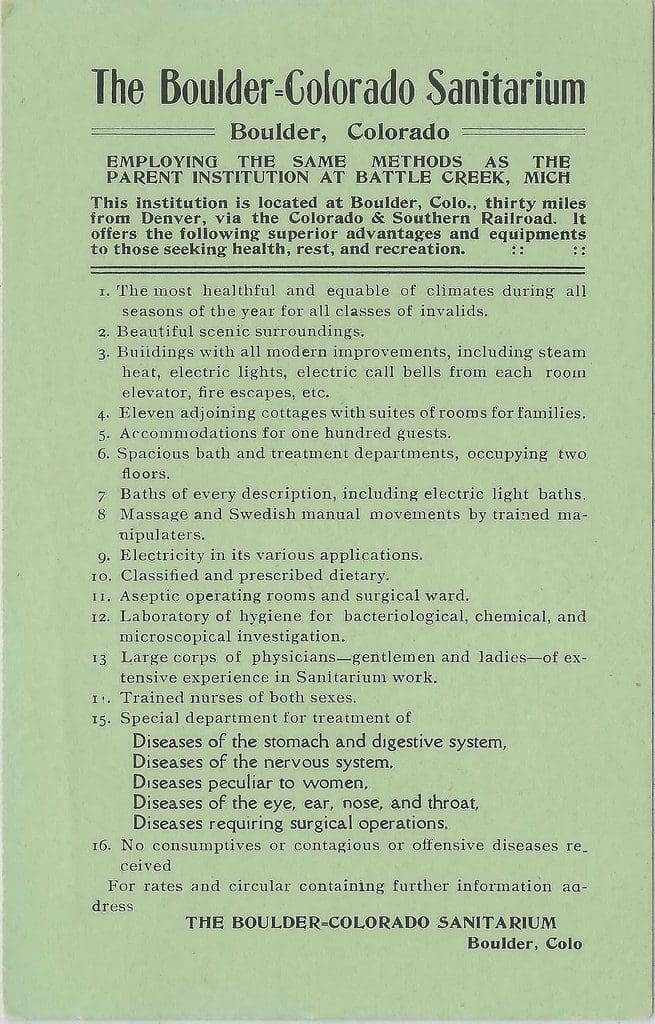
The Boulder Colorado Sanitarium was more than a hospital. It was a full-fledged health resort, a place where patients—and later, guests—could experience a new approach to wellness. The treatments offered combined modern medical practices with alternative therapies, including hydrotherapy, massage, diet, and spiritual reflection.
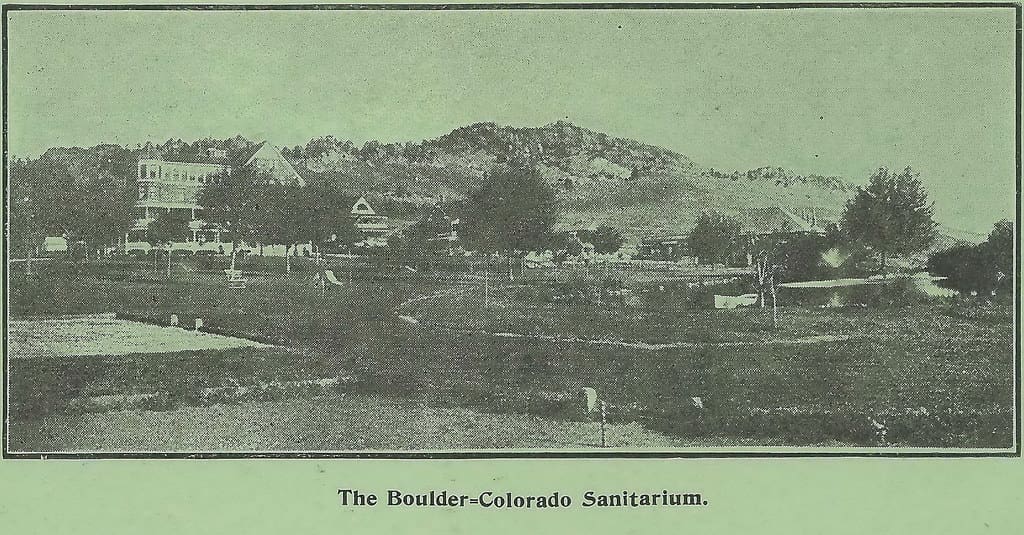
The historic Boulder Sanitarium with the majestic backdrop of Mount Sanitas (elevation 6,863 feet), capturing the spirit of Boulder’s early wellness movement in the shadow of the Rockies.
Nutrition was central to the sanitarium’s philosophy. Staff prepared and sold health foods like granola, whole-grain breads, and meat alternatives—decades before these items became staples of Boulder pantries. The idea that food could be healing wasn’t just a belief—it was baked (literally) into daily life.
The sanitarium’s success and longevity helped inspire a community-wide embrace of natural health, setting the stage for Boulder’s later boom in vegetarian restaurants, organic grocery stores, and health-minded entrepreneurs.
Boulder’s Lasting Legacy in Wellness
While the original sanitarium no longer stands, its legacy lives on in Boulder’s DNA. Today, you’ll find that the city’s love for clean eating, physical wellness, and spiritual balance echoes the values instilled over a century ago.
Walk down Pearl Street and you’ll spot juice bars, local granola brands, and wellness clinics. Hike up into the Flatirons and you’ll pass residents who still believe in the power of sunshine and movement as medicine. Visit the farmers market or a co-op and you’ll find the same principles of fresh, whole, healing foods that were once served in the sanitarium’s dining hall.
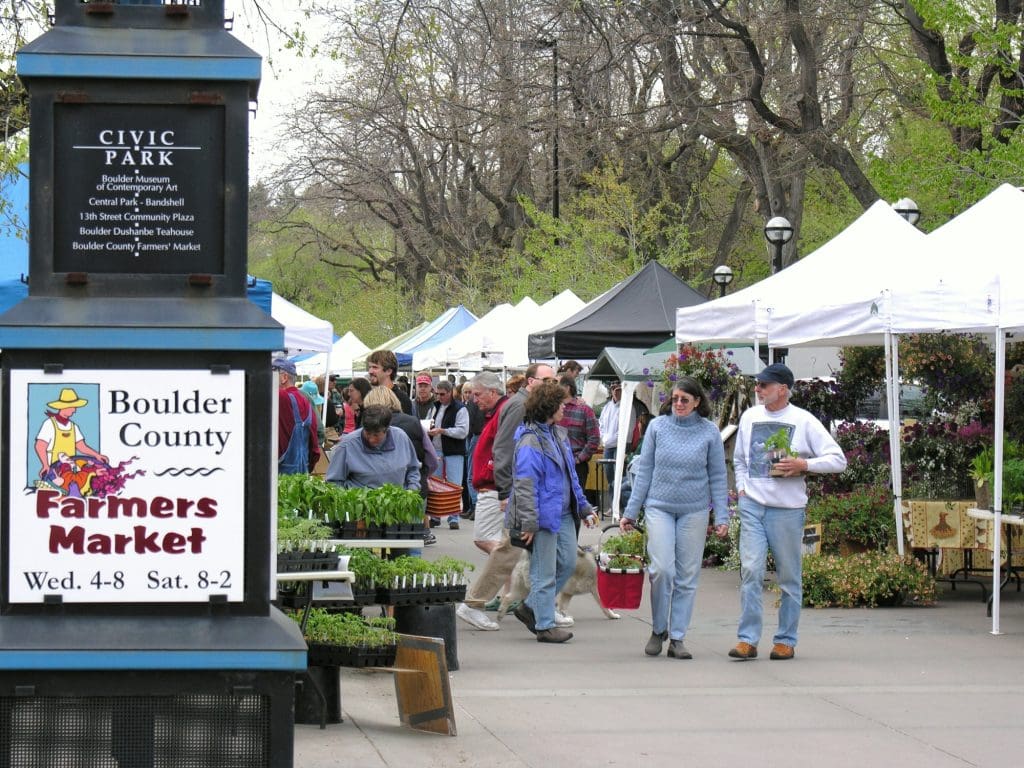
Boulder didn’t just follow a trend—it helped create the wellness movement. The same mountain air and nourishing philosophy that once drew tuberculosis patients now attracts athletes, yogis, and health seekers from across the country.
Conclusion: Wellness Isn’t Just a Trend—It’s Boulder’s Heritage
From its roots as a tuberculosis refuge to its role as a natural foods pioneer, Boulder’s wellness identity was forged through necessity, compassion, and innovation. The city’s enduring focus on holistic health wasn’t born in a lab or boardroom—it came from fresh air, whole grains, and a belief that the body and spirit are worth healing together.
It’s not just history—it’s Boulder’s way of life.