Boulder Area’s Best Spring Stargazing Spots Within an Hour
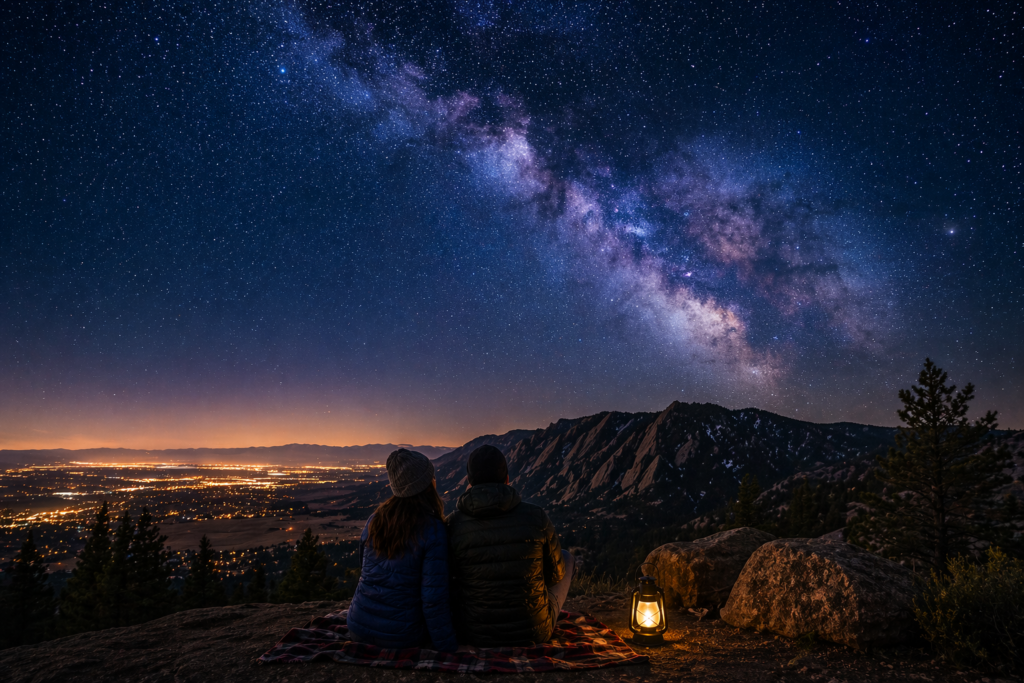
Spring nights in Boulder bring a perfect mix of crisp air and comfortable temperatures, making this one of the best seasons to look up at the stars. As the days grow longer and the skies clear, some of the brightest and most recognizable constellations of the year come into view.
Look overhead and you’ll spot Leo the Lion, Boötes the Herdsman, and Virgo the Maiden stretching across the sky. Even better, the famous Spring Triangle—formed by Regulus (Leo), Arcturus (Boötes), and Spica (Virgo)—is easy to find and shines brightly even with a bit of city light.
The best part? You don’t need a telescope or a long road trip. These nearby spots offer darker skies and easy access, all within about an hour of Boulder.
1. Flagstaff Mountain / Panorama Point (10 Minutes from Downtown Boulder)
If you’re looking for a quick and easy stargazing escape, Flagstaff Mountain is your go-to. A short drive up Flagstaff Road brings you to Panorama Point, where you’re already above much of Boulder’s light glow.
On clear spring nights, the Spring Triangle is easy to spot overhead, along with dozens of visible stars once your eyes adjust. This location is perfect for beginners or anyone looking for a spontaneous night out.
Bring a blanket or reclining chair, lie back, and give your eyes about 15–20 minutes to adjust to the darkness.
Important details:
- A parking fee is required for non-residents (typically around $5; check current rates with the City of Boulder Open Space and Mountain Parks).
- Some parking restrictions apply after hours, so always check current rules before heading up late.
- Expect some light pollution, but still excellent visibility for major constellations.
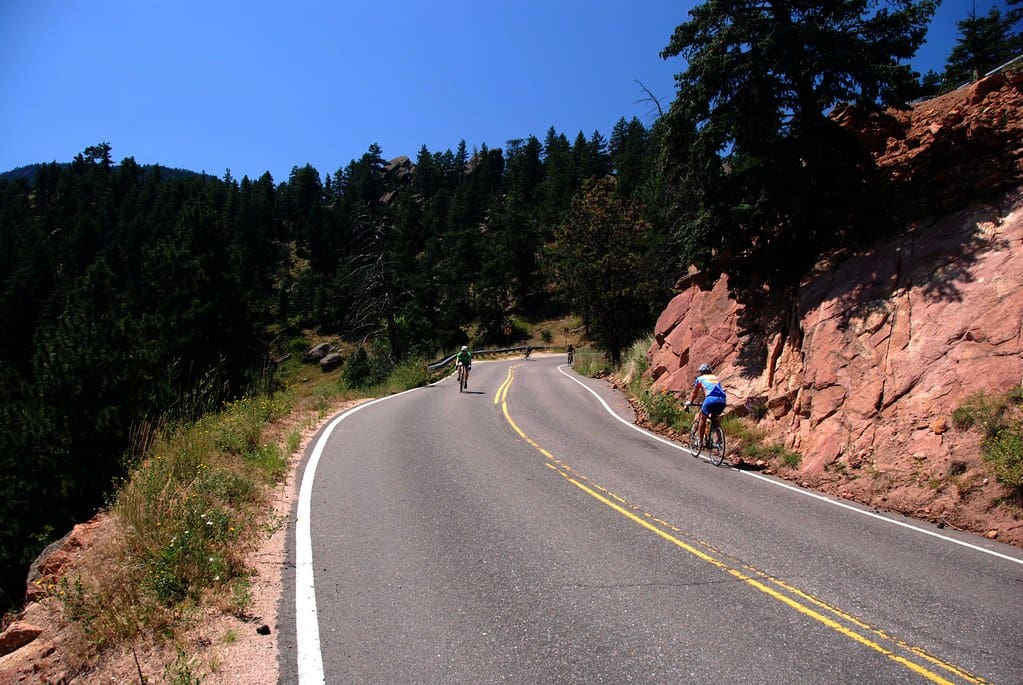
Flagstaff Mountain
2. Golden Gate Canyon State Park – Panorama Point (About 50 Minutes Away)
For darker skies without a long drive, Golden Gate Canyon State Park offers a noticeable upgrade. The Panorama Point Scenic Overlook provides wide, unobstructed views of the sky and surrounding mountains.
Here, you’ll see the same bright stars as on Flagstaff—but with less light interference, allowing fainter stars and constellations to emerge more clearly.
Spring nights at this elevation feel peaceful and expansive, making it a favorite for photographers and anyone wanting a quieter experience.
Important details:
- A daily vehicle fee or Colorado State Parks pass is required.
- The park typically closes at 10 p.m., so plan to arrive before sunset or shortly after.
- Dress warmly—temperatures drop quickly after dark, even in spring.
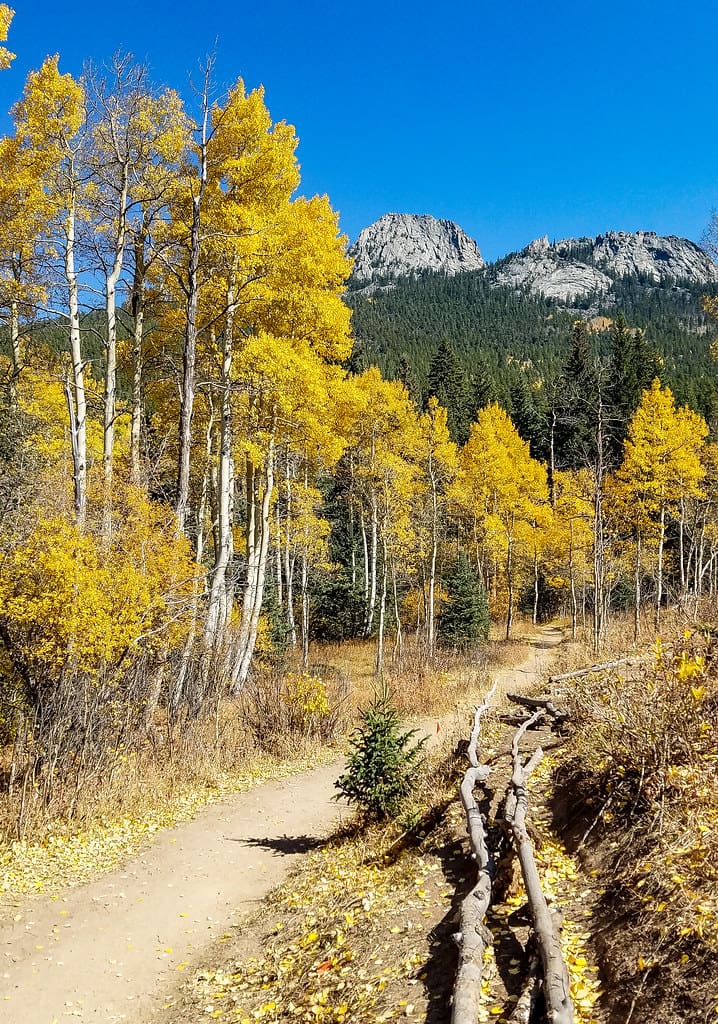
Golden Gate Canyon State Park
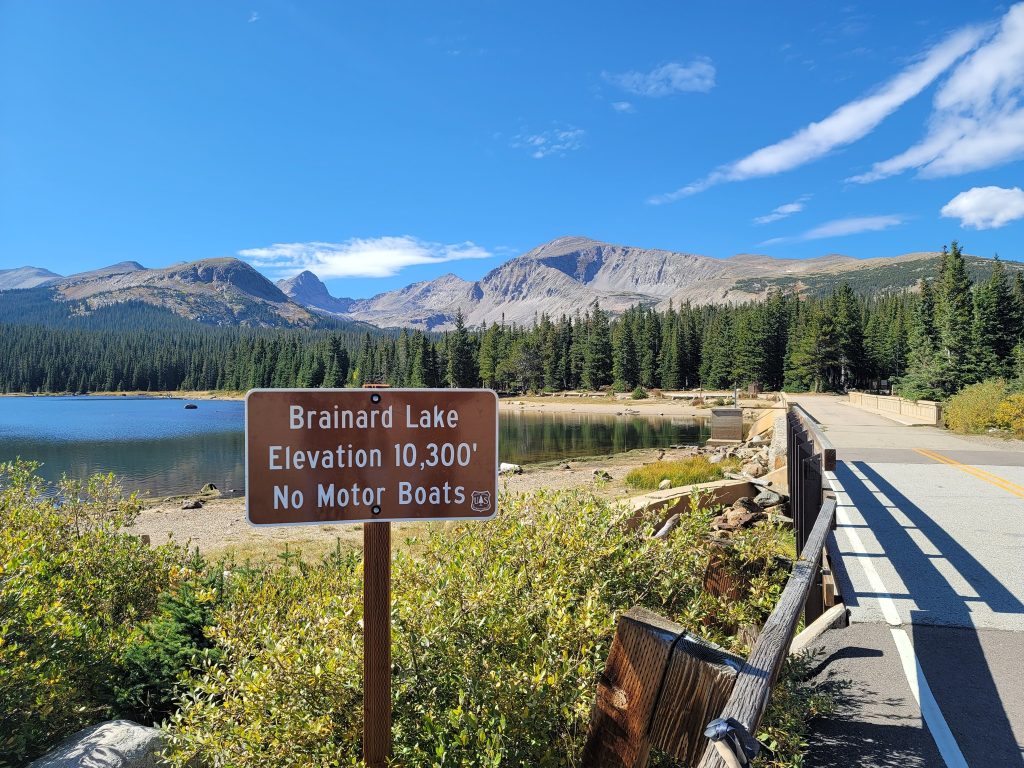
3. Brainard Lake Recreation Area (45–50 Minutes from Boulder)
For the darkest skies on this list, head up to Brainard Lake Recreation Area near Ward. Sitting at over 10,000 feet elevation, this area offers minimal light pollution and incredible clarity on clear nights.
Under the right conditions, you may even catch faint hints of the Milky Way, especially later in spring as the galactic core begins to rise earlier.
The alpine setting adds to the experience—quiet, remote, and surrounded by towering peaks.
Important details:
- Seasonal access varies. In early spring, the road to upper areas is often closed due to snow.
- The Gateway Trailhead or winter parking area is typically the safest access point during this time.
- Nights get cold quickly—bring layers, even in April and May.
Pro Tips for the Perfect Spring Stargazing Night
Make the most of your outing with a few simple strategies:
- Use a red-light flashlight or headlamp to preserve your night vision
- Download a stargazing app like SkyView or Stellarium to easily locate stars and constellations
- Allow 15–20 minutes for your eyes to adjust—this dramatically improves what you can see
- Check the moon phase—a new moon or thin crescent provides the darkest skies
- Follow Leave No Trace principles—pack out everything you bring
Why Spring Is Special for Stargazing in Boulder
Spring skies strike a balance between winter clarity and summer comfort. The air is often stable, visibility is strong, and temperatures are far more enjoyable than the deep winter months.
It’s also a transitional time in the night sky. While winter constellations fade in the west, summer stars begin to rise later in the evening—giving you a unique mix of seasonal views.
Final Thoughts
Stargazing around Boulder doesn’t require a big commitment—just a clear night and a short drive. Whether you’re heading up Flagstaff for a quick look, venturing into Golden Gate Canyon for darker skies, or going all-in at Brainard Lake, each spot offers its own version of Colorado night magic.
Bring a thermos, a blanket, and someone you enjoy spending time with—or go solo and take it all in.
Look up, slow down, and let the sky do the rest.