
Flagstaff Mountain: The Hidden History Behind Boulder’s Most Scenic Drive
Flagstaff Mountain
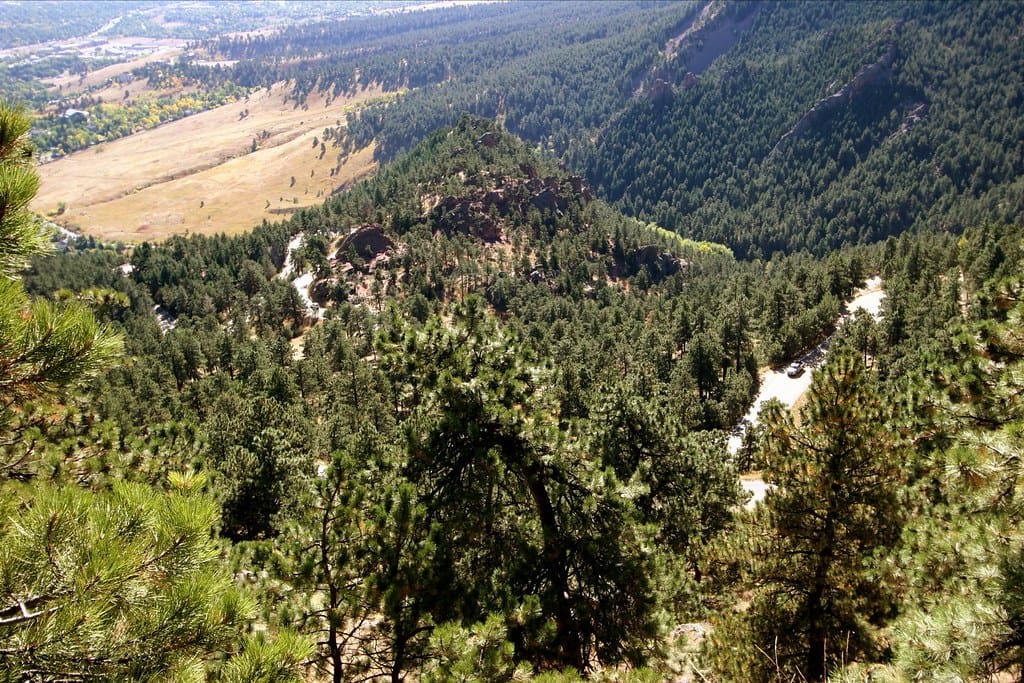
If you’ve ever driven up Flagstaff Mountain Road, you already know the feeling. The turns tighten, the air cools, and suddenly Boulder opens up beneath you in a way that never gets old. But beyond the sweeping views and easy access, Flagstaff holds a deeper story—one rooted in resilience, craftsmanship, and a pivotal moment in American history.
The Mountain That Got Its Name from a Flag
At 6,983 feet, Flagstaff Mountain isn’t the tallest peak in Boulder County, but it’s easily the most visited. Its proximity to downtown and its scenic road make it a favorite for sunrise chasers, cyclists, hikers, and anyone looking for a quick escape.
The name dates back to the late 1800s, when a large flagpole stood on the summit. Early settlers used it to fly a signal flag visible across the plains—both a landmark and a symbol for the growing town below. Long before it became a scenic drive, Flagstaff was a point of connection between Boulder and the vast landscape beyond.
How the Civilian Conservation Corps Shaped Flagstaff
The Flagstaff you experience today took shape during one of the most challenging times in American history—the Great Depression.
In 1933, under President Franklin D. Roosevelt’s New Deal, the Civilian Conservation Corps (CCC) was created to provide jobs for young men while improving public lands. Boulder became home to CCC Company 809, whose work would permanently transform Flagstaff Mountain.
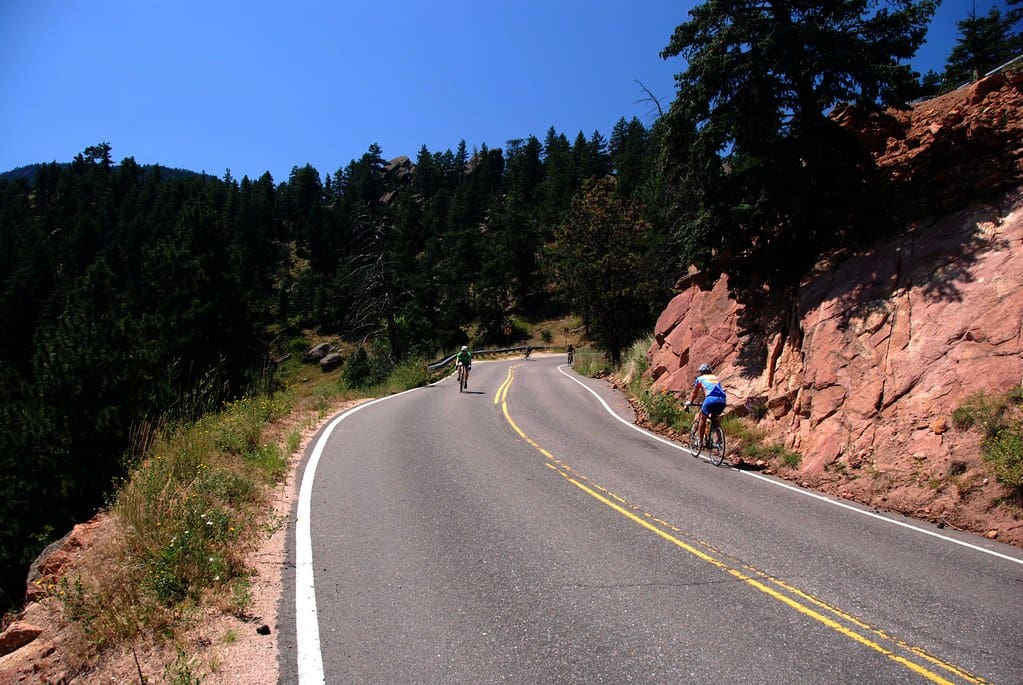
Stationed near Baseline Road, the crew set out to improve access to the mountain. What had been a rough, narrow route was widened into a usable road. They added stone guardrails, built scenic pullouts, and made the drive safer and more enjoyable for visitors.
Flagstaff Mountain
On March 29, 1935, the improved Flagstaff Road officially opened to the public. Its popularity quickly led to an extension over the summit and down the western slope toward Nederland. That extension is now known as Chapman Drive, a historic route still used by hikers and cyclists today.
The CCC’s impact didn’t stop at the road. The crews planted approximately 30,000 saplings across the mountain. Nearly a century later, those trees form the forest canopy that gives Flagstaff its signature look and feel.
Sunrise Amphitheater: A Stone-Built Masterpiece
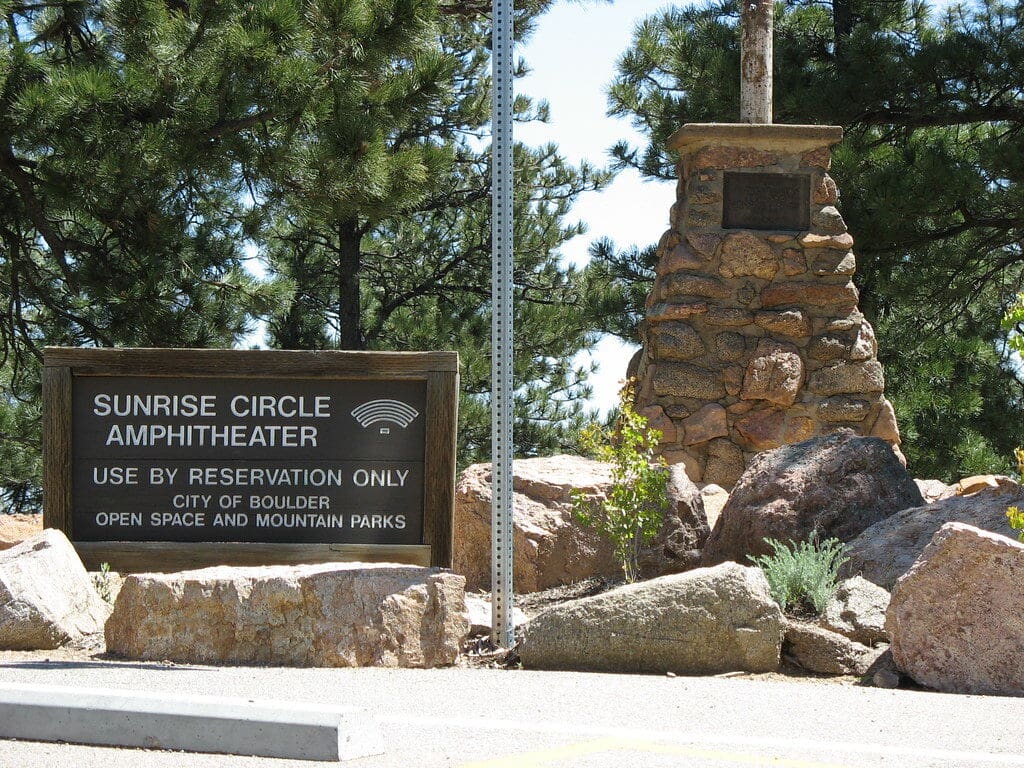
Just below the summit lies one of Boulder’s most special and often overlooked places—the Sunrise Amphitheater.
Built between September 1933 and March 1934 by CCC Company 809, this open-air amphitheater is tucked into a natural depression in the hillside. Its design is simple yet striking: twelve semicircular rows of stone seating, crafted from local fieldstone and tinted concrete, facing an elevated stage.
Sunrise Amphitheater
The amphitheater seats about 150 people and faces east, offering unobstructed views of the sunrise over Boulder and the plains. The acoustics are exceptional, thanks to the natural bowl shape of the landscape.
A bronze plaque on-site honors the CCC workers and their supervisor, James P. Solan—a reminder of the hands that built it stone by stone.
Today, the amphitheater hosts weddings, small performances, and quiet personal moments. Whether you arrive at sunrise or stumble upon it mid-day, it has a way of making you pause.
Must-Stop Overlooks on the Drive
Driving Flagstaff isn’t about getting to the top—it’s about the stops along the way. Each overlook offers a different perspective, and each is worth your time.
Panorama Point
The most iconic viewpoint on the mountain. From here, you can look directly down onto Boulder, see the dramatic rise of the Flatirons, and follow the plains stretching endlessly east. It’s especially powerful at sunset.
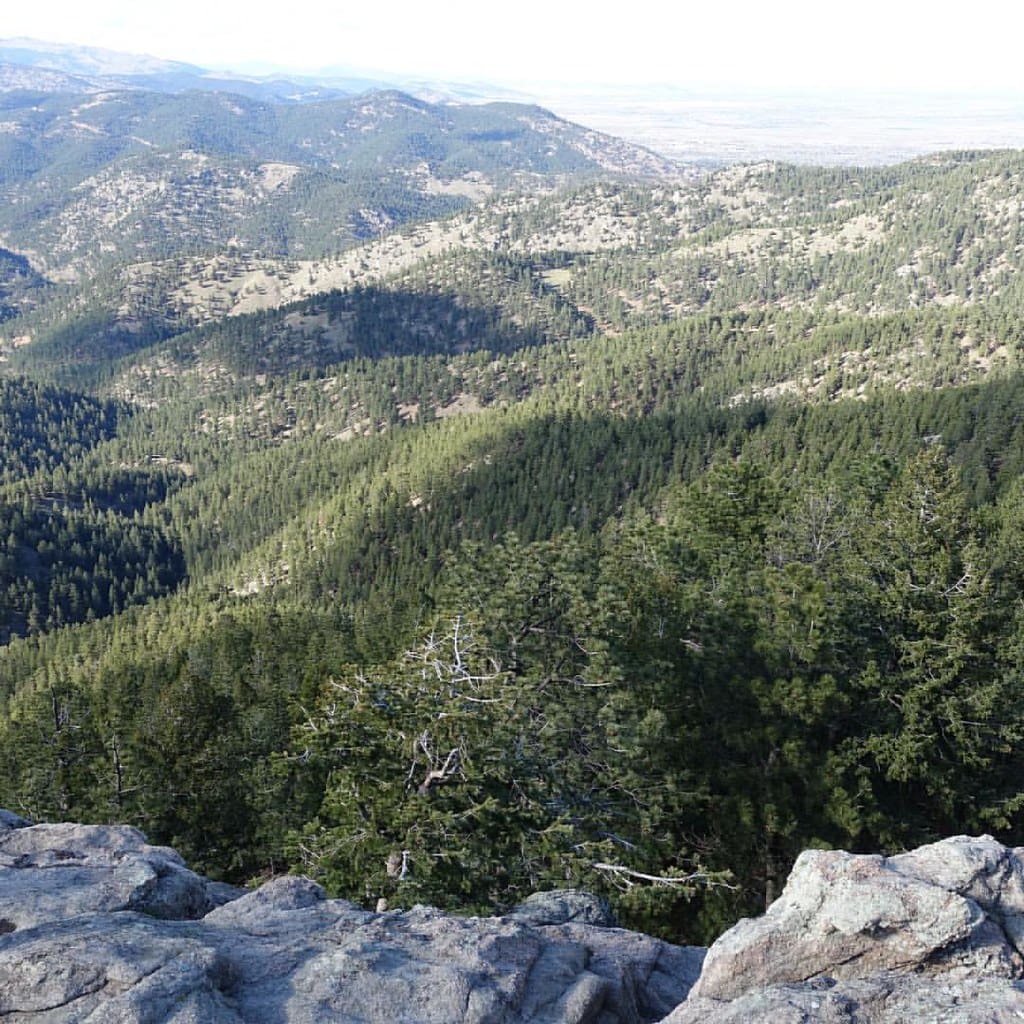
Lost Gulch Overlook
A quick and easy stop with expansive views to the west. Rolling forested hills give way to distant peaks, making this a favorite for photographers and anyone chasing that wide-open Colorado feel.
Lost Gulch Overlook, Flagstaff Mountain
Realization Point and Artist’s Point
These quieter stops offer short walks to more intimate viewpoints. From here, you can take in the Indian Peaks, Boulder Valley, and shifting light across the foothills. Less crowded, more reflective.
Why Flagstaff Still Matters
Nearly 90 years later, the work of the Civilian Conservation Corps continues to shape every visit to Flagstaff Mountain.
The road you drive, the trees that surround you, and the stonework you sit on were all built by young men looking for opportunity during one of the country’s hardest chapters. Their work turned Flagstaff into a place of access, beauty, and community.
That legacy still lives on today.
Next time you head up, take a few extra minutes. Stop at the amphitheater. Sit quietly. Look out over Boulder. It’s not just a view—it’s a connection to history, effort, and hope.

Flagstaff Mountain: Scenic View Point
Quick Tips for Your Visit
• The road is narrow and winding—take it slow and enjoy the drive
• Sunrise at the amphitheater is unforgettable, while sunsets at Panorama Point are equally stunning
• Temperatures can be 10 to 15 degrees cooler than in town—bring layers
• Dogs are welcome on most trails but must be leashed unless in designated voice-and-sight areas
Flagstaff Mountain isn’t just one of Boulder’s best drives. It’s one of its greatest stories—still unfolding with every visit.