
Lightning on the Flatirons: Staying Safe on Boulder’s Summer Trails
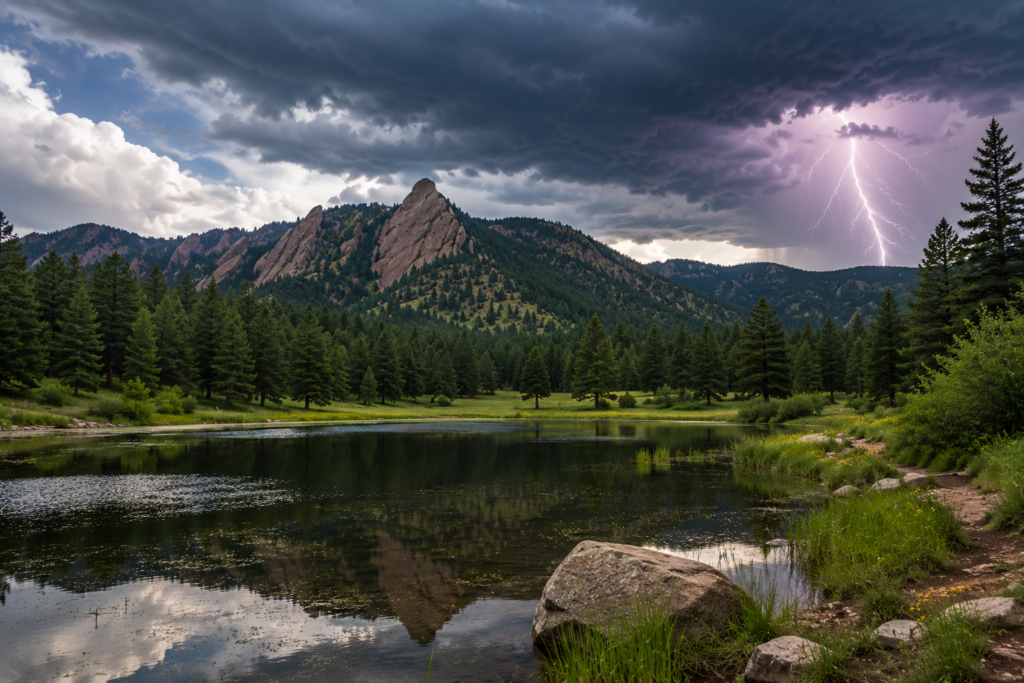
One minute you’re climbing the Mesa Trail beneath bright blue skies. The next, dark clouds are building over the Continental Divide and thunder is echoing across the Flatirons. In Boulder, weather can change quickly, making lightning one of the most serious summer hazards for hikers, runners, climbers, and anyone enjoying the outdoors.
Colorado experiences hundreds of thousands of lightning strikes each year, and the Front Range regularly sees active summer thunderstorms because of its elevation, mountain terrain, and rapidly changing weather patterns. Around Boulder, the highest lightning risk generally occurs from late spring through summer, especially during June, July, and August.
Why Afternoon Storms Develop So Quickly
Many of Boulder’s summer thunderstorms begin when warm air rises from the plains and is forced upward by the foothills and mountains. Combined with available moisture, that rising air can rapidly produce thunderstorms that often develop from midday into the afternoon.
Because many of Boulder’s most popular hiking destinations are high and exposed, they become increasingly dangerous once thunderstorms begin to form.
Popular areas that deserve extra caution include:
- The Flatirons
- Bear Peak
- Green Mountain
- Mount Sanitas
- Flagstaff Mountain
- Open ridgelines throughout Boulder Open Space and Mountain Parks
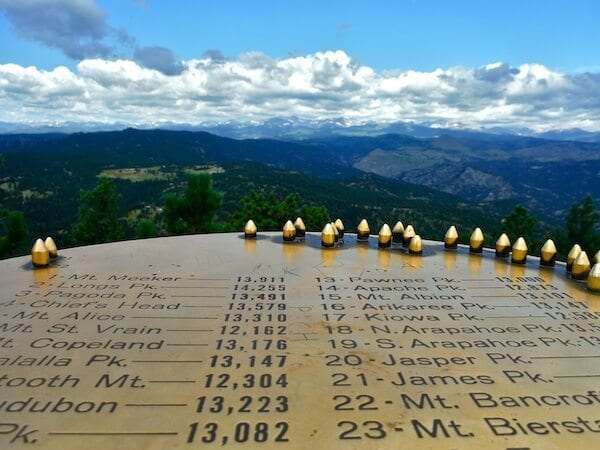
Summit of Green Mountain (8,144 ft) – Stunning views from the top of one of Boulder’s best hikes!
The 30-30 Rule Could Save Your Life
The National Weather Service recommends the easy-to-remember 30-30 Rule:
- If you see lightning, count the seconds until you hear thunder.
- If thunder follows within 30 seconds or less, lightning is close enough to be dangerous. Seek safe shelter immediately.
- Wait 30 minutes after the last clap of thunder before resuming outdoor activities.
Remember that lightning can strike several miles away from the center of a storm, even if blue sky is still visible overhead.
Start Early Like Boulder Locals
The safest strategy during the summer is simple: hike early.
Morning conditions are typically cooler, trails are less crowded, and thunderstorms are generally less likely than later in the day.
A few smart habits can make a big difference:
- Begin hiking around 7:00–8:00 a.m. whenever possible.
- Plan to leave exposed summits, ridges, and rock slabs by late morning.
- Check the weather forecast the night before and again before leaving home.
- Use a weather radar app before and during your hike if storms are possible.
- If thunderstorms are in the forecast, consider choosing a lower-elevation or shorter hike instead.
Many Boulder Open Space and Mountain Parks trailheads, including Chautauqua, feature lightning awareness signs. They’re worth reading before heading out.
What To Do If You’re Caught Outside
No location outdoors is completely safe during a lightning storm, but you can reduce your risk by acting quickly.
If thunder is approaching:
- Leave exposed ridges, summits, and open rock immediately.
- Descend to lower terrain if you can do so safely.
- Stay away from isolated trees, open meadows, fences, and bodies of water.
- If you’re hiking with others, spread out so multiple people are less likely to be affected by a single strike.
- If no safer shelter is available and lightning is imminent, the National Weather Service advises minimizing contact with the ground by crouching low with your feet together. This is a last-resort measure and should only be used when no safer option exists.
The safest places during a thunderstorm are substantial buildings or fully enclosed hard-topped vehicles.
Tents, picnic shelters, small rock overhangs, and open shelters do not provide adequate lightning protection.
Boulder Trail Highlights
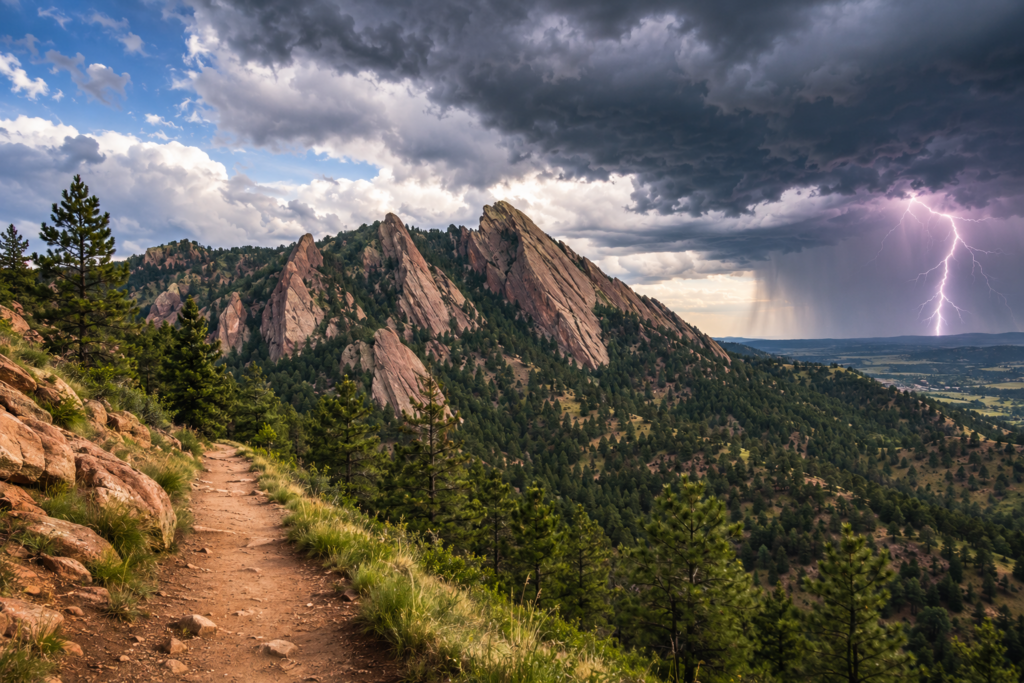
Flatirons and Chautauqua
These iconic trails feature beautiful sandstone formations but also large areas of exposed rock. Once thunderstorms begin developing, conditions can become dangerous very quickly.
Bear Peak and Green Mountain
Both hikes include long stretches near the summit where hikers are exposed to changing weather. An early turnaround is always the safer decision if storms begin building.
Mesa Trail
While portions travel through wooded areas, several sections cross open terrain where lightning remains a concern.
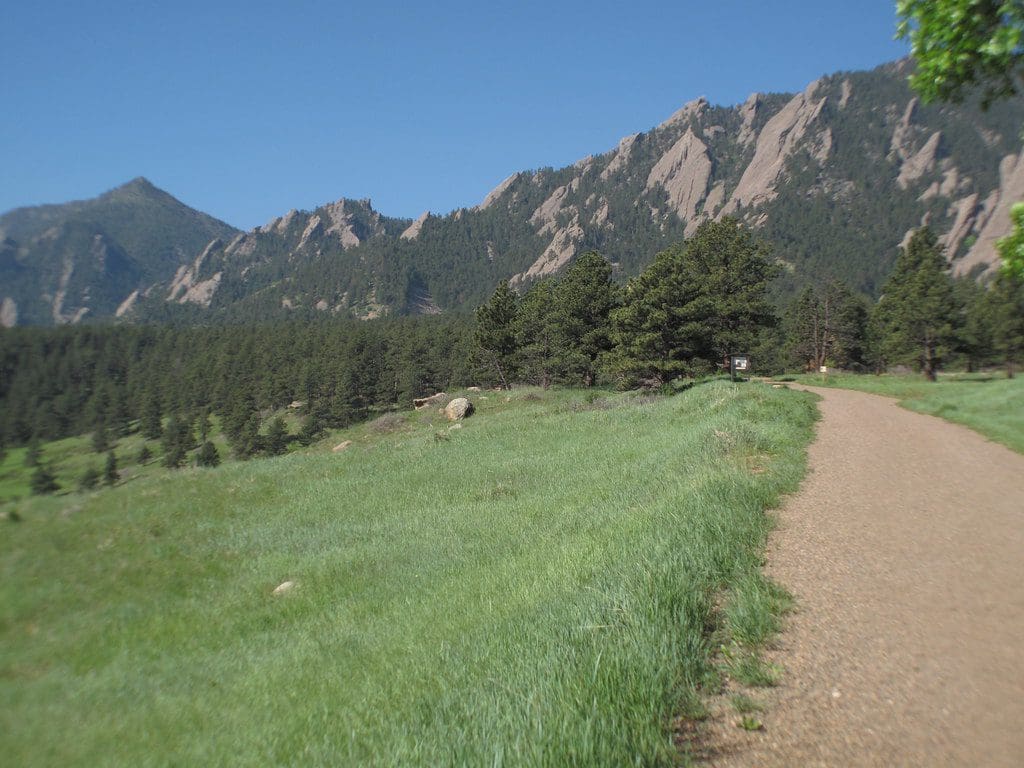
Enchanted Mesa Trail, Boulder, CO
Mount Sanitas and Flagstaff Mountain
These popular local favorites offer spectacular views but also include exposed ridges where weather awareness is essential.

Mount Sanitas
Bottom Line
Summer hiking in Boulder is one of Colorado’s greatest outdoor experiences, but lightning deserves respect.
Plan an early start, monitor the forecast, keep an eye on developing clouds, and don’t hesitate to turn around if conditions begin to change. The Flatirons, Bear Peak, Green Mountain, and every other Boulder trail will still be there another day.
When thunder roars, make getting to safer shelter your priority. A hike cut short is always better than taking unnecessary risks, and smart decisions today help ensure you’ll enjoy many more adventures on Boulder trails in the future.