
Bear Peak Sunrise: Nature’s Fiery Masterpiece Above Boulder
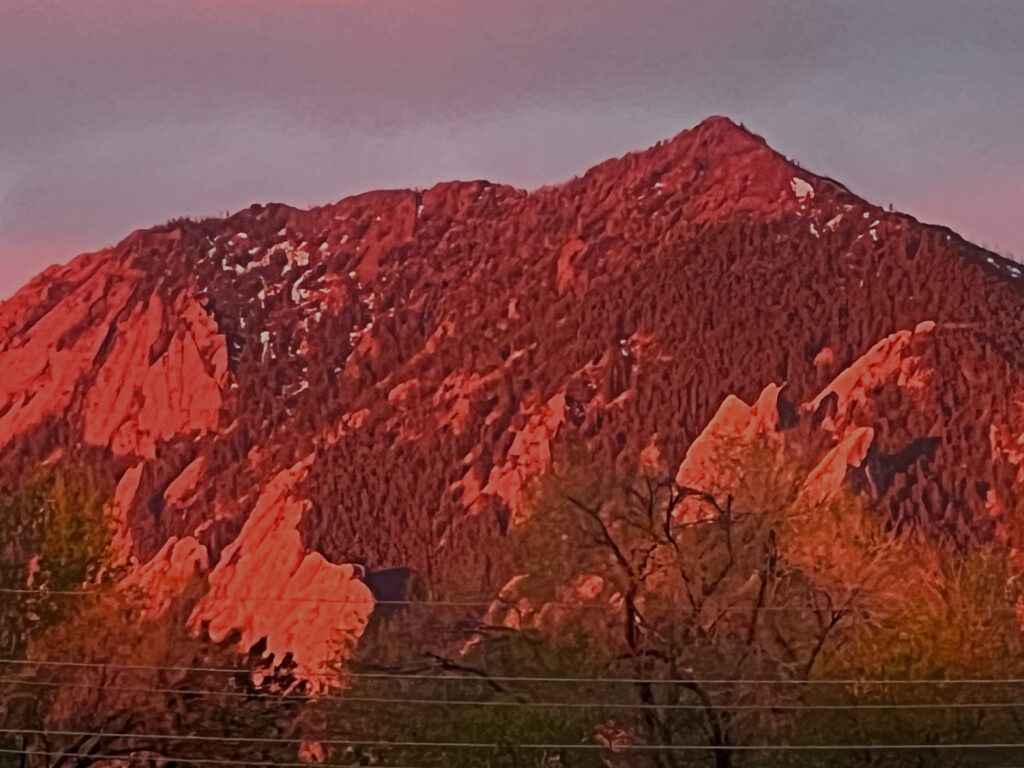
There is something unforgettable about watching the first light of day arrive over Bear Peak. Rising to approximately 8,461 feet above sea level, the rugged summit forms one of the most recognizable landmarks on Boulder’s southern skyline.
At sunrise, the mountain can appear almost theatrical. Deep reds, oranges, pinks, and golds spread across the eastern sky while the foothills and valleys remain in cool morning shadow. As the light strengthens, the rocky ridges and surrounding Flatirons take on warmer tones, creating one of those classic Colorado scenes that can stop hikers, runners, and photographers in their tracks.
Raw, peaceful, and unmistakably Boulder, a Bear Peak sunrise is one of nature’s finest local performances.
Why Bear Peak Steals the Show
Bear Peak rises immediately south of Boulder’s famous Flatirons and is one of the dominant summits in the city’s Open Space and Mountain Parks system. Although neighboring South Boulder Peak is higher, Bear Peak’s sharp profile and dramatic position above the plains make it one of the most visually striking mountains on Boulder’s skyline.
The mountain also occupies a remarkable geographic position. From the summit area, hikers can look east across Boulder and the plains and west toward the Continental Divide. On clear days, the panorama includes the Indian Peaks and other high summits of Colorado’s Front Range.
Getting there, however, requires serious effort.
Bear Peak is widely regarded as one of the toughest major hikes immediately accessible from Boulder. Depending on the starting point and route, hikers can gain roughly 2,500 to nearly 3,000 vertical feet on the journey to the summit.
Fern Canyon is the classic steep approach. The City of Boulder describes the trail as hard and notes that the route includes an unrelenting climb toward the summit. Shadow Canyon provides another demanding approach and can be incorporated into longer routes and loops.
Near the top, the terrain becomes increasingly rocky, and reaching the true summit requires a short scramble over exposed rock. The final section deserves caution, particularly in wet, icy, windy, or stormy conditions.
The reward is a spectacular panoramic view across the plains, foothills, and Continental Divide.
The Ancient Geology Behind the View
Part of Bear Peak’s visual power comes from the extraordinary geology surrounding it.
The Flatirons are part of the Fountain Formation, a sequence of sedimentary rock deposited approximately 280 million years ago from material eroded from the Ancestral Rocky Mountains. Much later, the rise of the modern Rocky Mountains tilted these once more horizontal rock layers dramatically upward, helping create the formations that define Boulder’s western skyline today.
The reddish and rust-colored tones visible throughout the Flatirons landscape become especially vivid in low-angle morning and evening light. At sunrise, changing light and atmospheric conditions can transform the entire mountain backdrop from dark silhouette to glowing rock in a matter of minutes.
Bear Peak Facts
• The City of Boulder lists Bear Peak at approximately 8,461 feet in elevation.
• Fern Canyon and Shadow Canyon are among the best-known routes used to reach the Bear Peak summit area.
• Depending on the trailhead and route selected, the hike can involve approximately 2,500 to nearly 3,000 feet of climbing.
• The summit offers sweeping views across Boulder, the eastern plains, the Front Range, and the Continental Divide.
• The final approach to the true summit includes exposed rocky terrain and a short scramble that requires careful footing.
• The surrounding Flatirons are formed from Fountain Formation rock deposited roughly 280 million years ago.
• Bear Peak and its surrounding trails are protected within Boulder’s remarkable Open Space and Mountain Parks system.
Chasing the Perfect Sunrise
A sunrise hike on Bear Peak requires preparation. Reaching high terrain before dawn means traveling in darkness, so hikers should carry a reliable headlamp, extra layers, water, navigation tools, and appropriate traction when snow or ice is present.
Weather is another major consideration. Bear Peak is highly exposed near the summit, and conditions can change quickly. Strong winds, snow, ice, and thunderstorms can make the upper mountain dangerous. Hikers should always check current trail conditions, closures, and the weather forecast before heading out.
For those prepared for the challenge, the experience can be extraordinary.
There is a special moment when the eastern horizon begins to glow and the first sunlight reaches the landscape. Boulder slowly emerges from the shadows below, the plains stretch toward the horizon, and the high peaks to the west catch the changing morning light.
Whether you climb to the summit or simply admire Bear Peak from below, the mountain represents something essential about Boulder: wilderness and city existing remarkably close together.
And when sunrise sets the sky on fire behind that unmistakable silhouette, Bear Peak becomes more than a mountain.
For a few unforgettable minutes, it becomes nature’s masterpiece.