Dehydrated in Boulder? The Altitude Trap Most Active Locals Miss (And How to Fix It)
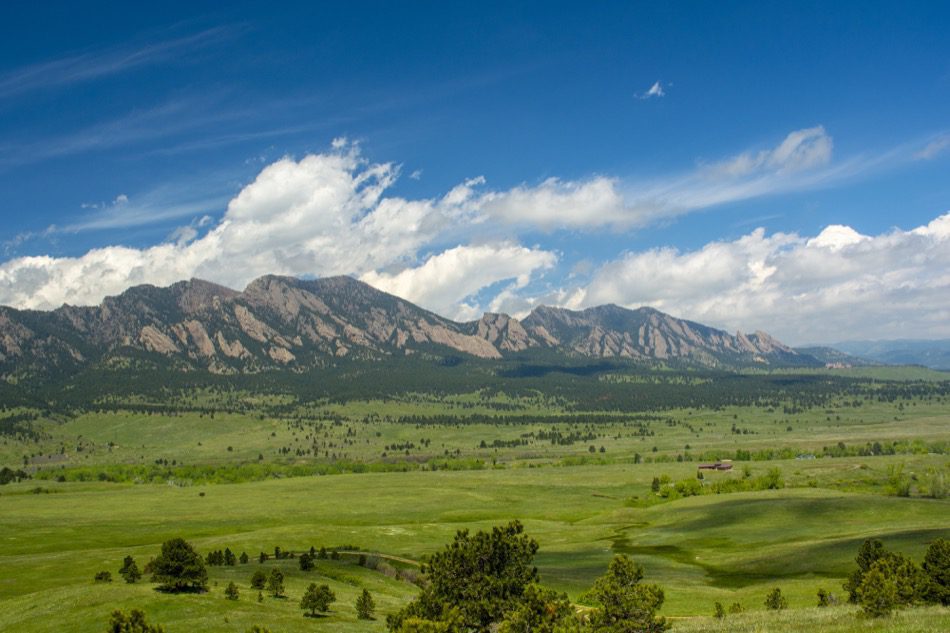
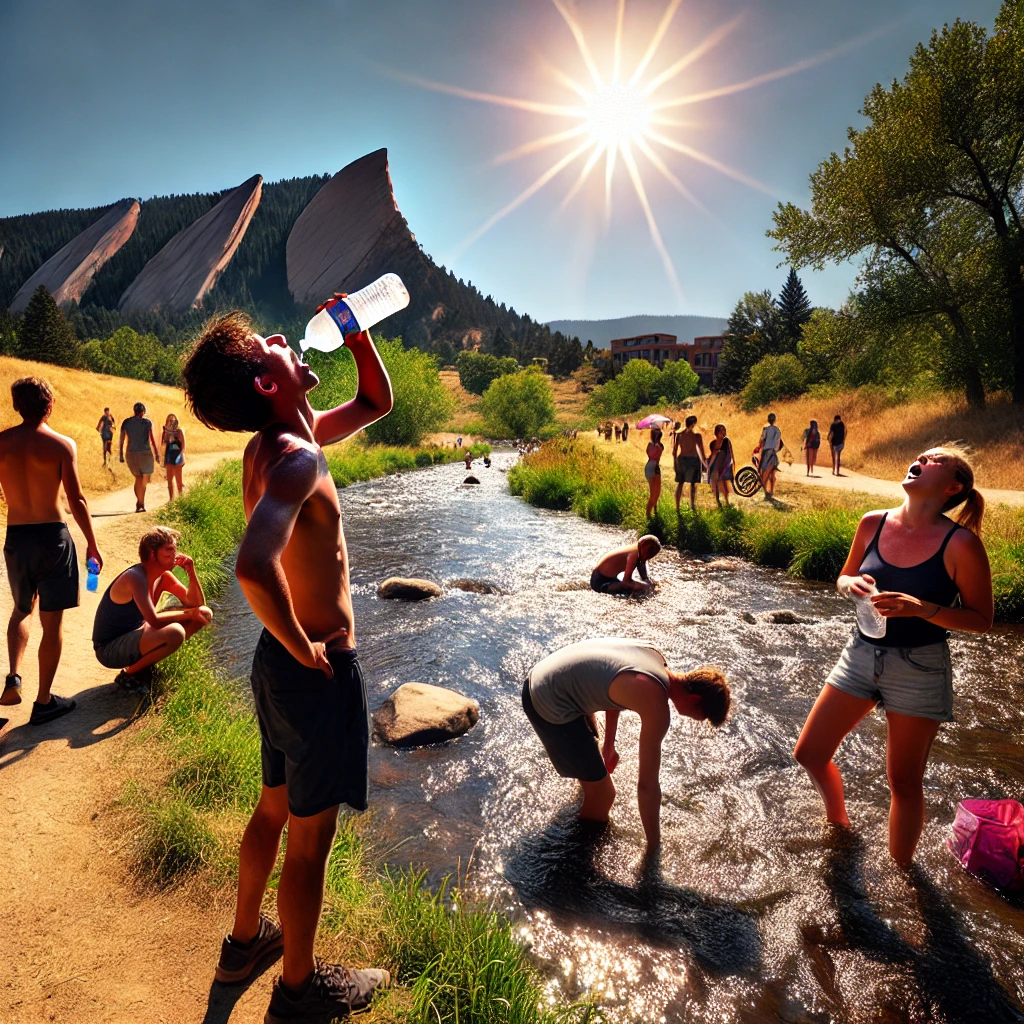
The Flatirons Mountains in Boulder, Colorado on a Sunny Day
Most Boulder locals know the feeling.
You finish a morning hike to Royal Arch, tackle a few miles around Chautauqua, or spend the morning riding Boulder Creek Path. Everything feels great while you’re outside. Then by early afternoon you’re unusually tired, your legs feel heavy, and a dull headache starts creeping in.
Many people blame the workout—or simply “the altitude.”
Often, the real culprit is dehydration.
Because of Boulder’s elevation and famously dry climate, even longtime residents can become mildly dehydrated without realizing it. The symptoms are subtle, but they can affect your energy, recovery, focus, and overall enjoyment of Colorado’s incredible outdoor lifestyle.
Fortunately, preventing it is easier than most people think.

Why Boulder Is Different
At approximately 5,430 feet above sea level, Boulder presents unique challenges your body doesn’t face in more humid, lower-elevation cities.
Your body naturally breathes faster at altitude to compensate for thinner air. Every breath carries moisture away from your lungs.
Combine that with Colorado’s extremely dry air, abundant sunshine, and frequent outdoor activity, and fluid loss happens much faster than many people realize.
Even more surprising?
Sweat evaporates so quickly in Boulder that you often don’t feel how much fluid you’re actually losing.
By the time you’re thirsty, you’re already playing catch-up.
Signs You May Already Be Dehydrated
Many Boulder residents experience mild dehydration without recognizing it.
Watch for signs such as:
- Afternoon fatigue
- Heavy legs on familiar hikes
- Mild headaches
- Brain fog
- Slower workout recovery
- Muscle cramps
- Darker urine
- Lower motivation later in the day
These symptoms are often blamed on poor sleep, aging, or simply having a busy day—but hydration is frequently the missing piece.
Hydration Starts Before Your Hike
One of the biggest mistakes people make is waiting until they’re already outside.
Instead:
- Drink consistently throughout the day before a long hike.
- Start your morning with water.
- Bring enough water to sip regularly instead of taking large drinks only during breaks.
Steady hydration works much better than trying to “catch up” afterward.
Don’t Forget Electrolytes
Water is important.
Electrolytes can be just as important.
When you’re hiking, running, biking, or spending hours outside, your body also loses sodium and other minerals.
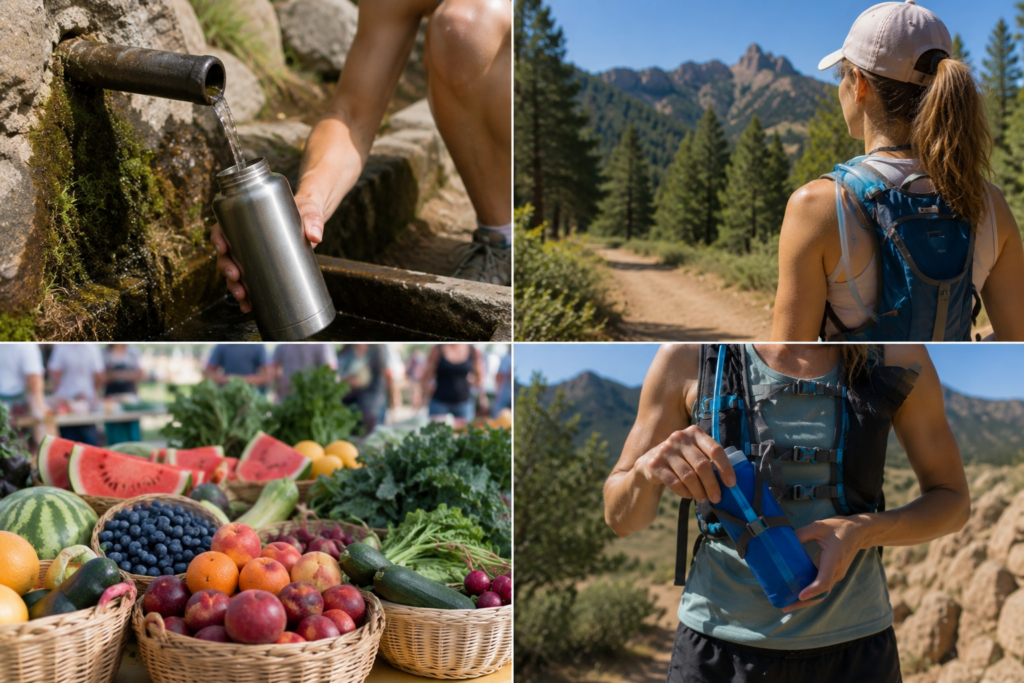
Adding an electrolyte tablet, low-sugar electrolyte mix, or naturally mineral-rich foods like oranges, bananas, watermelon, coconut water, or lightly salted nuts can make a noticeable difference in how you feel.
Many Boulder trail runners swear by keeping electrolyte packets in their hydration vest or backpack.
Boulder Hydration Hacks
One advantage of living here is that healthy habits are easy to build into everyday life.
Some local favorites include:
- Refilling reusable bottles throughout the day.
- Visiting the Boulder Creek spring near Arapahoe Avenue.
- Picking up hydrating fruits and vegetables at the Boulder Farmers Market.
- Carrying a hydration pack for longer outings instead of relying on a single water bottle.
These simple habits often prevent that late-afternoon energy crash many active locals experience.
Summer Requires Even More Attention
July brings warmer temperatures along with occasional wildfire smoke and ozone.
When the air becomes hazy, staying hydrated helps keep your airways comfortable and supports your body’s normal cooling processes.
On hotter days, begin drinking earlier, sip consistently, and consider adding electrolytes before your workout instead of afterward.
A Simple Daily Routine
Try this easy habit stack:
Morning
Start your day with a full glass of water. Add electrolytes if you’re planning a long hike or workout.
During Activity
Take small sips every 15–20 minutes rather than waiting until you’re thirsty.
Afterward
Continue drinking until your urine returns to a light yellow color and your energy feels normal again.
Evening
Finish the day with another glass or two, especially after spending hours outdoors.
Enjoy More Good Days Outside
One of the greatest things about Boulder is that nearly every day invites you outdoors.
Whether you’re climbing the Flatirons, walking Boulder Creek Path, paddleboarding at the reservoir, or simply enjoying a neighborhood stroll, staying ahead of dehydration helps you recover faster, think more clearly, and enjoy every adventure just a little more.
Sometimes the difference between feeling exhausted and feeling fantastic isn’t a harder workout or a better night’s sleep.
It’s simply drinking enough water before your body asks for it.